

Get Free Dumpster Rental Quotes in Clearwater
Tell us about your project and local Clearwater providers will follow up with pricing and availability.
Table of Contents
Choosing the Right Dumpster Size
Choosing the Right Dumpster Size
Dumpster size selection hinges on your project scope and debris type. For most Clearwater residential cleanouts — garage purges, estate clearing, or single-room renovations — a 10- or 15-yard container handles the volume. Larger home remodels and commercial construction projects typically need 20- to 40-yard roll-off dumpsters, which accommodate heavier loads and bulkier materials like drywall, flooring, and framing lumber.
Residential Cleanout and Renovation Sizes
A 10-yard dumpster works for focused projects: clearing out a cluttered attic, removing old carpet from three bedrooms, or hauling away debris from a bathroom gut. The footprint measures roughly 14 feet long by 7.5 feet wide — small enough to fit in most Clearwater driveways without blocking access. You’ll fit about three pickup truck loads of material inside.
Step up to a 15- or 20-yard container when you’re tackling whole-room renovations or combining multiple projects. Tearing out a kitchen generates more debris than most homeowners expect — cabinets, countertops, appliances, flooring, and drywall add up quickly. A 20-yard dumpster holds approximately six pickup loads, enough for a full kitchen or bathroom remodel plus the demolition waste. If you’re replacing a roof on a typical single-family home, this size accommodates the shingle tear-off without requiring a second haul.
Commercial and Construction Debris Containers
Construction sites and commercial renovations generate heavier, bulkier waste streams that demand larger capacity. A 30-yard dumpster suits major residential additions or light commercial work — think whole-home window replacements, multi-room office build-outs, or retail space renovations. The container holds roughly nine pickup truck loads and accepts mixed construction debris including framing scraps, siding, and packaging materials.
The 40-yard option serves large-scale commercial projects and new construction. You’re looking at a container 22 feet long that swallows demolition debris from entire building interiors or handles ongoing waste from multi-week construction jobs. Be mindful of weight limits regardless of container size — construction debris like concrete, brick, and soil is dense. A 20-yard dumpster filled with concrete rubble will hit weight restrictions long before it reaches capacity. Most providers in Pinellas County cap total weight between 2 and 4 tons depending on container size, with overage fees applying beyond that threshold.
Roll-Off Dumpster Pricing and Weight Limits
Roll-off dumpster rental in Clearwater generally ranges from $300 to $600 for a week-long period, depending on container size and weight capacity. Most providers include 1-3 tons of disposal in the base price, with overage charges of $40-$75 per additional ton. The final cost depends on your project type, dumpster size, and total debris weight—not just the rental fee quoted upfront.
Typical Rental Costs and Deposit Requirements
A 10-yard dumpster typically starts around $300-$350 for lighter cleanup projects, while 20-yard containers run $350-$450, and 30-40 yard units cost $450-$600. These rates usually cover a 7-10 day rental period. Expect the price to climb if you’re disposing of heavy materials like concrete, dirt, or roofing shingles—some companies charge $100-$150 more for dedicated “heavy debris” dumpsters with reinforced floors.
Most Clearwater providers don’t require a separate deposit if you pay by credit card, which serves as a hold against potential overage fees or property damage. Paying by check or cash sometimes triggers a $100-$200 refundable deposit. A few companies waive deposits entirely for repeat customers or contractors with established accounts. The rental agreement should clearly state whether your quoted price includes delivery, pickup, and a specific weight allowance—these aren’t always bundled the same way across providers.
Tonnage Allowances and Overage Fees
Base rental prices typically include 1-2 tons for smaller dumpsters and 2-3 tons for larger roll-off containers. That’s enough capacity for most household cleanouts or light renovation debris, but construction projects burn through allowances quickly. A kitchen demolition with cabinets, drywall, and tile might generate 2.5 tons. A roof tear-off on a 1,500 square foot home easily produces 4-5 tons of shingles alone.
Overage fees hit your final bill at $40-$75 per ton beyond your included weight. If you rent a 20-yard dumpster with a 2-ton limit at $400 and dump 4 tons of construction debris, you’ll pay an extra $160-$300 in tonnage charges. The driver weighs the container at the landfill, so you won’t know the exact overage until after pickup. Some contractors request a “flat-rate” option that covers unlimited tonnage up to the container’s weight limit—usually costs $100-$200 more upfront but eliminates surprise fees on heavy projects. Always ask whether your project materials typically exceed standard allowances before settling on a base-price rental.
Permitted Materials and Disposal Restrictions
Clearwater dumpster rentals accept most common waste streams—household junk, construction debris, yard waste, and general refuse—but prohibit hazardous materials, liquids, tires, appliances with refrigerants, and electronics. Pinellas County’s solid waste ordinances require separation of certain materials, and rental companies enforce these restrictions through visual inspections at pickup. Violating disposal rules typically results in additional fees ranging from $50 to $300, or in severe cases, refusal to haul the container until prohibited items are removed.
Construction and Demolition Debris
Roll-off dumpsters handle most building materials without issue. Wood framing, drywall, roofing shingles, siding, flooring, and concrete all qualify as acceptable construction debris. Contractors working on remodels or teardowns can mix these materials in a single container, though separating concrete and asphalt into dedicated loads often reduces disposal costs at the landfill.
Metal components—wiring, ductwork, fixtures, and structural steel—are allowed but represent missed revenue. Pinellas County scrap yards pay for ferrous and non-ferrous metals, so pulling these items out before the dumpster leaves your property makes financial sense on larger projects. Asbestos-containing materials require specialized handling and certified abatement contractors; no standard dumpster rental accepts these regardless of how they’re packaged.
Household and Yard Waste Guidelines
Furniture, mattresses, carpeting, and general household clutter fill residential dumpsters daily. Clearwater permits these items in roll-off containers, though mattresses may incur a $15-25 surcharge per unit at some facilities due to recycling mandates. Bagged garbage goes in without restriction, but loose trash creates problems during transport—wind scatter on I-275 leads to fines that rental companies pass along to customers.
Yard waste follows different rules depending on volume and type. Branches, leaves, grass clippings, and shrub trimmings are acceptable, but stumps often aren’t due to their density and the strain they place on weight limits. A 3-foot diameter oak stump can weigh 600-800 pounds alone, consuming a significant portion of typical tonnage allowances. Palm fronds and coconuts require extra consideration—their fibrous composition causes jams in processing equipment at some Pinellas County transfer stations, leading certain providers to restrict them entirely.
Prohibited Items and Hazardous Waste
Paint cans, motor oil, gasoline, pesticides, and pool chemicals cannot go in dumpsters under any circumstances. Florida administrative code classifies these as household hazardous waste, requiring drop-off at Pinellas County’s designated collection events or the Household Electronics and Chemical Collection Center on 130th Avenue North. Liquid waste of any kind—including that half-empty paint can—creates environmental liability that rental companies won’t accept.
Appliances containing refrigerants (refrigerators, freezers, air conditioners, dehumidifiers) need EPA-certified recovery of coolants before disposal. Most rental providers won’t take these units unless you provide documentation of proper refrigerant removal. The county’s curbside bulk pickup handles appliances for residents, often making that a simpler path than dumpster disposal. Tires face blanket prohibition due to Florida’s tire disposal fee system—retailers and dedicated tire recyclers manage this waste stream separately, and mixing tires into general refuse violates state regulations.
Delivery Zones and Placement Requirements
Dumpster delivery in Clearwater typically covers a 15-20 mile radius from the rental company’s location, encompassing most of Pinellas County including Safety Harbor, Dunedin, and Largo. Placement requires a flat, solid surface with 60 feet of overhead clearance (for truck boom access), at least 10 feet of width, and proper positioning away from low-hanging power lines, tree branches, and soft ground that could rut under the container’s weight.
Geographic Service Boundaries in Pinellas County
Most Clearwater providers operate within county lines, though some extend into northern Hillsborough or southern Pasco for an additional delivery fee. The geography matters here—Clearwater sits on a peninsula, so companies don’t spread service evenly in all directions. You’ll find better availability and lower fees for addresses in central Pinellas versus outlying areas like Tarpon Springs or St. Petersburg’s southern neighborhoods.
Cross-bay deliveries to Tampa or Hillsborough County often trigger $75-150 in extra charges, if the company services those areas at all. Some providers partner with sister locations across the bay rather than making the drive themselves. If your project sits near county boundaries, compare quotes from companies based in both counties—the closer depot usually wins on price.
Street Access and Clearance Needs
Roll-off trucks need room to maneuver. The delivery vehicle measures roughly 35-40 feet long and requires space to reverse, position the hydraulic lift system, and tilt the container onto your property. Tight residential streets with parked cars on both sides create problems. Cul-de-sacs work if the driver can complete a three-point turn, but dead-end streets without turnaround space may require special arrangements or smaller equipment.
Overhead clearance presents a frequent issue in neighborhoods with mature oak canopy. The truck’s hydraulic boom extends upward during placement and removal, creating a 60-foot vertical profile. Low power lines, tree branches, or eaves force drivers to abort delivery. Walk your intended placement spot and scan upward—if branches overhang, either trim them back or choose a different location.
Driveway vs. Street Placement
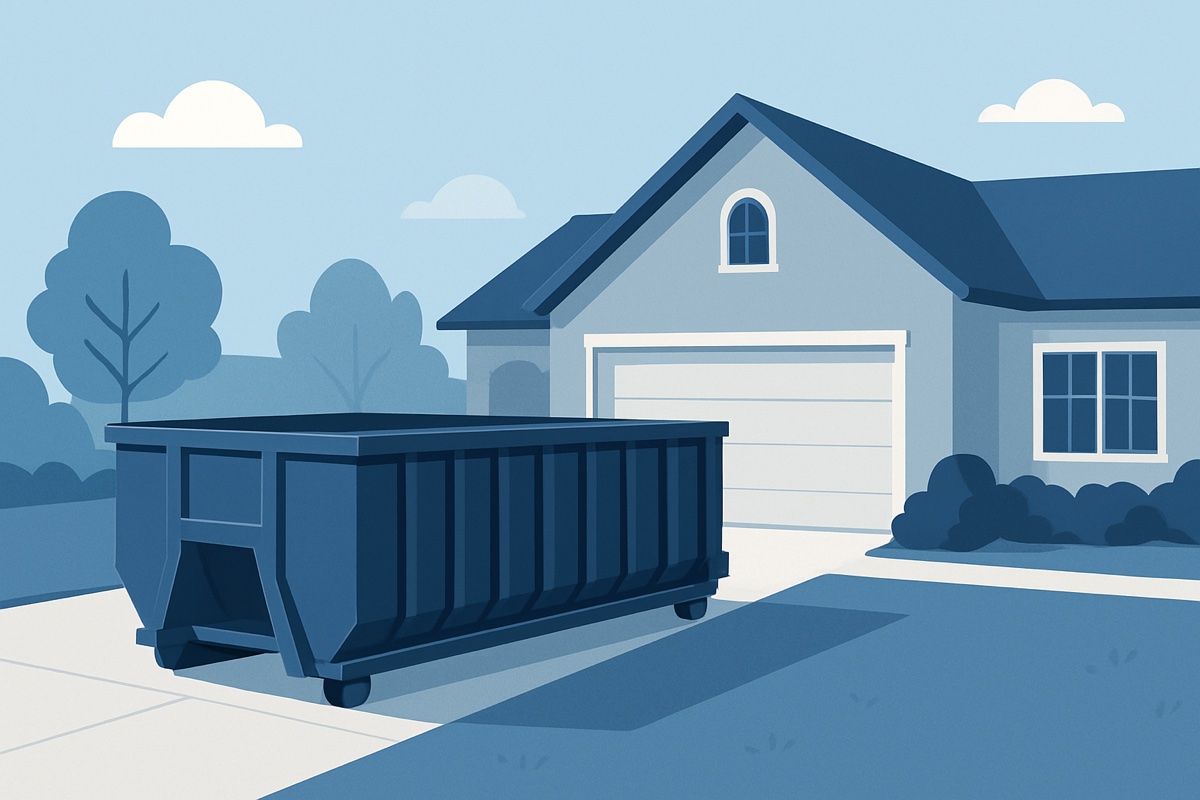
Driveways offer the cleanest option when the surface can handle the load. A fully loaded 20-yard roll-off dumpster filled with construction debris can exceed 10,000 pounds. Asphalt driveways handle this weight better than concrete in Florida’s heat—concrete can crack under point loads, especially if the slab sits on poorly compacted fill or has existing stress fractures. Most companies place plywood sheets under the container’s footprint to distribute weight, but this doesn’t eliminate risk on compromised surfaces.
Street placement requires a permit from the City of Clearwater. The permit costs approximately $25-50 and takes 1-2 business days to process. You’ll need to ensure the dumpster doesn’t block traffic flow, obstruct sight lines at intersections, or sit within 15 feet of a fire hydrant. Some HOA-governed neighborhoods prohibit street placement entirely regardless of permits. Rental companies rarely handle permit applications for you—that responsibility falls on the customer, though some provide guidance on the process.