Dumpster rental in Friendswood, TX typically costs between $300 and $600 for a week-long rental, with pricing determined by container size (10 to 40 yards), debris type, rental duration, and whether you’re working inside city limits or in unincorporated Galveston County where haul distances affect rates. The difference between choosing the right dumpster service and the wrong one shows up fast—whether that’s discovering your permit wasn’t filed with the city’s Development Services department, getting hit with overage fees because you underestimated tonnage, or waiting three extra days for pickup because the company runs limited routes to this area between Houston and Clear Lake. Friendswood’s residential project density, especially in established neighborhoods near Centennial Park and newer developments west of FM 528, creates specific logistics around driveway placement and HOA requirements that national chains often mishandle. Getting dumpster rental right in Friendswood means understanding local disposal regulations, matching container size to actual project waste, and working with services that know the difference between construction debris heading to a Galveston County landfill versus recyclables that need different processing.
Get Free Dumpster Rental Quotes in Friendswood Tx
Tell us about your project and local Friendswood Tx providers will follow up with pricing and availability.
Dumpster Sizes and Capacity Options
Dumpster Sizes and Capacity Options
Friendswood rental companies stock roll-off dumpsters in four standard sizes: 10-yard, 20-yard, 30-yard, and 40-yard containers. A 10-yard fits about three pickup truck loads, a 20-yard handles most single-room renovations, a 30-yard works for whole-home cleanouts, and a 40-yard accommodates major construction debris. Each size carries specific weight limits—typically 1-4 tons depending on the container—with overage charges applying when you exceed them.
Residential vs Commercial Container Sizes
Homeowners doing garage cleanouts or landscaping projects typically rent 10-yard or 20-yard containers. A 10-yard dumpster measures roughly 12 feet long by 8 feet wide by 3.5 feet high—small enough to fit in a driveway without blocking the entire width. These handle furniture removal, fence teardowns, or yard waste from seasonal trimming. A 20-yard container, standing about 4.5 feet tall, accommodates kitchen remodels, flooring replacement, or deck removal for a standard single-family home.
Commercial jobs and larger residential projects demand 30-yard or 40-yard containers. Contractors building additions or tearing out multiple rooms use 30-yard bins, which hold roughly nine pickup loads. Property managers clearing out foreclosed homes or handling estate cleanouts also favor this size. The 40-yard container—measuring approximately 22 feet long and 8 feet tall—serves commercial construction sites, complete home demolitions, or multi-unit property renovations where debris accumulates quickly over several weeks.
Weight Limits and Overage Fees
Most 10-yard and 20-yard containers in Galveston County include a 1-2 ton weight allowance in the base rental price. Construction debris like shingles, drywall, and lumber adds up faster than you’d expect—a small bathroom’s worth of tile and concrete backer board can hit 1,500 pounds. Overage fees generally range from $40-$75 per additional ton, calculated at the landfill scale when the hauler empties your bin.
Heavier materials require planning ahead. If you’re disposing of dirt, concrete, or brick, tell the rental company during booking—they’ll likely recommend a smaller container with a higher weight limit rather than a larger bin you can’t legally fill. A 10-yard dumpster loaded with concrete might max out its 3-ton limit while still showing visible empty space. Mixing heavy demolition waste with lighter household items helps you use the full container volume without triggering overage charges.
Pricing and Rental Periods
Dumpster rental costs in Friendswood generally range from $300 to $600 for a standard weekly rental, depending primarily on container size and debris type. Most providers structure pricing around a 7-day base period with tonnage allowances between 1 and 4 tons. Your final bill reflects the dumpster size you choose, how long you keep it, what materials you dispose of, and whether you exceed weight limits.
What Affects Your Rental Cost
Container size creates the baseline price difference. A 10-yard dumpster typically starts around $300-$350 for the rental period, while a 40-yard unit runs $500-$600. The price jump isn’t proportional to size because larger containers cost more to transport and process, regardless of how full you fill them.
Weight limits matter more than most people expect. Rental agreements include a tonnage allowance—often 2 tons for residential containers. Construction debris like concrete, dirt, and brick weighs considerably more than household junk. A 20-yard dumpster filled halfway with concrete can easily hit 4 tons, triggering overage fees of $50-$75 per additional ton. Material type also influences pricing directly. Some companies charge $100-$150 more upfront for heavy debris loads because landfill tipping fees in Galveston County run higher for construction materials than general waste. If your project involves both drywall and old furniture, you’ll pay less than if you’re dumping a broken concrete patio.
Typical Rental Duration and Extensions
The standard rental period runs 7 days in Friendswood, which handles most residential cleanouts and small renovation projects. You’re paying for the container whether you fill it in two days or seven—the clock starts when the roll-off dumpster hits your driveway.
Extensions cost $10-$20 per day beyond the initial week. That daily rate sounds manageable until a two-week delay turns into $140-$280 in extra charges. Coordinate your rental delivery for when you’ll actually generate debris, not when demolition prep begins. If you’re tackling a garage cleanout over three weekends, you’ll save money scheduling the dumpster for the second weekend when you’re actively hauling items rather than just sorting. Some providers offer flat-rate extensions—a second full week for $75-$100—which makes sense for projects with unpredictable timelines like estate cleanouts where you’re discovering items as you go.
What You Can Put in a Roll-Off Dumpster
Roll-off dumpsters accept most household junk, construction debris, yard waste, and old furniture. You can toss in drywall, lumber, roofing materials, carpet, appliances without refrigerants, and general trash. The key limitation isn’t what goes in—it’s how heavy it gets and whether hazardous materials are mixed in.
General Household Items and Furniture
Old couches, mattresses, kitchen cabinets, and broken appliances make up the bulk of residential cleanouts. You can load these items without special preparation, though breaking down bulky pieces saves space. A 20-yard dumpster typically handles a full house worth of furniture and belongings with room left over for boxes of miscellaneous items.
Remove cushions from upholstered furniture if they’re wet or moldy—damp materials add weight fast and create disposal issues. Appliances are fine as long as they don’t contain Freon or other refrigerants. If you’re unsure about a refrigerator or AC unit, call ahead. Most rental companies either handle the refrigerant recovery for an extra fee or direct you to a specialized disposal site.
Construction and Demolition Debris
Drywall, wood framing, vinyl siding, concrete, asphalt shingles, and metal studs all go in without issue. A bathroom gut might generate half a ton of tile, fixtures, and framing lumber. Kitchen remodels produce even more once you factor in cabinets and countertops. Construction debris tends to be heavy, so match your dumpster size to the project scope rather than filling a smaller unit past safe weight limits.
Separate materials if you’re dealing with large volumes of a single type. Some rental providers offer reduced rates for concrete-only or metal-only loads since those materials have resale value at recycling facilities. Mixed loads cost more to process but give you the flexibility to throw everything together during a fast-paced demolition.
Yard Waste and Landscaping Materials
Branches, leaves, grass clippings, shrub trimmings, and small stumps all qualify as acceptable fill. A typical yard cleanup after storm damage might produce two to three cubic yards of branches alone. Soil and sod are generally allowed in moderate amounts, though pure dirt loads sometimes require a separate dirt dumpster due to weight concerns.
Break or cut branches longer than four feet—they bridge across the container and waste space. Stumps are acceptable if they fit through the opening, but root balls caked with heavy clay soil push you toward weight limits quickly. If you’re clearing an overgrown lot in Galveston County, plan for multiple loads or a larger container rather than overfilling.
What You Absolutely Cannot Dispose Of
Hazardous materials don’t belong in any roll-off dumpster. That means no paint (unless completely dried out), motor oil, gasoline, pesticides, batteries, propane tanks, or automotive fluids. These items contaminate landfills and create liability for both you and the rental company. Texas disposal regulations impose fines for hazardous waste violations, and those costs get passed directly to whoever rented the container.
Tires and electronics also face restrictions in most cases. Galveston County has separate recycling programs for monitors, TVs, and computer equipment. Tires require specialized processing facilities. Some dumpster rental companies accept small quantities of these items for an additional fee, but clarify before you load. Finding out after the fact means paying penalty charges or arranging separate pickup.
Placement and Delivery in Friendswood
Dumpster delivery in Friendswood requires coordination with providers serving Galveston County, typically within 24-48 hours of booking. Drivers need at least 10 feet of width and 23 feet of length for safe placement, plus overhead clearance of 14-16 feet to account for the truck’s hydraulic lift system. Most residential driveways work fine, but narrow streets common in older Friendswood neighborhoods may require street placement with a permit from the city.
Choosing the Right Placement Location
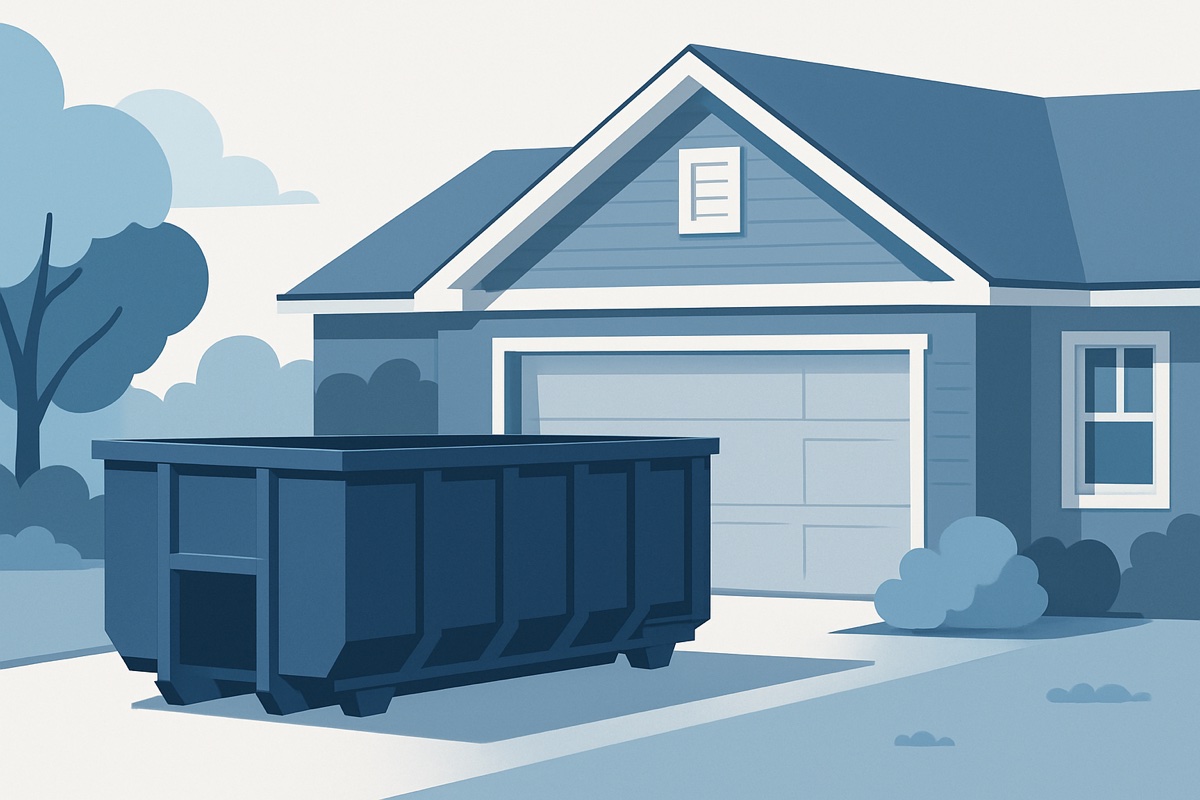
Your driveway offers the simplest option for most projects. Place roll-off dumpsters on concrete or asphalt rather than grass to prevent sinking, especially during Houston-area rain events. The container stays level on hard surfaces, making loading easier and protecting your yard from ruts that form under 4-6 tons of combined weight from the dumpster and debris.
Street placement becomes necessary when driveways lack adequate space or slope too steeply. Friendswood requires permits for any dumpster placed on public right-of-way, available through the Public Works Department. The permit process takes 3-5 business days, so factor this into your project timeline. Avoid blocking mailboxes, fire hydrants, or creating sight-line obstructions at intersections.
Access Requirements for Delivery Trucks
Delivery trucks measure 14-16 feet tall when the hydraulic arms extend. Survey the route from street to placement spot for tree branches, power lines, and canopy structures. A driver who spots a clearance issue will refuse delivery rather than risk equipment damage or utility disruption.
The truck needs a straight shot or gentle curve to back into position. Sharp turns or narrow side yards force drivers to leave containers at street level instead of your preferred spot. Walk the path yourself and note any obstacles—a basketball hoop, parked cars, or decorative landscaping rocks can all block access.
Protecting Your Property During Placement
Rental companies provide plywood boards to place under dumpster feet on request, preventing weight indentations on asphalt driveways. These boards distribute the load across a wider surface area. Without them, you may see permanent dimples where the steel feet rested, particularly during summer months when asphalt softens in Texas heat.
For concrete driveways in good condition, protection boards matter less unless you’re loading particularly heavy construction debris approaching weight limits. Older concrete with existing cracks benefits from boards to prevent the dumpster from settling unevenly and worsening damage.
Dumpster Rental in Nearby Texas Cities
Ready to get started?
Frequently Asked Questions About Dumpster Rental in Friendswood
How much does dumpster rental cost in Friendswood?
Dumpster rental in Friendswood typically runs between $300 and $600 for a standard weekly rental, with a 10-yard container starting around $300 to $350 and a 40-yard unit reaching $500 to $600. These figures are estimates, and your final price depends on container size, debris type, how long you keep it, and whether you exceed the weight allowance. Get a quote from a local provider for an accurate number on your project.
Do I need a permit for a dumpster in Friendswood?
If the dumpster sits on your private driveway, you usually do not need a permit. Placing it on a public street or right-of-way does require a permit through the Friendswood Public Works Department, and that process takes about 3 to 5 business days. Plan ahead so the permit does not hold up your delivery.
What size dumpster do I need for my Friendswood project?
A 10-yard dumpster handles small cleanouts and bathroom remodels, while a 20-yard works well for garage cleanouts and mid-size renovations. For larger jobs like whole-home cleanouts or major construction, a 30 to 40-yard container gives you the room you need. When you are between sizes, the larger one usually saves you the cost of a second haul.
How long can I keep a roll-off dumpster in Friendswood?
The standard rental period in Friendswood runs 7 days, which covers most residential cleanouts and small renovations. If you need more time, extensions generally cost $10 to $20 per day, and some providers offer a flat-rate second week. Schedule your delivery for when you will actually be hauling debris so you are not paying for idle days.
What can I not put in a dumpster in Friendswood?
Hazardous materials are not allowed in any roll-off dumpster, including paint, motor oil, gasoline, pesticides, batteries, propane tanks, and automotive fluids. Tires and electronics like TVs, monitors, and computers also face restrictions and often need separate recycling through Galveston County programs. Ask your provider before loading questionable items, since penalty charges get passed back to you.