Dumpster rental in Greenwood Village, CO typically costs between $300 and $600 for a week-long rental, with pricing determined by container size (10 to 40 yards), your project type, and whether you’re disposing of standard debris or heavier materials like concrete and dirt that require specialized hauling. Getting this decision right matters because choosing the wrong size means either paying for unused capacity or scrambling to schedule a second delivery mid-project, and local waste regulations in Arapahoe County add specific requirements around placement permits and prohibited materials that can trigger unexpected fees. The rental process itself is straightforward once you understand how Greenwood Village’s residential neighborhoods and commercial zones affect delivery logistics — narrow streets near the eastern border with Cherry Hills require smaller trucks, while properties along major corridors like Arapahoe Road offer easier access. Most confusion comes from underestimating project volume or misunderstanding what actually counts as acceptable waste, which is why knowing your exact needs before calling for quotes saves both time and money on dumpster rental in Greenwood Village, CO.
Get Free Dumpster Rental Quotes in Greenwood Village Co
Tell us about your project and local Greenwood Village Co providers will follow up with pricing and availability.
Roll-Off Dumpster Sizes and Capacity
Roll-off dumpsters in Greenwood Village typically come in four standard sizes: 10-yard, 20-yard, 30-yard, and 40-yard containers. The “yard” measurement refers to cubic yards of capacity, not the physical dimensions. A 20-yard dumpster holds roughly 20 cubic yards of material—equivalent to about 10 pickup truck loads. Weight limits generally range from 2-4 tons for smaller containers to 5-8 tons for larger ones.
Residential vs Commercial Container Options
Most residential projects work well with 10-yard or 20-yard containers. A 10-yard dumpster fits in a standard driveway and handles bathroom remodels, garage cleanouts, or small deck removals. The footprint measures roughly 14 feet long by 8 feet wide by 3 feet high. A 20-yard container—the most popular residential size—accommodates full kitchen renovations, medium-sized roof replacements, or estate cleanouts. Expect dimensions around 22 feet long by 8 feet wide by 4.5 feet high.
Commercial jobs and large construction sites typically require 30-yard or 40-yard containers. A 30-yard dumpster handles whole-home cleanouts, major renovation debris, or commercial roof tear-offs. The 40-yard option serves new construction sites, large-scale demolition work, or significant commercial renovation projects. These larger containers measure up to 22 feet long and stand about 8 feet high when full, requiring adequate clearance for delivery trucks with hydraulic lift systems.
Weight Limits for Each Dumpster Size
Each dumpster size carries specific weight restrictions that affect your final cost. A 10-yard container typically maxes out around 2-3 tons, suitable for lighter materials like drywall, carpet, or household junk. Load it with concrete or dirt, and you’ll hit the limit with the bin still half-empty. The 20-yard option usually allows 3-4 tons, which accommodates most residential debris including mixed construction materials, old furniture, and yard waste.
Larger containers don’t always mean higher weight limits. A 30-yard dumpster generally permits 4-5 tons, while 40-yard containers range from 5-8 tons depending on the rental company. The disconnect between volume and weight matters most for heavy materials. Asphalt shingles, concrete, brick, and soil are dense—a small amount fills your weight allowance quickly. Greenwood Village providers often recommend 10-yard or 20-yard containers specifically for heavy debris, even on large projects, because you’re paying for weight capacity rather than space. Exceeding your weight limit typically costs $50-100 per ton over the agreed amount.
Permitted Debris and Material Restrictions
Permitted Debris and Material Restrictions
Greenwood Village dumpster rentals accept most construction debris and household waste — wood, drywall, shingles, concrete, furniture, and yard waste typically go in without issue. You cannot put in hazardous materials like paint, chemicals, electronics, tires, appliances with refrigerants, or medical waste. Understanding these restrictions before loading prevents surprise fees and keeps your project moving.
Acceptable Construction and Household Waste
Most roll-off dumpsters handle standard demolition and remodeling debris without restrictions. Wood framing, plywood, dimensional lumber, drywall, and insulation all qualify. Roofing materials — asphalt shingles, tar paper, metal flashing — fill a significant percentage of construction dumpsters. Concrete, brick, and asphalt usually require a dedicated clean-fill dumpster since mixing them with lighter materials creates weight problems that push you past tonnage limits.
Household cleanouts generate different waste streams but fit the same containers. Furniture, carpeting, mattresses, and boxed household goods all qualify. Yard waste like branches, leaves, and shrubs works in most cases, though some providers charge extra if organic material makes up the entire load. Kitchen cabinets, countertops, old flooring, and bathroom fixtures from renovation work are standard fare. The key limitation isn’t what you’re throwing away — it’s how much it weighs relative to your dumpster size and included tonnage allowance.
Prohibited Items and Hazardous Materials
Paint cans (even dried latex paint in some cases), solvents, pesticides, motor oil, antifreeze, and household chemicals cannot go in construction dumpsters. Arapahoe County’s hazardous waste regulations require separate disposal through designated facilities. Refrigerators, air conditioners, freezers, and dehumidifiers contain refrigerants that need professional recovery before disposal — tossing them in a dumpster violates both local and federal environmental rules.
Electronics, fluorescent bulbs, batteries, and tires also stay out. Medical waste — syringes, prescription drugs, contaminated materials — requires specialized handling. Propane tanks, fire extinguishers, and compressed gas cylinders present explosion risks in compactor trucks. If your provider finds prohibited items during pickup, expect a contamination fee starting around $100 plus the cost of proper disposal. When in doubt about a specific item, ask before loading. Most rental companies would rather answer a quick question than deal with a rejected load at the landfill.
Rental Costs and Pricing Factors
Dumpster rental costs in Greenwood Village typically range from $300 to $800 for a standard weekly rental, with the final price depending on container size, rental duration, debris type, and weight limits. A 10-yard dumpster for light household cleanouts generally costs less than a 30-yard unit filled with heavy construction materials, and exceeding included weight allowances can add $50 to $100 per ton in overage fees.
Base Rental Rates by Container Size
Pricing starts with the container dimensions you select. A 10-yard dumpster—suitable for small bathroom remodels or garage cleanouts—generally runs $300 to $400 for a seven-day rental period. Move up to a 20-yard unit for moderate projects like deck removal or estate cleanouts, and expect $400 to $550. The 30-yard size, popular for whole-home renovations or large-scale landscaping work, typically costs $500 to $700. The largest residential option, a 40-yard roll-off dumpster, ranges from $600 to $800 and handles major construction debris from ground-up builds or complete tear-outs.
These base rates usually include delivery, pickup, and a weight allowance between one and three tons depending on the provider and dumpster size. Arapahoe County’s disposal regulations affect pricing slightly—certain materials require special handling at local transfer stations, which some companies build into their rates while others charge separately.
Weight Limits and Overage Charges
Most rental agreements include a specified tonnage limit, commonly two tons for smaller containers and up to four tons for larger units. Concrete, dirt, and roofing shingles are particularly heavy materials that can push you over the threshold quickly. A full load of asphalt shingles from a typical residential roof often weighs three to four tons alone, even in a 20-yard container that looks only half full.
Overage fees typically range from $50 to $100 per additional ton, applied after the rental company weighs your container at the landfill. Some providers in Greenwood Village offer flat-rate pricing with higher weight allowances built in, which works well for construction projects where you’re certain to generate heavy debris. For variable-weight projects, starting with a lower base rate and paying potential overages often costs less than prepaying for capacity you might not use.
Rental Duration and Extension Fees
The standard rental period runs seven to ten days, included in the base price. Most residential projects fit comfortably within this window, but renovation work or phased cleanouts sometimes need more time. Extension fees generally run $10 to $20 per day, though some companies offer discounted weekly rates if you know upfront you’ll need two or three weeks.
Plan your project timeline before the dumpster arrives. Scheduling delivery for the day demolition starts—rather than days earlier—maximizes your included rental period for actual use. For projects with unpredictable timelines, ask about flexible pickup scheduling rather than committing to a specific removal date you might need to extend.
Material Type Restrictions and Surcharges
What you’re throwing away affects pricing as much as container size. General household debris, lumber, drywall, and most construction materials fall under standard rates. Certain materials trigger additional fees or require separate disposal arrangements. Mattresses and tires often carry $25 to $50 surcharges each because recycling facilities charge haulers to accept them. Electronics, appliances with refrigerants, and hazardous materials like paint or chemicals aren’t accepted in standard roll-off containers.
Concrete, dirt, and asphalt sometimes qualify for reduced rates if kept separate from other debris—clean loads of these materials go to different facilities than mixed construction waste, and some companies offer “clean fill” pricing $100 to $200 below standard rates. Mixed loads forfeit this discount. Greenwood Village’s proximity to metro Denver recycling facilities means some providers offer competitive rates for recyclable metal and clean wood, particularly on larger commercial projects where sorting makes economic sense.
Delivery Zones and Placement Requirements
Dumpster rental companies in Greenwood Village typically deliver within a 15-20 mile radius of their yards, covering all of Arapahoe County and portions of Douglas and Denver counties. Your driveway must accommodate a 60-foot delivery truck that needs 23 feet of vertical clearance. Placement requires a flat, solid surface away from overhead utility lines, and most providers require the container to sit on private property rather than city streets.
Understanding Service Boundaries in Arapahoe County
Greenwood Village sits centrally within most providers’ primary delivery zones, which means you’ll pay standard rates without distance surcharges. The service area extends north to the Tech Center corridor, south through Castle Pines, west toward Littleton, and east past Aurora. Properties beyond these boundaries often incur additional fees ranging from $50 to $150, calculated by round-trip mileage from the nearest depot.
Douglas County addresses south of Lincoln Avenue sometimes fall into extended zones. If your project site sits near the Arapahoe-Douglas county line, confirm your exact address during booking. Some companies draw their boundary at County Line Road, while others extend coverage another five miles south. The difference affects both pricing and whether same-day or next-day delivery is available.
Driveway and Access Requirements
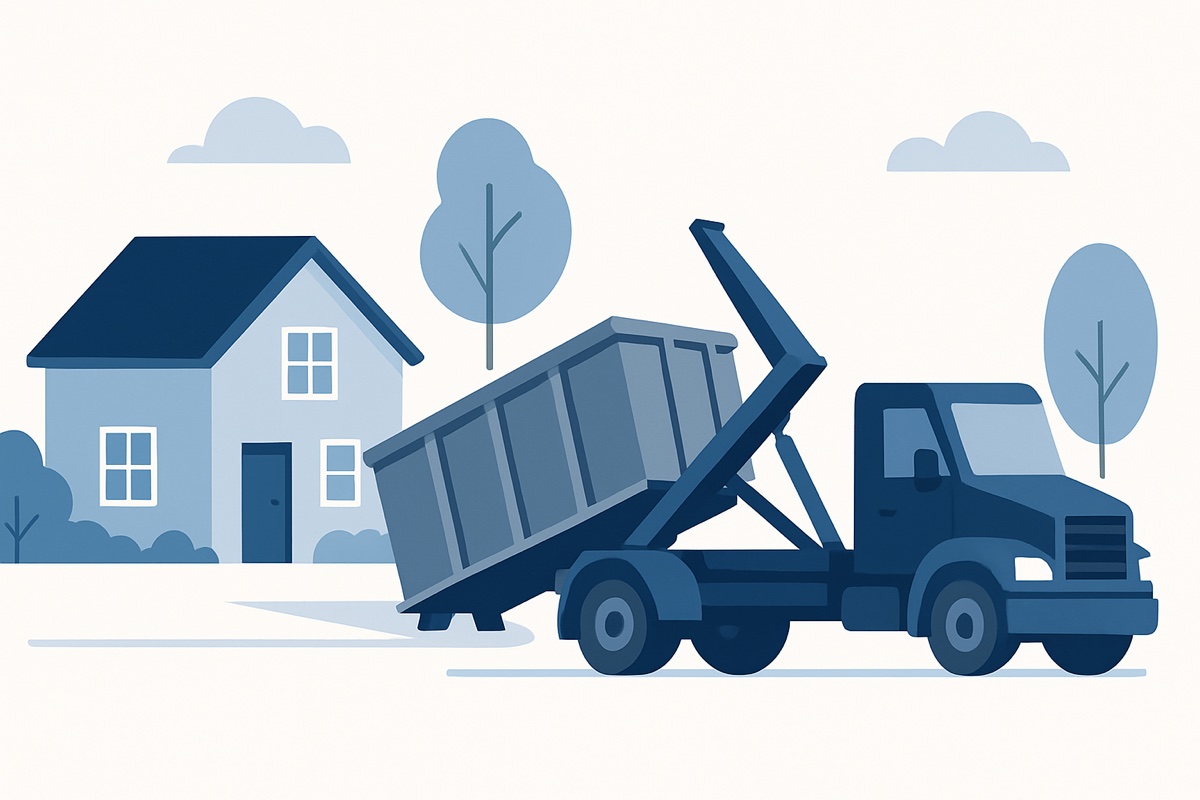
The delivery truck—essentially a flatbed with hydraulic lift—measures roughly 35 feet long and 8.5 feet wide. It needs a straight approach of at least 60 feet to position the roll-off dumpster and pull away after tilting it off the hydraulic rails. Curved driveways work only if the radius allows the truck to maintain alignment during the drop. Tight turns, narrow gates, or steep inclines that exceed a 10-degree grade create problems.
Check overhead clearance along the entire route from street to placement spot. Tree branches, power lines, and garage door headers all need at least 23 feet of clearance. A single low-hanging cable forces the driver to refuse delivery, and you’ll still pay a trip charge. Walk the path yourself with a tape measure before the truck arrives—it prevents wasted time and unexpected fees.
Placement Surface and Protection
Roll-off dumpsters weigh 2-3 tons empty. Add construction debris or roofing materials, and you’re pressing 8-12 tons onto four steel pads, each about six inches square. Asphalt driveways soften in summer heat, creating permanent divots under this concentrated weight. Concrete handles the load better but can still crack if the slab sits over poorly compacted fill or if the dumpster stays in place for weeks during temperature swings.
Place plywood sheets—at least ¾-inch thick, ideally two layers—under each contact point. This distributes weight and protects against hydraulic fluid drips from the truck. Stamped concrete, pavers, and decorative driveways need protection regardless of season. Grass placement seems appealing but guarantees dead patches and ruts. The container will sink several inches into turf, especially after rain, making pickup difficult and leaving your yard gouged.
Street Placement and Municipal Permits
Greenwood Village enforces strict rules about dumpsters on public streets. You need a right-of-way permit from the Public Works Department, which requires a $50 application fee and proof of $1 million liability insurance from your rental company. The permit process takes 3-5 business days, so plan ahead. Containers placed without permits draw $150 citations, and the city can order immediate removal.
Even with a permit, placement restrictions apply. The dumpster must sit as close to the curb as possible without blocking sidewalks, fire hydrants, or mailboxes. Reflective markers on all four corners are mandatory after dark. Streets narrower than 28 feet don’t allow dumpster placement at all—the fire marshal needs unobstructed access. Most residential neighborhoods in Greenwood Village have adequate street width, but cul-de-sacs and older sections near Belleview Avenue sometimes don’t meet the threshold.
Utility Line Clearances
Power lines present the biggest hazard. The delivery truck’s hydraulic arm extends 22 feet vertically when tilting the container. Residential service drops—the lines running from pole to house—typically hang 12-18 feet above ground. That’s not enough clearance. Xcel Energy requires 10 feet of separation in all directions when operating equipment near power lines. If lines cross your driveway, the dumpster goes elsewhere or the utility company temporarily relocates the drop, which adds cost and delay.
Underground utilities matter less for placement but critically during excavation projects. Colorado law requires calling 811 at least three business days before digging. The locator service marks gas, electric, water, and telecom lines with colored flags. Set the dumpster away from these marks—not for the container itself, but so trucks and equipment loading the dumpster don’t compact soil over lines or damage shallow conduit. Sewer and water laterals often run under driveways at depths of just 18-24 inches.
Dumpster Rental in Nearby Colorado Cities
Ready to get started?
Frequently Asked Questions About Dumpster Rental in Greenwood Village
How much does dumpster rental cost in Greenwood Village?
Dumpster rental in Greenwood Village typically costs between $300 and $600 for a week-long rental, though larger 30-yard and 40-yard containers can run closer to $800. These figures are estimates, and your final price depends on container size, rental duration, debris type, and weight limits. Exceeding your included weight allowance usually adds $50 to $100 per ton in overage fees.
Do I need a permit for a dumpster in Greenwood Village?
If the dumpster sits on your own driveway or private property, you generally do not need a permit. Placing one on a public street or right-of-way requires a permit from the Greenwood Village Public Works Department, which carries a $50 application fee and proof of liability insurance from your rental company. Plan ahead, since the permit process takes a few business days and unpermitted containers can draw citations.
What size dumpster do I need for my Greenwood Village project?
A 10-yard dumpster fits in a standard driveway and handles bathroom remodels, garage cleanouts, or small deck removals. A 20-yard container is the most popular residential size and suits full kitchen renovations, medium roof replacements, or estate cleanouts. For commercial jobs, whole-home cleanouts, or large construction work, step up to a 30-yard or 40-yard container.
How long can I keep a roll-off dumpster in Greenwood Village?
The standard rental period runs seven to ten days and is included in the base price. Most residential projects fit comfortably within that window, but renovation work or phased cleanouts sometimes need more time. Extension fees generally run $10 to $20 per day, and some providers offer discounted weekly rates if you know upfront you will need two or three weeks.
What can I not put in a dumpster in Greenwood Village?
Hazardous materials stay out, including paint, solvents, pesticides, motor oil, antifreeze, and household chemicals. Appliances with refrigerants, electronics, fluorescent bulbs, batteries, tires, and medical waste also require separate disposal under Arapahoe County and federal rules. If a provider finds prohibited items during pickup, expect a contamination fee starting around $100 plus the cost of proper disposal, so ask before loading anything you are unsure about.