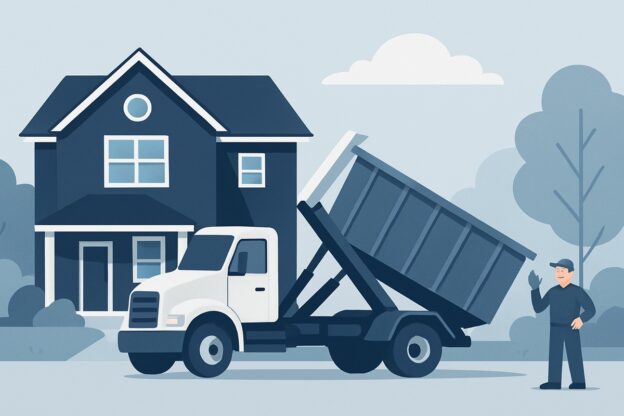
Dumpster rental works by contacting a company to reserve a container size that matches your project needs, scheduling a delivery date, loading it with debris during your rental period (typically 7-14 days), and then having the company haul it away for disposal once you’re finished. This process matters because missteps—like choosing the wrong container size, loading prohibited materials, or misunderstanding weight limits—can add hundreds of dollars in overage fees or require a second rental mid-project. Most people approach their first rental assuming it works like any other delivery service, but roll-off dumpsters come with specific rules about placement, filling methods, and material restrictions that directly affect your timeline and budget. Understanding how dumpster rental works upfront helps you avoid the common pitfalls that turn a straightforward cleanup into a frustrating logistical problem. The key is knowing what happens at each stage—from sizing and pricing to pickup—so you can plan accordingly and keep your project moving without surprises.
Renting a Dumpster for This Project?
For most of these jobs, a roll-off dumpster delivered to your driveway is the simplest, cheapest way to handle the haul. Compare local providers and get a free quote in minutes.
Find Dumpster Rental in Your City →
Choosing the Right Dumpster Size
Choosing the Right Dumpster Size
The right dumpster size matches your project’s volume and the physical space available for delivery. Most residential projects use a 10, 20, or 30-yard roll-off dumpster, while commercial jobs often need 40-yarders. Picking too small means scheduling a second rental; too large wastes money on unused capacity.
Common Roll-Off Dumpster Sizes
A 10-yard dumpster holds about three pickup truck loads and fits in most driveways. Expect dimensions around 14 feet long, 7.5 feet wide, and 3.5 feet high—roughly the footprint of a large sedan. These work well for bathroom remodels, small deck removals, or garage cleanouts where you’re generating 2-4 tons of debris.
The 20-yard size doubles that capacity and is the most popular choice for homeowners. At roughly 22 feet long and 4.5 feet high, it handles full kitchen renovations, roof replacements on smaller homes (up to 2,000 square feet), or estate cleanouts. The taller sides mean you can toss material in without everything spilling over.
Thirty-yard dumpsters measure about 22 feet long and stand 6 feet tall. Use these for large additions, whole-home cleanouts, or significant landscaping projects where you’re removing old fencing, sheds, and yards of soil. They hold 9-10 pickup loads, so unless you’re doing multi-room demo, you probably don’t need this much space.
Forty-yard containers stretch to 22 feet long and 8 feet high—tall enough that you’ll want to avoid throwing materials from ground level if you have a weak arm. Commercial construction sites use these for ongoing projects that generate debris over weeks. Residential customers rarely need this size unless they’re tearing down an entire structure.
Matching Size to Your Project
Start by estimating volume, not weight. Walk through your project space and visualize how much material you’ll remove. A standard interior door takes up about 10 cubic feet; a kitchen’s worth of cabinets fills roughly 100 cubic feet. If you’re removing flooring, calculate square footage and multiply by the depth of materials—old carpet with padding typically stacks 4-6 inches thick once rolled.
Weight limits matter more than volume for dense materials. Concrete, dirt, and brick max out weight restrictions quickly, even in a small dumpster. A 10-yard container filled with concrete chunks from a patio demo hits the typical 2-3 ton limit before it’s half full. For heavy materials, you need a smaller dumpster rental or multiple trips—overfilled containers can’t be safely hauled.
The delivery area determines your practical maximum size. Measure the space where the dumpster will sit: you need at least 60 feet of straight access for the truck to back in, plus 10-12 feet of width. Overhead clearance matters too—trees, power lines, or low-hanging eaves can block placement. A 20-yard dumpster fits most residential driveways, but a 30 or 40-yarder might force you to use the street, which often requires a permit.
Scheduling Delivery and Placement
Scheduling Delivery and Placement
Scheduling delivery means choosing a drop-off date and confirming placement details with your rental company before the driver arrives. Most companies offer next-day or same-week delivery, and you’ll need to specify exactly where the dumpster goes on your property—typically a driveway, street, or cleared area. Getting placement right the first time prevents redelivery fees and project delays.
Where to Place Your Dumpster
Your driveway is usually the best spot if it’s wide enough and paved. A standard roll-off dumpster is roughly 8 feet wide and 14-22 feet long depending on size, so measure your driveway width first. If you have a two-car driveway, you’ll likely have room, but a single-car driveway might force you to block the entire width. The driver needs a straight shot to drop the container—sharp turns or overhanging tree branches can make placement impossible.
If your driveway won’t work, the street becomes your next option, but check local permit requirements first. Many cities require street permits for dumpster placement, especially in residential areas. You’ll also want the container close to where you’re working. Carrying demolition debris or roofing shingles an extra 50 feet gets old fast. Make sure the placement area is level and firm—soft ground or grass can cause the dumpster to sink, and unlevel surfaces make loading awkward and potentially unsafe.
Loading and Using Your Rental
Once your dumpster arrives, you can start loading immediately. Fill it level with the top edge — anything sticking above counts as overfilling and may trigger extra fees or require the driver to refuse pickup. Distribute weight evenly, break down bulky items to use space efficiently, and keep prohibited materials out entirely. Most rentals allow you to fill at your own pace throughout the rental period.
Safe Loading Practices
Start heavy, finish light. Place the densest materials — concrete chunks, soil, roofing shingles — on the bottom. This keeps the center of gravity low and prevents lighter debris from getting crushed and compacted in ways that waste space. If you’re mixing construction debris with household junk, layer them: a base of heavy demo waste, then lighter framing lumber, then bags of general trash on top.
Break down everything that folds, collapses, or disassembles. Flatten cardboard boxes completely. Dismantle furniture so you’re loading planks and cushions, not air-filled armchairs. Cut long boards to fit within the dumpster’s length — a 2×4 sticking out three feet will get flagged at pickup. The more you compress and tessellate, the more you fit before hitting the fill line.
Weight Distribution Tips
Load from front to back, not side to side. Walk into the dumpster and place heavy items toward the front and center, then work your way backward. This mimics how the container will sit on the hauler’s truck during transport. Uneven weight on one side can make the dumpster tilt during lifting, which slows down pickup or requires redistribution on-site.
Avoid creating hollow pockets. If you toss in a rolled-up carpet, you’ve just wasted all the empty space inside that tube. Unroll it and lay it flat, or cut it into sections. Same with garbage bags — don’t throw them in haphazardly. Place them in gaps between larger items where they’ll conform to the available space.
Fill Level Guidelines
The top rail of the roll-off dumpster is your hard limit. Picture a flat plane across the container’s open top — nothing can break that plane. Even a single bag or board poking above the edge means the driver either has to stop and push it down (delaying their route and potentially costing you a fee) or refuse to take the load until you fix it.
Rental companies have legitimate safety and legal reasons for enforcing this rule. Overloaded dumpsters can shed debris on highways, damage the hydraulic mechanisms during lifting, or exceed road weight limits. If you’re nearing the top edge with materials left to go, stop loading and call for an earlier pickup or a second container. Trying to Tetris one last bag onto a maxed-out dumpster rarely ends well.
Extending Your Rental Period
Most rentals include seven to fourteen days of on-site time. If your project runs long, contact the company before your scheduled pickup date. Extensions typically cost $5 to $15 per day in 2026 estimates, though some companies charge weekly rates instead. The earlier you call, the easier it is for dispatch to adjust the route schedule.
Don’t wait until the driver is en route to ask for more time. Haulers plan their days around specific pickup windows, and last-minute changes disrupt those logistics. If you know midweek that you won’t finish by Friday, make the call on Wednesday. You’ll avoid rush fees and the awkward situation of a driver showing up to a half-full container that you’re still actively loading.
Pickup and Final Costs
Pickup and Final Costs
When your rental period ends, the company retrieves the dumpster and weighs your debris at a certified scale. You’ll receive a final invoice showing the base rental fee plus any overage charges for weight beyond your limit, extra days you kept the container, or prohibited items requiring special disposal. Most companies process final bills within a few business days of pickup.
The pickup itself happens fast—usually 15 minutes or less. The driver needs the same clear path they used for delivery. If you’ve parked cars near the dumpster or set items around it, move everything before the scheduled pickup window. Some companies call 30 minutes ahead; others simply show up during the time slot you confirmed.
Weight overages represent the most common surprise cost. If you rented a container with a two-ton limit but filled it with 2.8 tons of concrete and dirt, expect charges for that extra 1,600 pounds. Rates for overage generally range from $50 to $100 per ton in 2026, varying by material type and location. Dense materials like soil, brick, and roofing shingles hit weight limits faster than bulky but lighter debris like furniture or drywall.
You might also see disposal fees for prohibited items discovered during processing. If the facility finds paint cans, treated lumber, or electronics mixed into your general debris, many rental agreements allow the company to charge the specialized disposal costs back to you. A single can of latex paint might add $15 to your bill; treated lumber could run $75 to $150 depending on volume. Calling ahead to ask about questionable items saves you from these add-ons. Most companies would rather tell you to dispose of a few cans separately than deal with contaminated loads.
Extended rental fees apply when you keep the roll-off dumpster past your agreed period. A three-day delay might cost $10 to $15 per day; keeping it an extra two weeks could add $100 to $200 to your total. If you realize mid-project that you need more time, contact the company before your deadline expires. They’ll typically extend your rental at the daily rate rather than charging late fees on top of it.
Ready to get started?
Find a Dumpster Near You