Dumpster rental in Los Angeles connects you with roll-off containers ranging from 10 to 40 yards for construction debris, home cleanouts, and renovation projects, with rental periods typically spanning 7-14 days and costs generally falling between $300-$800 depending on container size, debris type, and your specific location within LA County. The city’s strict waste disposal regulations and variable permitting requirements across different municipalities mean choosing the wrong provider or container size can delay your project and rack up overage fees. Getting dumpster rental right in Los Angeles requires understanding how tonnage limits work, when you need a street placement permit from the Department of Public Works, and which materials trigger higher disposal rates at LA County landfills. Most residential projects underestimate how quickly heavy materials like concrete or soil max out weight limits, while commercial jobs often misjudge the volume generated during multi-story renovations. This guide walks through the practical decisions that determine whether your rental runs smoothly or becomes a expensive headache.
Get Free Dumpster Rental Quotes in Los Angeles
Tell us about your project and local Los Angeles providers will follow up with pricing and availability.
Dumpster Sizes and Capacity Options
Roll-off dumpsters in Los Angeles typically come in four standard sizes: 10-yard, 20-yard, 30-yard, and 40-yard containers. The number refers to cubic yards of capacity, not physical dimensions. A 20-yard dumpster holds roughly three pickup truck loads of material, while a 40-yard can handle 12 or more. Choosing the right size depends on your project scope and the type of debris you’re disposing.
Residential vs Commercial Container Sizes
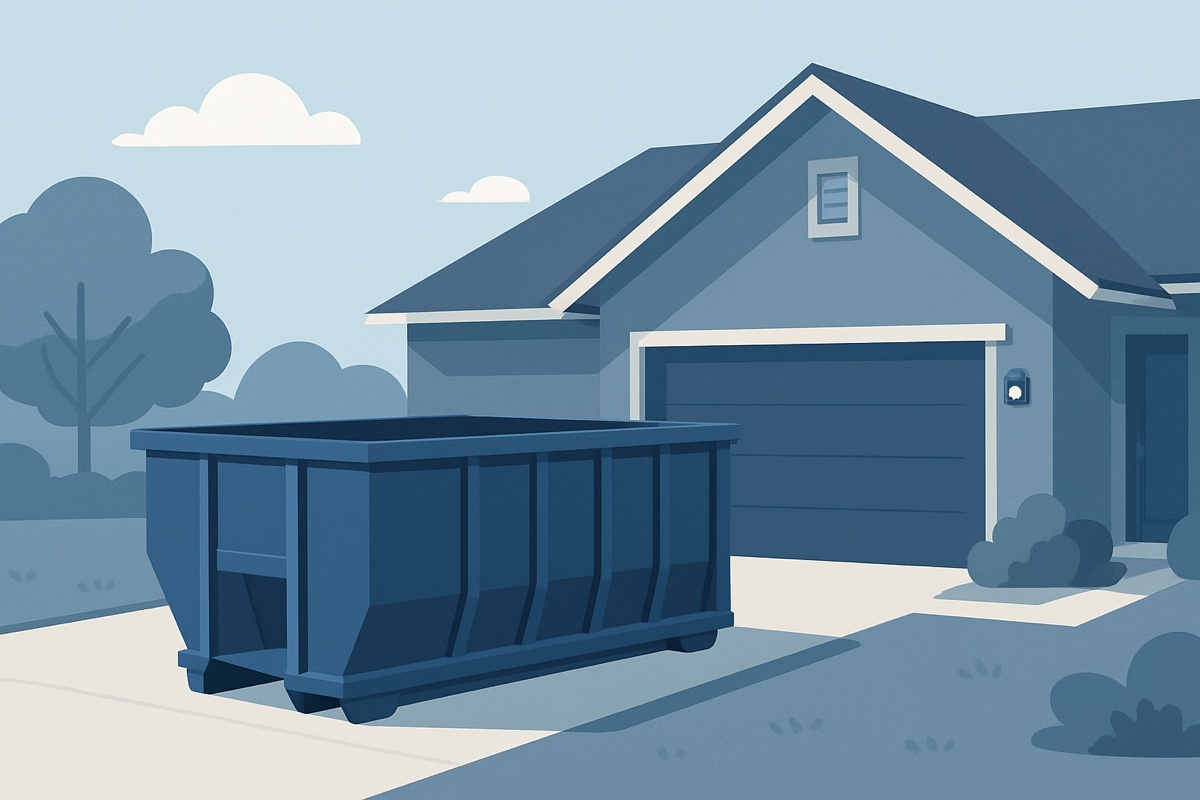
Residential projects usually require 10- to 20-yard containers. A 10-yard dumpster works for single-room cleanouts, bathroom remodels, or small landscaping jobs — think clearing out a garage or replacing a deck. Most measure about 14 feet long and 7.5 feet wide, fitting in a standard driveway without blocking the sidewalk. The 20-yard size handles whole-house cleanouts, kitchen renovations, or roof replacements on smaller homes. These typically sit about 22 feet long and stand 4.5 feet high.
Commercial and large construction projects scale up to 30- and 40-yard containers. A 30-yard dumpster handles major home additions, large-scale landscaping overhauls, or commercial tenant improvements. The 40-yard size is standard for new construction, full building demolitions, or commercial roofing jobs spanning multiple structures. At roughly 22 feet long and 8 feet high, these containers require significant clearance — not just width, but overhead space for the delivery truck’s hydraulic arms. In dense LA neighborhoods with narrow streets or low-hanging power lines, you may need to coordinate with the hauler on placement logistics.
Matching Project Type to Dumpster Size
Construction debris drives size decisions differently than household junk. Drywall, lumber, and roofing shingles compress poorly and bulk up fast. A kitchen gut job generates more volume than you’d expect — cabinets, countertops, and tile eat up space quickly. Plan on a 20-yard minimum for any project involving structural demolition. Contractors often underestimate concrete and brick volume. A standard driveway removal fills a 20-yard container completely, sometimes requiring a second haul.
Weight limits matter as much as volume. Most dumpster rentals in Los Angeles include a weight allowance — commonly 2 to 4 tons depending on container size — with overage fees for exceeding it. Dirt, concrete, and asphalt hit weight limits long before filling the container. A 10-yard dumpster loaded with concrete rubble can exceed weight restrictions at half capacity. Separate heavy materials into their own container when possible, or ask about flat-rate concrete disposal if you’re dealing with foundation work or hardscaping removal. Mixed loads of construction debris rarely max out weight allowances unless you’re disposing of multiple appliances or saturated materials.
Pricing and Rental Periods in LA
Dumpster rental costs in Los Angeles typically range from $300 to $800 for a standard week-long rental, depending primarily on container size, debris type, and your location within the county. Most providers bundle delivery, pickup, and a set weight allowance into their base rate, then charge overage fees if you exceed the included tonnage limit or keep the unit beyond the agreed period.
What Affects Your Rental Cost
Container size drives the base price structure. A 10-yard unit generally costs less than a 20-yard, which costs less than a 30-yard, and so on. But size alone doesn’t tell the whole story—a 20-yard dumpster filled with heavy concrete will cost significantly more than the same container holding lightweight household junk, because waste disposal fees are calculated by weight at the landfill.
Geographic factors matter more in LA than in most cities. If you’re in Downtown LA or Santa Monica, you’ll likely pay less for delivery than someone in Palmdale or Santa Clarita, simply because the hauling distance increases fuel costs and driver time. Permit requirements add another variable—some neighborhoods require street permits that run $50 to $100, which either you arrange directly with the city or the rental company handles for an added fee. The type of debris also affects pricing. Clean concrete or asphalt often qualifies for lower disposal rates at recycling facilities, while mixed construction debris containing wood, drywall, and metal costs more to process. Hazardous materials aren’t accepted at all, and trying to sneak them in results in contamination fees that can double your final bill.
Typical Rental Duration and Extensions
The standard rental period runs seven days. Most companies price their quotes assuming you’ll load the dumpster and call for pickup within that week. This works well for focused projects—a garage cleanout, a bathroom renovation, a roofing job with a dedicated crew.
Longer projects need a different approach. If you’re managing a multi-phase remodel or clearing out an estate over several weekends, ask about extended rental rates upfront. Providers typically charge $5 to $15 per day for each day beyond the initial week, though some offer discounted rates for month-long commitments. The key is setting realistic expectations when you book. A contractor demolishing a kitchen knows the dumpster needs to stay for three weeks; a homeowner tackling a garage might genuinely believe they’ll finish in a weekend but end up needing ten days. Either way, calling to extend before your pickup date costs less than the rush fees some companies charge when you cancel a scheduled pickup at the last minute.
Permits and Placement Requirements
Los Angeles requires permits for any roll-off dumpster placed on public streets, sidewalks, or parkways. You’ll need approval from the Bureau of Street Services before delivery, with fees typically ranging from $50 to several hundred dollars depending on placement duration and location. Private property placement—driveways, construction sites, parking lots you control—generally doesn’t require city permits, though you may need approval from property management or homeowners associations.
Street Placement Permits
The Bureau of Street Services handles all public right-of-way permits in Los Angeles. Submit your application at least five business days before your planned delivery date. The city needs your exact placement location (address and specific street position), container dimensions, and rental duration. Applications submitted without complete information get rejected, pushing back your timeline.
Permit fees increase with rental length. A one-week placement costs less than a month-long rental in the same spot. The city also requires traffic control measures in some situations—if your dumpster narrows a street to one lane or sits near an intersection, you’ll need reflective cones or barricades. The rental company usually handles these details, but confirm who’s responsible before delivery day.
Private Property Considerations
Placing a dumpster on your own property sidesteps city permits entirely. Driveways work for most residential projects, though you should verify the surface can handle the weight. A fully loaded 20-yard container holding construction debris can exceed 10,000 pounds. Asphalt driveways typically hold up fine; gravel or dirt surfaces may develop ruts under that kind of concentrated weight.
Multi-unit buildings and commercial properties operate under different rules. Your building management or landlord must approve the placement even if you’re the tenant. Homeowners associations often restrict where containers can sit and how long they can remain visible from the street. Getting written approval before scheduling delivery prevents last-minute cancellations and wasted permit fees.
Clearance and Access Requirements
Delivery trucks need 23 feet of overhead clearance and 50 feet of straight-line access to position a roll-off dumpster. Low-hanging power lines, tree branches, or carport roofs block placement. Walk your intended spot before the rental company sends a truck—measure the height of anything overhead and check for width restrictions like narrow driveways or tight alley access.
The truck must get within 20 feet of the final container position. Drivers can’t roll dumpsters uphill, across soft ground, or through gates narrower than 10 feet. If your only option sits behind a locked gate or up a sloped driveway, tell the rental company during booking. They can sometimes arrange alternative delivery methods, but that costs extra and isn’t always possible with standard equipment.
Weight Limits and Prohibited Materials
Roll-off dumpsters in Los Angeles typically carry weight limits ranging from 1-10 tons depending on container size, with overage fees generally starting around $50-$100 per ton beyond your limit. Certain materials — including hazardous waste, electronics, tires, and refrigerants — are prohibited by California law and will result in additional charges or refusal of pickup if discovered in your container.
Understanding Container Weight Capacity
The weight limit on your dumpster rental isn’t arbitrary — it’s determined by Department of Transportation road safety regulations and the structural capacity of the hauling truck. A 10-yard container typically handles 1-3 tons, while larger 30-yard and 40-yard units can accommodate 3-6 tons or more, though limits vary by provider.
Heavy materials fill capacity fast. A 20-yard dumpster loaded with concrete or dirt might hit its weight limit when only half full by volume. That’s why most rental companies in LA charge by ton for heavy debris projects rather than offering flat rates. Your actual cost depends on the final certified weight at the landfill scale, not your estimate.
What You Cannot Dispose Of
California regulations prohibit several material categories from standard landfill disposal. Hazardous waste tops the list: paint, solvents, pesticides, motor oil, antifreeze, asbestos, and anything containing mercury or lead. These materials require specialized handling through certified facilities, and mixing them with construction debris can shut down an entire disposal operation.
Electronics fall under California’s e-waste laws and can’t go in standard dumpsters. This includes computers, monitors, televisions, printers, and cell phones — all must be recycled through approved channels. Auto parts with fluids, propane tanks, and lithium batteries also require separate disposal. Some providers accept mattresses and tires for an additional per-item fee, while others prohibit them entirely. Ask before loading anything you’re uncertain about, because contamination charges often exceed $500 once your dumpster reaches the transfer station.
Dumpster Rental in Nearby California Cities
Ready to get started?
Frequently Asked Questions About Dumpster Rental in Los Angeles
How much does dumpster rental cost in Los Angeles?
Most standard week-long roll-off rentals in Los Angeles run between $300 and $800, and these figures are estimates that shift with container size, debris type, and your location within the county. Heavy materials like concrete or dirt push costs up because disposal fees are calculated by weight at the landfill. Get a quote that bundles delivery, pickup, and a set weight allowance so you can compare providers fairly.
Do I need a permit for a dumpster in Los Angeles?
If you place the dumpster on your own driveway or private property, you generally do not need a city permit. If it sits on a public street, sidewalk, or parkway, Los Angeles requires approval from the Bureau of Street Services before delivery. Confirm the rules with your local municipality, and ask whether your rental company handles the permit or leaves it to you.
What size dumpster do I need for my Los Angeles project?
A 10-yard container suits single-room cleanouts, bathroom remodels, and small landscaping jobs. A 20-yard handles whole-house cleanouts, kitchen renovations, and smaller roof replacements, while 30- and 40-yard containers fit major additions, new construction, and large commercial work. When in doubt, size up, since a second haul usually costs more than the next container up.
How long can I keep a roll-off dumpster in Los Angeles?
The standard rental period runs about seven days, and many providers will extend it for a fee of roughly $5 to $15 per day. If you are running a multi-phase remodel or clearing an estate over several weekends, ask about extended rates when you book. Calling to extend before your scheduled pickup date costs less than rescheduling at the last minute.
What can I not put in a dumpster in Los Angeles?
Hazardous materials such as paint, solvents, pesticides, motor oil, antifreeze, and asbestos are prohibited, and California e-waste laws keep electronics like computers, monitors, and televisions out of standard dumpsters. Tires, propane tanks, and lithium batteries also require separate disposal. Ask your provider before loading anything you are unsure about, because contamination charges can be steep.