

Get Free Dumpster Rental Quotes in Columbus
Tell us about your project and local Columbus providers will follow up with pricing and availability.
Table of Contents
Dumpster Sizes and What Fits in Each
Dumpster sizes range from 10 to 40 cubic yards, with each designed for specific project scales. A 10-yarder handles small cleanouts and minor repairs, 20-yarders work for medium renovations and estate cleanouts, 30-yarders suit whole-home remodels and large-scale debris removal, and 40-yarders tackle commercial demolition and major construction projects. Matching the right size to your project prevents overage charges and wasted rental fees.
Residential Projects and Cleanouts
A 10 yard dumpster holds roughly three pickup truck loads—enough for a garage cleanout, bathroom remodel, or small deck removal. You’ll fit about 2,500 pounds of material, which covers most household debris from a single-room project. If you’re clearing out an estate or tackling multiple rooms, a 20-yarder gives you room for furniture, appliances, carpeting, and general household junk without running out of space mid-project.
The 30-yard size handles full-home renovations where you’re generating debris from multiple sources simultaneously—think kitchen cabinets, old flooring, drywall, and exterior materials all at once. Roofing projects often need this size because shingles are deceptively heavy and bulky. Weight limits matter here: asphalt shingles can max out a dumpster’s weight capacity before you fill the volume, so confirm tonnage allowances before loading.
Construction and Commercial Jobs
Construction sites typically start at 30 yards and move up depending on the scope. A 30-yarder works for framing debris, drywall scraps, and general construction waste from residential builds or renovation work. The container fits in most driveways and job sites while providing enough capacity that crews aren’t constantly waiting for swaps.
A 40-yard roll-off dumpster becomes necessary when you’re demolishing structures, clearing commercial properties, or managing debris from multiple trades working simultaneously. These containers hold around 8,000 pounds of material—the equivalent of 12 pickup loads. Delivery and placement requires more space; you need at least 60 feet of straight clearance for the truck to drop and pick up the container. Most commercial jobs generate prohibited materials like paint, chemicals, and certain electronics, so designate separate collection points for those items before they contaminate the main dumpster and trigger disposal surcharges.
Weight Limits and Overage Charges Explained
Dumpster weight limits typically range from 1-2 tons for a 10 yard container up to 5-8 tons for larger roll-off dumpsters. Exceed your allowance and you’ll pay overage fees of $50-$100 per ton beyond the limit. Understanding which materials push you over the threshold helps you avoid surprise charges that can add hundreds of dollars to your final bill.
Typical Weight Allowances by Size
A 10 yard dumpster usually comes with a 1-2 ton weight allowance, while a 20 yard container bumps that to 2-3 tons. The 30 yard size handles 3-5 tons, and 40 yard dumpsters cap out around 5-8 tons depending on the rental company’s policies.
The allowance matters less than what you’re tossing. You can fill a 20 yard container to the brim with household junk and still stay under 3 tons. Fill that same container halfway with dirt or concrete, and you’ve likely blown past your limit. Most residential cleanouts—furniture, boxes, yard debris—won’t trigger overages even in smaller dumpster sizes. Construction debris falls into a gray zone where you need to watch the mix.
Heavy Materials That Trigger Fees
Concrete, asphalt, dirt, and brick are the usual culprits. A cubic yard of concrete weighs roughly 2 tons. That means just two cubic yards of broken concrete maxes out most 10-20 yard containers before you’ve filled a quarter of the bin. Roofing shingles present similar problems—they’re deceptively heavy, and a full roof tearoff can exceed weight limits even in a 30 yard container.
Mixing heavy materials with lighter debris gives you more room before hitting the cap. If you’re renovating and have both drywall and tile, load the tile first and top it with the drywall. The rental company weighs the entire load at the landfill, so distribution doesn’t matter—total pounds do. Some companies in Columbus offer flat-rate pricing for specific heavy materials, which eliminates overage risk if you’re dealing with a concrete-only or dirt-only project. Always declare what you’re hauling when you book. Switching from “general debris” to “all concrete” after pickup can mean paying both overage charges and material reclassification fees.
Roll-Off Dumpster Delivery and Placement
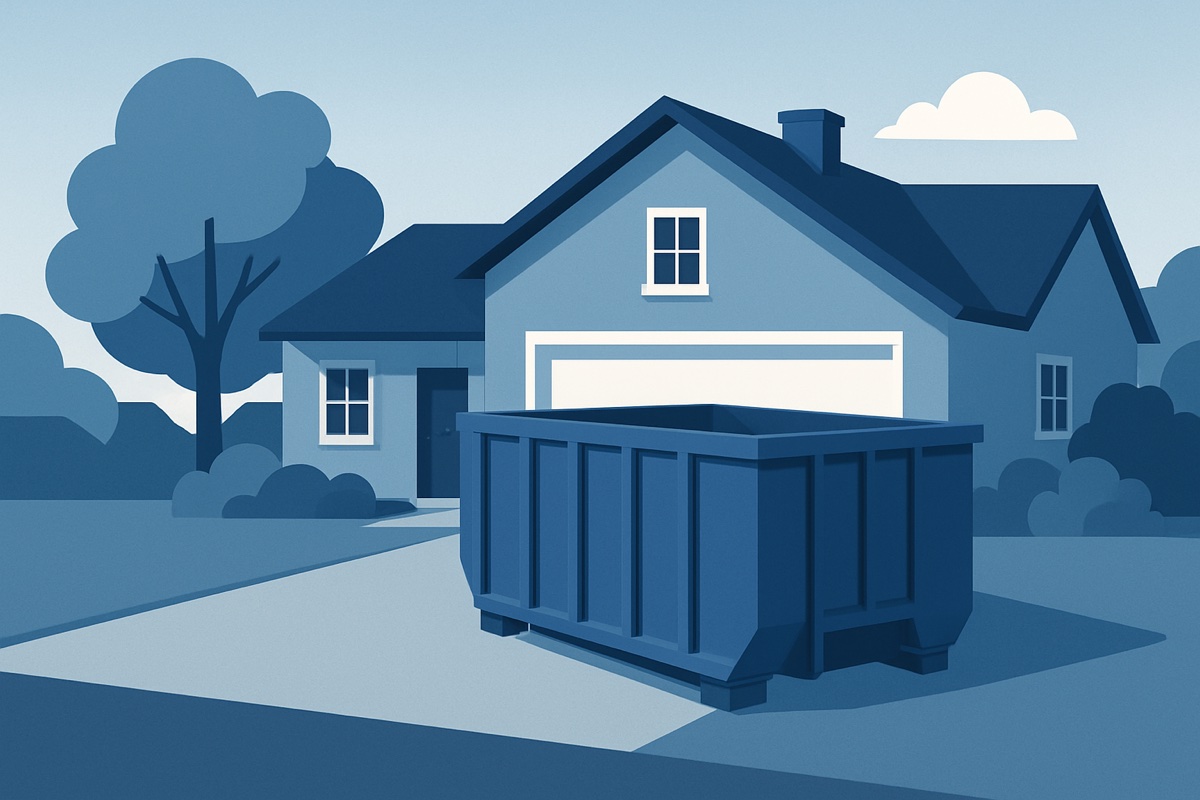
Successful dumpster delivery requires three preparations: clearing a straight access path at least 10 feet wide for the truck, deciding exactly where the container will sit for your project’s duration, and protecting the ground surface if needed. The driver needs room to maneuver a truck roughly 50 feet long, and the dumpster itself occupies a footprint of about 22 feet (including the truck’s positioning space during drop-off).
Preparing Your Site for Delivery
Walk the delivery route before the truck arrives. Measure the width of your driveway, alley, or access point — delivery trucks cannot squeeze through spaces narrower than their frame. Check overhead clearance too. Power lines, tree branches, and awnings create problems at heights below 23 feet.
Mark the exact spot where you want the dumpster with spray paint or stakes. Most drivers appreciate this clarity. They’re working on tight schedules and a clear target eliminates guesswork. If you’re placing a roll-off dumpster near a fence, building, or parked vehicle, leave at least three feet of clearance on the side where the door opens. You’ll need that space to actually use the container.
Protecting Your Driveway Surface
Asphalt driveways risk damage from the weight of a loaded container, particularly during hot weather when the surface softens. A 10 yard dumpster weighs roughly 3,000 pounds empty — fill it with concrete debris and you’re looking at 13,000 pounds pressing down on eight small footprint points.
Plywood sheets work as a simple protective barrier. Place them under where each wheel of the dumpster will rest. Two 4×8 sheets of three-quarter-inch plywood handle most residential situations. Some rental companies provide this protection as part of delivery, but many don’t. Ask before the truck shows up. Concrete and gravel surfaces rarely need protection. Pavers sometimes crack under concentrated weight, especially if the base beneath them wasn’t properly compacted during installation.
Placement Strategy for Maximum Efficiency
Position the container as close to the work area as safety and access allow. Carrying roofing shingles an extra 40 feet gets old fast. For construction and commercial jobs, dumpster placement often determines workflow efficiency. Roofers want the container directly below the edge they’re tearing off. Interior renovators prefer placement near the main egress point.
Think about the project’s progression. If you’re cleaning out a house room by room, placing the dumpster near the front door makes sense. If you’re demolishing a deck in the backyard, find the shortest path from deck to container even if that means the dumpster sits on the lawn. Just remember that a loaded container cannot be moved once filled — the delivery truck picks it up from whatever spot you chose at drop-off. Getting this decision wrong means extra labor for your crew.
Permits and Rules for Columbus Dumpster Rentals
Columbus requires a permit when your dumpster sits on public property like streets or sidewalks, but not when it stays on your own driveway or yard. The city also prohibits certain materials from landfill disposal and enforces placement rules to keep streets passable and neighborhoods safe. Most residential projects proceed without permits, while commercial jobs often need approval depending on container location.
When You Need a Permit in Columbus
You need a permit from the Columbus Engineering Department if your roll-off dumpster occupies any part of a public right-of-way. This includes city streets, the strip of land between the sidewalk and curb, and public alleys. The permit costs around $50 and typically takes two business days to process. Your rental company can handle the application, but you’re ultimately responsible for securing it before delivery.
Private property placement skips the permit requirement entirely. A dumpster on your driveway, front yard, or construction site lot needs no city approval. This applies to both residential and commercial jobs as long as the container never extends past your property line into the street or public sidewalk.
Placement Restrictions and Setback Requirements
Columbus code requires at least three feet of clearance between your dumpster and the travel lane on any public street. This keeps fire trucks and emergency vehicles moving through neighborhoods. If your street lacks adequate width, the city may deny your permit or require you to find an alternative placement spot on private property.
Dumpsters cannot block sidewalks, fire hydrants, or utility access points. The container must sit with its opening facing your property when possible, not toward the street. For residential areas, some homeowner associations add their own rules about where dumpsters can go and how long they can stay, so check before scheduling delivery and placement.
Prohibited Materials and Disposal Rules
Columbus landfills refuse hazardous waste, including paint, motor oil, pesticides, batteries, asbestos, and propane tanks. Medical waste, electronics, and tires also face disposal restrictions. Rental companies assess overage charges if they discover prohibited materials during pickup, and they’ll require you to remove the items before they can haul the container.
Liquids of any kind cannot go in dumpsters because they leak during transport and contaminate other waste. This includes partially full paint cans — let them dry completely first or take them to a household hazardous waste facility. Different dumpster sizes have specific weight limits, typically ranging from 2-3 tons for a 10 yard dumpster up to 5-6 tons for larger containers. Exceeding these limits triggers additional fees and may require a second container to complete your cleanout safely.