

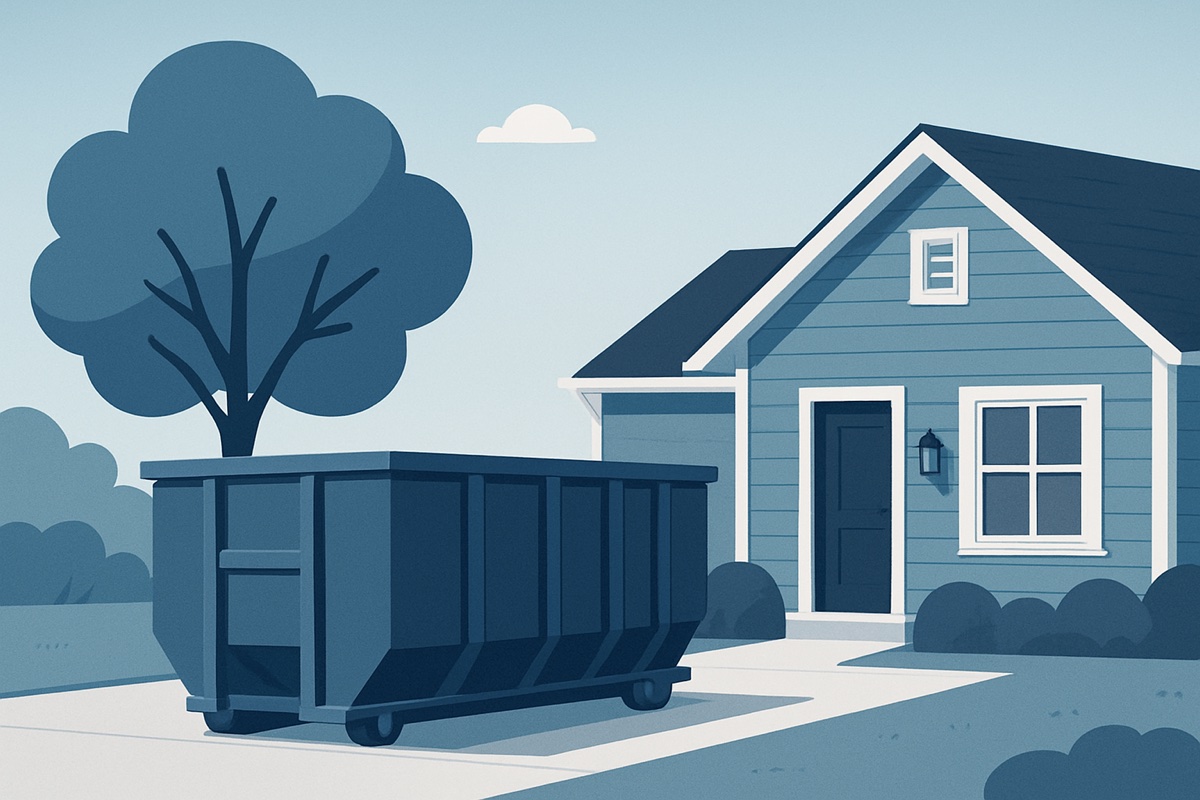
Get Free Dumpster Rental Quotes in Overland Park Ks
Tell us about your project and local Overland Park Ks providers will follow up with pricing and availability.
Table of Contents
Roll-Off Dumpster Sizes and Capacity
Roll-off dumpsters in Overland Park range from 10 to 40 cubic yards, with each size suited to different project scales. A 10-yard container handles about three pickup truck loads, while a 40-yard unit accommodates major demolition jobs. Choosing the right size depends on your project type and the material’s density — bulky items like furniture need volume, while heavy debris like concrete maxes out weight limits quickly.
Residential vs Commercial Container Options
Residential projects typically use 10 to 20-yard dumpsters. A 10-yard container works for single-room cleanouts or small bathroom renovations — picture clearing out a garage packed with years of accumulated items. The 20-yard size handles whole-house cleanouts, roof replacements on ranch-style homes, or kitchen gut jobs. These containers fit in most driveways without blocking street access, which matters in Overland Park neighborhoods where HOA restrictions or narrow streets limit placement options.
Commercial and construction sites lean toward 30 and 40-yard containers. A 30-yard dumpster handles light commercial renovations, like updating an office suite or removing old retail fixtures. The 40-yard size appears on major construction sites — new home builds, large-scale demolitions, or commercial buildouts. These containers require significant clearance: a 40-yard unit measures roughly 22 feet long and needs overhead space for the delivery truck’s hydraulic arm.
Weight Limits by Dumpster Size
Weight limits run independent of container volume, which catches people off guard. A 10-yard dumpster typically allows 2-3 tons, a 20-yard permits 3-4 tons, and larger units handle 5-8 tons depending on the rental company’s truck capacity. The material determines whether you hit volume or weight limits first.
Concrete, asphalt, and dirt are the usual culprits for weight overages. A 10-yard container filled halfway with concrete rubble already approaches its weight threshold — the rest of the space goes unused. Heavy construction debris creates the same issue: one ton equals roughly one cubic yard of concrete, meaning you’d max out weight with just three cubic yards in a 20-yard container. Lighter materials like drywall, wood framing, or household junk let you fill the container completely. Most Overland Park rental companies charge $50-100 per ton over the included weight allowance, so estimating your debris density before ordering prevents surprise fees.
What You Can Put in a Rental Dumpster
Rental dumpsters in Overland Park accept most household junk, construction debris, and renovation waste including wood, drywall, flooring, and old furniture. You cannot dispose of hazardous materials like paint, chemicals, electronics, tires, or appliances containing refrigerants. Understanding these restrictions before your delivery prevents rejection fees and helps you plan alternative disposal for prohibited items.
Accepted Construction Debris and Materials
Most construction and demolition waste goes straight into a roll-off dumpster without issue. Wood framing, dimensional lumber, plywood, and engineered wood products make up the bulk of acceptable materials on job sites. Drywall, metal studs, shingles, siding, concrete, brick, and asphalt typically qualify as standard construction debris. Carpet, padding, vinyl flooring, tile, and laminate all count as acceptable waste.
Household cleanouts generate different but equally acceptable materials. Furniture, mattresses, box springs, and children’s playsets fit within most rental agreements. Yard waste like branches, leaves, and brush are usually fine, though some providers charge extra for organic materials or require separate containers. Cardboard boxes, plastic storage bins, and general household clutter fill dumpsters during moves or estate cleanouts. Just avoid mixing prohibited items that contaminate the entire load.
Prohibited Items and Disposal Restrictions
Hazardous materials create liability issues and require specialized disposal facilities. Paint cans (even dried), stains, solvents, pesticides, herbicides, motor oil, antifreeze, and household chemicals belong at Johnson County’s household hazardous waste facility on West 111th Street. Batteries, fluorescent bulbs, and electronics containing circuit boards need electronics recycling programs rather than landfills.
Appliances create specific complications. Refrigerators, freezers, air conditioners, and dehumidifiers contain refrigerants that technicians must remove before disposal. Most rental companies reject these items outright or require proof of refrigerant recovery. Tires face similar restrictions—Kansas landfills don’t accept them, so you’ll need a tire recycling center. Propane tanks, whether empty or full, pose explosion risks during compaction and are universally prohibited. Some providers also restrict dirt, concrete, and other heavy materials to specific dumpster sizes because of weight limits that prevent safe transport when a container fills completely with dense material.
Rental Costs and Delivery in Overland Park
Dumpster rental prices in Overland Park generally range from $300 to $600 for a week-long rental, depending on container size and debris type. Delivery typically happens within 24-48 hours of booking, with most providers serving the entire city from staging yards near I-435 and Metcalf Avenue. Expect additional fees if you exceed weight limits or need the container longer than the standard rental period.
Understanding the Base Rate Structure
Most providers price their containers using a flat-rate model that bundles delivery, pickup, disposal of a set weight limit, and a rental period (usually 5-7 days). A 10-yard dumpster for light household cleanouts typically starts around $300-$350, while a 20-yard unit for renovation projects runs $400-$475. The 30-yard and 40-yard roll-off dumpster options, common for construction debris removal or whole-home cleanouts, range from $475 to $600.
The base rate covers a weight allowance that varies by container size—often 1-2 tons for smaller units and 3-4 tons for larger ones. Go over that threshold and you’ll pay overage charges, typically $50-$75 per additional ton. Concrete, dirt, and other heavy materials hit weight limits quickly, so some providers offer specialized pricing for these loads rather than standard mixed-waste rates.
Delivery Logistics and Timing
Scheduling delivery requires confirming the drop-off location can accommodate the container footprint and the delivery truck’s turning radius. A 20-yard dumpster measures roughly 22 feet long and 8 feet wide, so you need a driveway or street space that allows the truck to position it without blocking traffic or damaging landscaping. Overland Park doesn’t require permits for dumpsters placed on private property, but street placement may need approval from the Public Works department depending on your neighborhood.
Same-day delivery is sometimes available for morning orders, though next-day service is more reliable. Providers typically deliver between 7 AM and 5 PM and call an hour before arrival. If you’re ordering during peak construction season (April through October), booking 2-3 days ahead ensures you get your preferred delivery window.
Hidden Costs That Affect Your Total
Extended rental periods beyond the included week add $10-$20 per day. If your kitchen remodel takes longer than expected, a two-week rental might cost you an extra $100-$140. Prohibited items create another expense—tires, batteries, appliances with refrigerants, and hazardous materials require separate disposal, and some companies charge trip fees if they arrive to pick up a dumpster containing banned materials.
Dumpster sizes matter for cost control. Ordering a 10-yard container to save money often backfires when you need a second one mid-project. A 20-yard unit usually offers better value for whole-room renovations because you avoid the delivery fee and scheduling hassle of a second drop-off. Calculate your debris volume before booking—multiply the length, width, and height of your pile in feet, then divide by 27 to get cubic yards.
Permits and Placement Rules for Johnson County
Most residential dumpster rentals in Overland Park don’t require permits when placed on private property like driveways. You’ll need a permit from the City of Overland Park’s Public Works Department if the dumpster sits on public right-of-way—streets, sidewalks, or the grass strip between sidewalk and curb. Commercial projects and construction debris removal typically need permits regardless of placement location.
Johnson County operates under home rule, meaning Overland Park sets its own regulations separate from county-wide ordinances. The city enforces strict placement rules to prevent street obstruction and property damage. A roll-off dumpster blocking a fire hydrant, crosswalk, or handicap ramp violates municipal code and can result in fines starting at $100 per day.
Private property placement is simpler but not without rules. The dumpster must sit entirely on your property, not extending into the street or neighboring yards. Place plywood or boards under the dumpster if you’re concerned about asphalt or concrete damage—those metal feet concentrate weight and can crack driveways, especially in summer heat. Most rental companies provide protective boards on request.
Right-of-way permits cost $25 and require 48-hour advance notice, though processing can take up to five business days during busy construction seasons. Submit applications through the Public Works Department at City Hall or online through Overland Park’s permit portal. You’ll need to specify the dumpster size, placement location, and rental duration. Permits typically allow placement for up to 14 days, with renewal options if your project runs longer.
Construction projects face additional scrutiny. Any dumpster rental related to permitted building work—additions, remodels, demolitions—must appear on your building permit application. Inspectors check that dumpster sizes match the project scope and that you’re following weight limits for construction debris. Overloaded dumpsters can’t be picked up legally, and haulers won’t move containers exceeding DOT road weight restrictions, which creates expensive delays.
Placement near wetlands or drainage easements requires environmental review, common in developments near Tomahawk Creek or Blue River tributaries. Contact the Stormwater Management Division before placing dumpsters within 50 feet of marked drainage areas. Sediment or construction runoff entering storm systems triggers violations and mandatory cleanup at your expense.