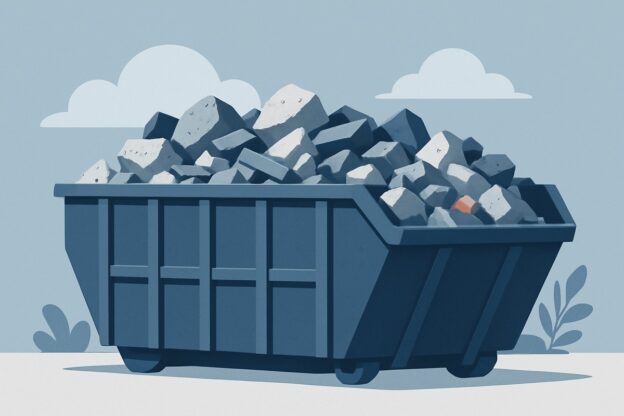
Disposing of asphalt requires either recycling it at an asphalt processing facility, hauling it to a landfill that accepts construction debris, or crushing it on-site for reuse as base material — and which option makes sense depends on the quantity you’re handling, local regulations, and whether the asphalt contains contaminants. Get this decision wrong and you’ll either pay steep disposal fees for material that could have been recycled for free, or worse, face fines for illegal dumping of what municipalities classify as construction waste. Most homeowners removing a driveway don’t realize that asphalt is one of the most recycled materials in construction, yet it often ends up in landfills simply because people don’t know where to take it. Understanding how to dispose of asphalt correctly saves money on both removal and potential replacement projects, since recycled asphalt works as excellent fill material. This guide walks through your disposal options based on project size, explains what asphalt recycling facilities actually accept, and covers the practical steps for handling everything from a small patio tear-out to a full driveway replacement.
Renting a Dumpster for This Project?
For most of these jobs, a roll-off dumpster delivered to your driveway is the simplest, cheapest way to handle the haul. Compare local providers and get a free quote in minutes.
Find Dumpster Rental in Your City →
Where You Can Take Old Asphalt
Old asphalt belongs at asphalt recycling centers, construction and demolition recycling facilities, or municipal solid waste sites that accept inert materials. Call ahead to confirm acceptance, ask about size limits and contamination rules, and verify hours—most facilities require broken-up pieces small enough to handle and free of soil, metal, or tar paper.
Recycling Centers That Accept Asphalt
Dedicated asphalt recycling facilities exist in most metropolitan areas and process nothing but pavement materials. These operations crush old asphalt into aggregate for road base, hot mix asphalt plants, and drainage applications. You’ll typically find them near quarries or concrete plants. They accept chunks of any size but prefer pieces under 24 inches for easier processing. Bring clean asphalt only—no attached concrete, rebar, or chunks of subbase. Most facilities charge by weight or volume, and fees generally range from $10 to $40 per ton in 2026, though some waive tipping fees if you’re delivering pure, uncontaminated material they can immediately reuse.
Construction and demolition (C&D) recycling centers also take asphalt alongside concrete, brick, and clean fill. These facilities sort mixed loads and route materials to appropriate processors. Expect slightly higher fees than dedicated asphalt recyclers—typically $30 to $60 per ton—since they handle the sorting. If you’re removing an entire driveway and have other materials like concrete curbs or brick edging, a C&D facility saves you multiple trips. A roll-off dumpster from a company specializing in construction waste often goes directly to these recyclers, streamlining disposal for larger projects.
Municipal Waste Facilities and Requirements
Many city and county transfer stations accept asphalt as part of their inert waste programs. Call your local public works department or check the municipal website for designated drop-off days—some facilities only take asphalt during specific hours or restrict residential customers to certain volumes. Municipalities commonly cap single loads at one pickup truck bed or equivalent, usually around one to two cubic yards. Proof of residency matters at many public facilities; bring a utility bill or driver’s license showing a local address.
Requirements vary significantly by jurisdiction. Some municipalities accept asphalt free of charge for residents, while others impose fees matching commercial rates. Contamination rules stay consistent: no tar paper, roofing materials, sealcoating, or oil-stained pieces. A few progressive counties run their own crushing operations and offer recycled asphalt millings back to residents for driveway resurfacing—a genuine closed-loop system. Check weight limits for your vehicle class too. Public scales often restrict vehicles over a certain gross weight, and exceeding posted limits can mean turned-away loads or citations.
Renting a Dumpster for Asphalt Removal
For most asphalt removal projects, a roll-off dumpster offers the most practical disposal solution. Broken asphalt is heavy and bulky, making multiple trips to a recycling facility inefficient. A dumpster rental brings a container directly to your work site, handles the weight of asphalt debris, and simplifies removal once you’ve finished demolition. The key is matching container size to your project volume and understanding weight limits.
Choosing the Right Roll-Off Size
Asphalt sizing follows a simple calculation: square footage times depth. A 10-yard dumpster handles roughly 1,000 square feet of asphalt at two inches thick — enough for a residential driveway or small parking area. Once you exceed that, the math gets heavier fast.
For a standard two-car driveway replacement (about 600 square feet at three inches), a 10-yard container typically suffices. Most contractors working on larger parking lots — say, 3,000 square feet at four inches — rent a 20-yard roll-off dumpster. The 30-yard and 40-yard sizes exist mainly for commercial demolition where you’re tearing up expansive surfaces. Weight becomes the limiting factor before volume does. Asphalt runs approximately 150 pounds per cubic foot, so a seemingly half-full 20-yard container often hits its three-to-four-ton weight limit. Rental companies charge overage fees if you exceed that threshold, which makes accurate estimation critical. Measure your removal area, multiply by depth in feet, and account for the weight. If your calculations put you near a size threshold, go bigger — compressing broken asphalt into a smaller container risks overage charges that exceed the cost difference between sizes.
Asphalt Recycling and Reuse Options
Asphalt is one of the most recyclable construction materials available — nearly 100% of removed asphalt can be processed and reused. Recycling facilities grind old asphalt into aggregate that becomes new pavement, road base, or construction fill. Most asphalt recycling happens through specialized processors who turn your old driveway or parking lot into raw material for future projects, creating a closed-loop system that reduces waste and cuts material costs.
Processing Methods for Old Asphalt
Recycling plants use two main techniques to transform old asphalt into usable material. Cold recycling grinds asphalt at ambient temperature using crushers and mills, producing reclaimed asphalt pavement (RAP) that serves as aggregate in new asphalt mixes or as base material for roads. This method works for most residential and commercial projects.
Hot recycling heats old asphalt to separate the aggregate from the binding agents, then adds new binder to create hot mix asphalt that performs identically to virgin material. This process requires specialized equipment and higher energy inputs, so it’s typically reserved for large-scale municipal or highway projects. Both methods keep asphalt out of landfills while producing materials that meet engineering specifications.
Where Recycled Asphalt Gets Used
Road construction consumes the majority of recycled asphalt. State and municipal highway departments blend RAP with new asphalt at ratios up to 50% for road surfaces and up to 100% for base layers. This practice has become standard — most highways you drive on contain some percentage of recycled material.
Private projects also rely on recycled asphalt. Contractors use RAP as a gravel substitute for driveways, walking paths, and parking areas. The material compacts well and costs less than fresh gravel. Some landscaping projects use crushed asphalt as a permeable base under patios or as erosion control on slopes. A roll-off dumpster full of asphalt from a tear-out project often becomes the foundation for someone else’s driveway within weeks.
Finding Recycling Facilities That Accept Asphalt
Start with asphalt recycling plants in your region — these facilities specifically process pavement and often pay for clean loads. Search for “asphalt recycling” or “RAP facility” plus your location. Municipal solid waste departments maintain lists of approved processors and can direct you to the nearest option.
Some construction and demolition recycling centers accept asphalt alongside concrete and brick. Call ahead to confirm they take asphalt and ask about any restrictions on load size or contamination. Certain facilities reject asphalt mixed with dirt, roofing shingles, or other debris. If you’re demolishing a large area, coordinate directly with a recycling processor — they may send trucks to your site and handle transport themselves, especially for loads exceeding several tons.
Preparing Asphalt for Disposal
Proper preparation reduces disposal costs and prevents problems at the facility. Break large chunks into pieces no bigger than 2-3 feet across, remove any attached concrete or debris, and separate wire mesh or rebar. Sort clean asphalt from contaminated material — facilities charge different rates or reject loads with oil stains, sealant, or excessive dirt mixed in.
Breaking Down Large Pieces
Asphalt slabs from driveways or parking lots need reduction before hauling. A sledgehammer works for small areas, but jackhammers or skid steers with breaker attachments handle bigger jobs faster. Aim for chunks that two people can lift without strain — roughly 50-75 pounds each. Oversized pieces can damage a roll-off dumpster or get rejected at recycling facilities that use automated crushers sized for smaller material.
Cold asphalt breaks cleaner than hot. Plan demolition for early morning or after sunset during summer months. Heat makes asphalt sticky and harder to separate from underlying base material.
Removing Contaminants and Debris
Recycling centers pay top rates for clean asphalt — no tar paper, no roofing shingles, no dirt clumps. Pull out any visible rebar or wire mesh before loading. Metal fragments damage crushing equipment and contaminate the recycled product. A magnet on a stick speeds up small metal detection.
Watch for oil stains from parked cars or sealcoat residue. Many facilities refuse asphalt with petroleum contamination because it leaches into recycled aggregate. If you’re disposing of a gas station lot or auto shop driveway, call ahead — you’ll likely need a different disposal method than standard asphalt recycling.
Sweep off loose gravel and dirt. A little dust won’t matter, but thick dirt layers add weight you’ll pay to haul and reduce what recyclers can use. For dumpster rental purposes, clean asphalt often qualifies for lower tonnage rates than mixed construction debris.
Sorting by Material Type
Keep asphalt separate from concrete — they look similar in piles but can’t be recycled together. Concrete contains cement and aggregates that interfere with asphalt binding when mixed. Most recyclers run dedicated lines for each material and charge extra to sort mixed loads.
Asphalt millings (the shredded surface from road resurfacing) go in their own category. They’re already sized for reuse and command better recycling rates than solid chunks. Roofing shingles contain asphalt but include fiberglass, sand, and additives that make them unsuitable for pavement recycling — always separate these into regular trash or specialty shingle recycling programs.
Ready to get started?
Find a Dumpster Near You