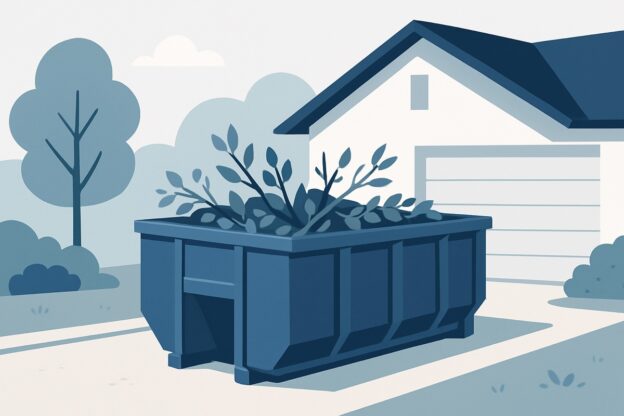
The most practical ways to dispose of leaves include curbside collection programs, composting them into nutrient-rich soil amendment, mulching them directly into your lawn with a mower, or renting a roll-off dumpster for large volumes during major cleanouts. How you handle fall leaf removal affects more than just curb appeal—the wrong approach can mean multiple trips to a distant drop-off site, bagged leaves sitting in your garage for weeks, or missing your municipality’s narrow collection window and facing disposal fees. Homeowners with mature trees often underestimate the sheer volume; a typical oak can drop 50-60 lawn bags worth of leaves in a single season, which changes the math on which disposal method actually makes sense. Knowing how to dispose of leaves efficiently means matching your property’s specific situation—tree coverage, local regulations, and whether you’re tackling regular maintenance or a one-time project—to the method that saves you the most time and hassle.
Renting a Dumpster for This Project?
For most of these jobs, a roll-off dumpster delivered to your driveway is the simplest, cheapest way to handle the haul. Compare local providers and get a free quote in minutes.
Find Dumpster Rental in Your City →
Composting Leaves for Garden Use
Composting Leaves for Garden Use
Composting leaves transforms yard waste into nutrient-rich soil amendment while eliminating disposal costs. Build a pile at least three feet wide and three feet tall, layer dry leaves with nitrogen-rich materials like grass clippings or food scraps, and maintain moisture levels similar to a wrung-out sponge. The result is finished compost in three to twelve months, depending on your maintenance approach.
Building a Leaf Compost Pile
Location matters more than most homeowners realize. Pick a spot with partial shade and good drainage—full sun dries out the pile too quickly, while low areas collect water and turn leaves into a soggy mess. Direct contact with soil allows beneficial microbes and earthworms to colonize your pile naturally.
Start by creating a base layer of small twigs or coarse material to promote airflow from the bottom. Add leaves in six-inch layers, mixing different types if you have them. Oak and beech leaves break down slowly due to high tannin content, while maple and ash decompose quickly. Alternate each leaf layer with a two-inch layer of nitrogen sources—kitchen scraps, grass clippings, or aged manure. This carbon-to-nitrogen balance (aim for roughly 30:1) prevents the pile from simply sitting there unchanged. A three-foot cube is the minimum size that generates enough heat for active decomposition. If you’re clearing several yards’ worth of leaves, you might need a roll-off dumpster for excess material that won’t fit in your compost system.
Speeding Up the Decomposition Process
Shredding leaves before composting cuts decomposition time in half. Run a mulching mower over leaves spread on your lawn, or use a leaf shredder for larger volumes. Smaller pieces mean more surface area for microbes to work on. Whole leaves can mat together and shed water rather than absorbing it.
Turn your pile every two to three weeks during active decomposition. Use a pitchfork to move material from the edges into the center, where microbial activity generates the most heat. A properly maintained pile reaches internal temperatures of 130-150°F, hot enough to kill weed seeds and break down leaves faster. Check moisture when you turn—squeeze a handful and you should see a few drops of water but not a stream. Too dry and microbial activity stops; too wet and the pile goes anaerobic, creating ammonia smells instead of earthy-smelling humus. Adding a shovelful of finished compost or garden soil introduces beneficial bacteria and fungi that accelerate the process.
Curbside Collection and Municipal Programs
Curbside Collection and Municipal Programs
Most cities and towns offer scheduled leaf collection in fall, either as loose piles at the curb or in approved containers. Check your local waste management website or call public works to confirm collection dates, accepted bag types, and whether you need to separate leaves from other yard waste. Some municipalities require clear or kraft paper bags, while others accept biodegradable plastic. Missing these requirements means your leaves sit uncollected until the next scheduled pickup.
When Bagging Is Required
Your municipality typically mandates bags when vacuum trucks can’t efficiently collect loose piles—this happens in neighborhoods with narrow streets, limited truck access, or areas where wind scatters loose leaves into storm drains. Paper lawn bags hold 30-40 gallons and cost $3-5 for a pack of five. They work well in dry conditions but fall apart if left in rain for more than a day or two. Biodegradable plastic bags last longer in wet weather and cost slightly more, around $8-12 for ten bags.
Bag weight matters more than you’d expect. A packed paper bag of wet oak leaves can hit 50-60 pounds, which exceeds what many collection crews will lift. Fill bags three-quarters full and compress gently—this keeps weight manageable while maximizing what fits in each bag. If you’re clearing a property with mature trees that drop hundreds of bags worth of leaves each fall, a roll-off dumpster often makes more sense than endless trips to buy bags and haul them to the curb. A 10-yard dumpster holds roughly what 80-100 lawn bags would contain, and you load it on your schedule rather than racing to meet municipal collection windows.
Mulching Leaves into Your Lawn
Mulching leaves directly into your lawn converts them into free fertilizer while eliminating disposal hassles. A standard rotary mower with sharp blades can shred leaves into fine pieces that settle between grass blades and decompose within weeks. This works best when leaves cover no more than half the grass height and you mow frequently enough to prevent thick mats from forming.
The process feeds your lawn naturally. As shredded leaves break down, they release nitrogen, phosphorus, and other nutrients back into the soil. You’re essentially recycling what your trees pulled from the ground in the first place. Most turf grasses thrive with this approach through late fall, when growth slows but root systems still benefit from the nutrient boost.
Timing matters more than most homeowners realize. Wait too long and you’ll face wet, matted leaves that clog mower decks and smother grass. The ideal window runs from when leaves first accumulate until they start getting soggy from rain or morning dew. In practice, this means mowing at least twice during peak leaf drop rather than waiting for everything to fall at once.
Your mower needs enough power to chop rather than just push leaves around. A standard walk-behind mower handles oak and maple leaves effectively when they’re dry and you’re only cutting through one layer at a time. If you see whole leaves behind the mower after a pass, either slow down, raise the deck height, or make a second perpendicular pass. The goal is mulch fine enough that you can barely see it on the lawn surface after mowing.
For properties with dense tree coverage, you might generate more leaves than your lawn can absorb. Grass handles roughly one inch of shredded leaf cover across the season—beyond that, you risk blocking sunlight and creating disease-friendly conditions. When you’re consistently mowing through ankle-deep leaves every few days, consider bagging the excess for garden beds or composting separately rather than forcing it all onto the turf.
Renting a Dumpster for Large Volumes
When you’re dealing with multiple trailer loads of leaves — think post-storm cleanup, clearing an overgrown property, or handling fall cleanup for a large yard — a roll-off dumpster becomes the practical choice. A 10 or 15-yard container can hold what would take 20+ trips with your truck bed, and you load at your own pace without racing to the landfill before closing time.
Choosing the Right Dumpster Size
A 10-yard dumpster holds roughly 50-65 large lawn bags of compacted leaves. That’s adequate for most single-property fall cleanups or clearing leaves from a half-acre lot. The 15-yard size works better when you’re combining leaves with branches, or when the leaves are wet and heavy. Wet leaves take up more volume and add significant weight — a consideration since most dumpster rental agreements include a weight limit (typically 1-2 tons for yard waste).
Don’t go bigger than you need. A 20-yard container costs more and often exceeds what municipal yard waste facilities accept for organic material. The extra space tempts you to mix in other debris, which can complicate disposal if the facility only processes pure yard waste.
What to Know Before Ordering
Call ahead to confirm your rental company accepts organic waste and knows where it’s going. Some operators charge extra for yard waste because it routes to composting facilities rather than standard landfills. Delivery typically costs between $50-150 depending on distance, with rental periods running 3-7 days in most markets.
Place the dumpster on a hard surface if possible. A fully loaded container of wet leaves can exceed 4,000 pounds, and that weight will sink into soft ground or tear up your lawn. Driveway placement works best. If you must use grass, ask for plywood boards under the container’s feet — most companies provide them on request.
Don’t pack leaves while they’re soaking wet unless you have no choice. You’ll hit the weight limit long before you fill the volume. If rain is forecast, either wait or plan on the container being hauled away half-full. Time your rental for dry weather when possible, and you’ll get significantly more capacity from the same container.
Ready to get started?
Find a Dumpster Near You