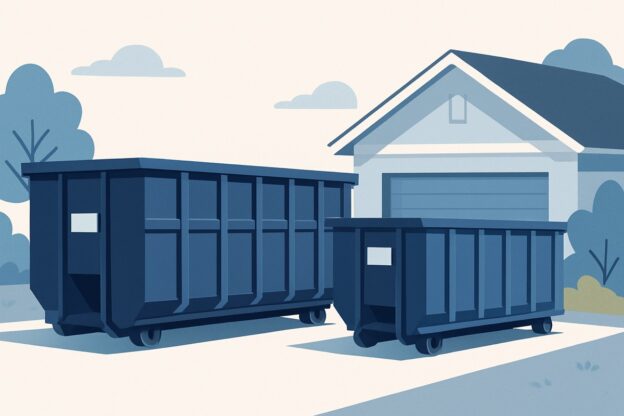
A 20 yard dumpster measures roughly 22 feet long, 7.5 feet wide, and 4.5 feet high — about the size of a large SUV parked in your driveway — and holds 20 cubic yards of debris, which equals approximately 110-130 standard trash bags or six pickup truck loads. For most homeowners tackling medium-to-large projects, understanding how big is a 20 yard dumpster determines whether you’ll waste money on excess capacity or face the headache of an overflowing container and extra haul-away fees. This size handles whole-room remodels, large cleanouts, and roofing projects for average-sized homes, but it’s too small for full-house demolitions and overkill for a simple bathroom update. Choosing the right dumpster size means knowing not just the external footprint that’ll sit in your driveway, but also how your specific debris type affects usable space — because how big is a 20 yard dumpster on paper differs from how much you can actually fit once you account for weight limits and material density.
Renting a Dumpster for This Project?
For most of these jobs, a roll-off dumpster delivered to your driveway is the simplest, cheapest way to handle the haul. Compare local providers and get a free quote in minutes.
Find Dumpster Rental in Your City →
Physical Dimensions of a 20 Yard Dumpster
A standard 20 yard dumpster measures approximately 22 feet long, 8 feet wide, and 4 feet high. These dimensions make it roughly the size of a large sedan in footprint but only waist-height, allowing most people to toss debris over the side without a ladder. The container holds 20 cubic yards of material—enough volume to fill about six pickup truck loads.
Length, Width, and Height
The 22-foot length means you need at least 60 feet of total clearance for delivery: about 50 feet for the dumpster and truck, plus room to maneuver. Most driveways can accommodate this footprint lengthwise, but narrow residential streets sometimes require the rental company to place the container partially on the road (which may need a permit).
The 8-foot width fits within a standard driveway lane, though it leaves minimal space on either side. If you park cars in your driveway, you’ll likely need to move them during the rental period. The 4-foot sidewall height makes loading easier than taller containers—you can lift bags of shingle debris or furniture pieces over the edge without standing on a ladder. Heavy items like concrete chunks can be walked up a set of boards if you can’t lift them to shoulder height.
Weight Limits and Ton Capacity
Most 20 yard roll-off dumpsters have weight limits between 2 and 4 tons (4,000 to 8,000 pounds), depending on your rental agreement and local regulations. Going over the weight limit typically incurs overage fees, which generally range from $50 to $100 per additional ton in 2026. The material you’re disposing of determines whether you’ll approach this limit—roofing shingles, dirt, and concrete are dense enough that you might max out the weight before filling the volume.
A dumpster filled completely with light materials like furniture, drywall, or household junk rarely hits the tonnage cap. But fill that same container halfway with asphalt shingles from a roof tearoff, and you’re likely at or over the limit. Concrete and soil are even denser—a 20 yarder can only handle about one-third full of pure concrete before reaching maximum weight. That’s why contractors working with heavy debris often rent multiple smaller containers or pay for weight-rated dumpsters specifically designed for dense materials.
What a 20 Yard Dumpster Holds
What a 20 Yard Dumpster Holds
A 20 yard dumpster holds approximately six pickup truck loads of debris. That assumes you’re using a standard full-size pickup with an 8-foot bed, filled level with the sides. In practical terms, you’re looking at 20 cubic yards of total capacity — enough to handle most single-room renovations, large cleanouts, or moderate roofing projects without multiple haul-aways.
Volume in Pickup Truck Loads
The six-truck-load estimate changes based on how you pack. If you’re tossing in bulky furniture or construction debris with lots of air gaps, you might only fit the equivalent of four or five truck loads. Pack denser materials like dirt, shingles, or broken concrete, and you could approach seven loads before hitting weight limits.
This comparison helps when you’re deciding between multiple dump runs and a roll-off dumpster rental. Six round trips to the landfill means fuel, dump fees for each load, and at least a full day of your time. Most people underestimate how long loading, driving, unloading, and repeating actually takes. A single dumpster sits on-site for days or weeks, and you fill it as you work. The math usually favors the dumpster once you’re past three or four truck loads of material.
Projects Best Suited for a 20 Yard Dumpster
A 20 yard dumpster handles mid-sized residential renovations and cleanouts that generate 3-6 pickup truck loads of debris. This size works for full bathroom or kitchen remodels, garage cleanouts, large deck removals, and roofing projects on homes up to about 3,000 square feet. It’s the sweet spot between a 10 yarder that fills too quickly and a 30 yarder that sits half-empty on your property.
Kitchen and Bathroom Remodels
Gutting a kitchen produces more waste than most homeowners anticipate. You’re removing cabinets, countertops, flooring, drywall, old appliances, and possibly a section of wall. A typical kitchen remodel generates 40-60 contractor bags worth of debris, plus bulky items like the old sink and dishwasher. A 20 yard roll-off dumpster gives you room to toss everything without playing Tetris every time you demolish another section.
Bathroom renovations fit comfortably in this size unless you’re tackling multiple bathrooms simultaneously. Removing a cast iron tub, tile surround, vanity, toilet, and subfloor from a standard bathroom uses roughly one-third of the container. You’ll have space left for the new installation waste—cut drywall pieces, tile boxes, packaging materials—that accumulates as the project progresses.
Roofing Tear-Offs and Replacements
Roofing contractors request 20 yarders for homes between 2,000 and 3,500 square feet. A typical tear-off produces one ton of debris per 1,000 square feet of roof, and asphalt shingles are dense. The dumpster needs capacity for multiple layers if you’re stripping down to bare decking. Most roofers load shingles from the edge toward the center to distribute weight, since roofing debris settles heavily.
Factor in damaged plywood replacement if your roof has been leaking. Water-damaged decking adds another few hundred pounds per section, and you can’t salvage rotted wood. The container will likely reach its weight limit before it’s visually full—roofing projects rarely fill a 20 yarder to the brim, but they frequently hit the 2-3 ton weight threshold that triggers overage fees.
Garage and Basement Cleanouts
Clearing out a two-car garage worth of accumulated junk—broken furniture, old paint cans, garden equipment, boxes of forgotten belongings—typically fills 60-75% of a 20 yard container. These projects involve oddly shaped items that don’t stack efficiently: bicycles, workbenches, rolled carpeting, yard tools. The extra cubic footage prevents you from needing a second dumpster rental mid-project when you discover another layer of debris behind the first.
Basement cleanouts run heavier if you’re removing old furnaces, water heaters, or exercise equipment. A treadmill alone takes up 15-20 cubic feet once you’ve broken it down. Finished basements generate construction debris when you tear out paneling, drop ceilings, or carpeted floors. Unfinished basements often hold decades of storage—and a 20 yarder lets you clear everything in one aggressive weekend rather than spreading the project across multiple weeks.
Deck Demolition and Exterior Projects
Removing a 12×20 foot deck produces roughly 4-5 cubic yards of lumber, fasteners, and railing materials. Treated lumber is heavier than standard framing wood, and older decks often have concrete footings you’ll need to dig out and dispose of. A 20 yard dumpster accommodates the full teardown plus any rotted fascia boards or damaged siding you discover once the deck is gone.
Fence replacement projects scale well to this container size. A standard privacy fence running 100-150 linear feet generates enough posts, rails, and pickets to justify the upgrade from a 10 yarder. You can toss sections whole rather than breaking them down into small pieces, which saves hours of labor with a reciprocating saw.
Choosing Between 10, 20, and 30 Yard Sizes
Choosing Between 10, 20, and 30 Yard Sizes
The 20-yard dumpster sits in the middle of the residential size range, holding roughly 10 pickup truck loads of debris. A 10-yard works for single-room cleanouts and small repairs, while a 30-yard handles whole-house renovations and major construction projects. Most homeowners rent a 20-yard when they have medium-scale projects that clearly exceed what fits in a 10-yard but don’t generate the volume of a full gut job.
The practical difference becomes obvious when you look at actual debris volume. A 10-yard dumpster handles about 4 pickup truck loads — enough for a bathroom remodel, garage cleanout, or small deck removal. You’ll fill it quickly if you’re tearing out kitchen cabinets and flooring together, or clearing out more than two rooms of furniture and belongings.
A 30-yard dumpster, by contrast, holds 15 pickup truck loads. That capacity makes sense when you’re removing old roofing from a 2,500+ square foot house, gutting multiple rooms down to studs, or tearing down a large shed or detached garage. The jump from 20 to 30 yards costs less than the hassle of scheduling a second dumpster rental mid-project, but only if you’ll actually generate that much waste.
The weight limit matters as much as physical size. Most roll-off dumpster rentals include a 2-3 ton weight allowance regardless of container size. A 10-yard filled with concrete or dirt hits that limit fast — you’re paying for cubic yards you can’t use. A 20-yard gives you room to mix heavy materials like drywall and shingles with lighter debris like lumber and packaging. A 30-yard works when you have mostly bulky, lightweight waste: furniture, mattresses, rolled carpet, or large amounts of dimensional lumber.
Where homeowners misjudge is underestimating demo debris. Tearing out finished spaces generates more volume than you’d think — a single room’s drywall, trim, flooring, and framing scraps easily fills half a 10-yard container. If your project involves removing and replacing materials in three or more rooms, or combines interior work with exterior projects like fence replacement or deck rebuilding, the 20-yard prevents you from running out of space three-quarters through the job.
Ready to get started?
Find a Dumpster Near You