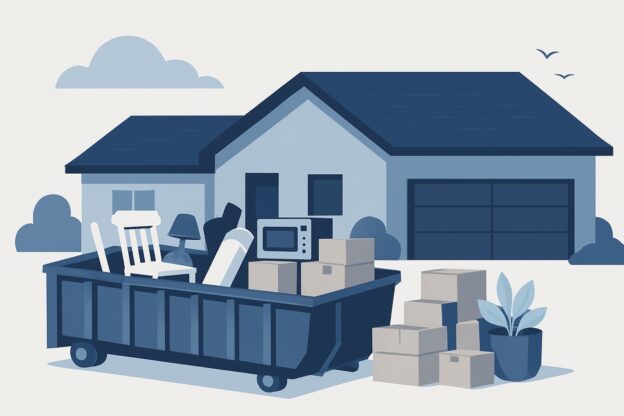
A whole home declutter dumpster is a large rental container (typically 10-40 cubic yards) that sits in your driveway for several days or weeks, letting you throw away years of accumulated belongings in one concentrated purge instead of making dozens of trips to the dump or waiting for weekly trash pickup. Most people underestimate the sheer volume of stuff hiding in their basements, garages, and closets until they actually start pulling it out — and then realize their regular garbage service can’t handle 15 bags of clothes, broken furniture, and boxes of mystery cables from 2003. Renting the right size dumpster changes a months-long decluttering nightmare into a manageable weekend project, but the cost varies wildly based on your location, what you’re tossing, and how long you need it. Getting the details right matters because ordering too small means paying for a second rental, while going too large wastes money on empty space you’re still charged for.
Renting a Dumpster for This Project?
Tell us about your project and local providers will follow up with pricing and availability.
Planning a Whole-Home Declutter
Planning prevents the chaos that turns a productive cleanout into a frustrating mess. Start by mapping out which rooms you’ll tackle and in what order, then set daily or weekly targets based on the size of each space and how much you can realistically accomplish. This approach keeps you from getting overwhelmed and ensures your dumpster rental period doesn’t expire before you finish.
A Room-by-Room Approach
Start with the rooms that give you the quickest wins—spaces you use daily that will immediately improve your quality of life once cleared. Kitchens and living rooms typically work better as starting points than attics or basements because you’ll see the results every day, which builds momentum. Save storage areas and garages for later in the process; these spaces usually hold items you need to sort through when you’re already in a decision-making rhythm.
Work through one room completely before moving to the next. Jumping between spaces creates piles that migrate around your house and makes it harder to track progress. Within each room, sort items into four categories: keep, donate, sell, and trash. The 20 yard dumpster handles most whole-home projects, giving you space for furniture, appliances, and household junk without running out of room mid-project.
Setting Realistic Goals
Break your timeline into specific room targets rather than vague daily goals. “Clear out the master bedroom closet and bedroom furniture we’re replacing” works better than “work on bedroom.” A typical bedroom takes 4-6 hours to declutter thoroughly—not just surface cleaning, but pulling items from closets, sorting dresser drawers, and making final decisions. Kitchens often take twice as long because of the sheer number of small items.
Account for decision fatigue in your planning. Most people make good choices for about three to four hours before they start keeping things they’d have tossed earlier in the day. Schedule high-volume areas like basements or attics for days when you’re fresh, and plan lighter rooms for later in the week. If you’re coordinating donations, check pickup schedules before you start—many organizations book a week or more out during spring cleaning season, which affects your overall timeline.
What Size Dumpster for a Whole-Home Declutter?
Most whole-home declutters require a 20 yard dumpster, which holds roughly 110-130 trash bags worth of material. This size handles furniture from 2-3 rooms, several years of accumulated garage items, and typical basement storage. If you’re clearing an estate, downsizing from a large home, or dealing with floor-to-ceiling hoarding situations, you’ll need a 30 or 40 yard container instead.
Typical Household Volumes
A standard three-bedroom house generates 3-6 tons of material during a full declutter. That number jumps when you’re clearing storage spaces people have filled over decades rather than just surface clutter from living areas.
One bedroom’s worth of furniture and belongings fills about one-quarter of a 20 yard dumpster. Add a living room set, and you’re at half capacity. The remaining space handles kitchen cabinets full of duplicate appliances, closets stuffed with old clothes, and that shelf in the garage where broken things go to die. Basements and attics push totals higher—a finished basement used for storage often adds another 1-2 tons by itself.
Count on 10-15 large trash bags per room for moderate decluttering. Heavy items matter more than bag count, though. An old sleeper sofa weighs 300 pounds. A treadmill that hasn’t moved in five years: 200 pounds. Particle board furniture from college disintegrates when you move it, but the pieces still take up space.
When to Size Up
Order a 30 yard dumpster if you’re clearing an entire household after someone passes away or moves to assisted living. These projects involve disposing of nearly everything—furniture, kitchenware, linens, books, decades of paperwork. You’re not just getting rid of excess; you’re emptying a home.
Homes over 2,500 square feet with full basements and attics consistently generate more waste than a 20 yard container holds. Same goes for properties where the previous owner was a collector or struggled to throw things away. Walk through before ordering. If you open a closet and can’t see the back wall, or if the garage requires turning sideways to reach the door, size up.
Spring cleaning differs from true decluttering. If you’re tossing worn-out patio furniture, last decade’s electronics, and things you meant to donate but never did, a 20 yard works. If you’re gutting spaces to reclaim them—turning a storage room back into a guest room, clearing a garage so cars fit again—the larger size prevents a second rental when you run out of space halfway through.
Sorting: Keep, Donate, Toss
The key to efficient sorting during a whole-home declutter is making decisions once. As you handle each item, immediately place it in one of three categories: keep (items you use or genuinely value), donate (functional items someone else can use), or toss (broken, expired, or unsalvageable items). This prevents the common trap of moving the same box from room to room for weeks.
What Belongs in the Dumpster
Broken furniture goes straight in. That wobbly chair you’ve been meaning to fix for two years, the desk with water damage, the mattress with a broken spring — these aren’t donation candidates. Most charities won’t accept damaged goods, and trying to sell them wastes time you could spend on the actual declutter.
Old building materials, worn carpeting, and outdated fixtures fill dumpsters quickly. If you’re renovating while you declutter, a 20 yard dumpster handles both household junk and construction debris. The same goes for anything genuinely trash-adjacent: expired pantry items, old paint cans, deteriorated holiday decorations, moldy books. If you wouldn’t give it to a friend, it doesn’t belong in the donation pile.
Donate and Recycle
Clothing in wearable condition, working electronics, and intact household items move to donation boxes immediately. Most people overfill their dumpster because they toss things that local charities would gladly take. A functional microwave, gently used cookware, books without water damage, children’s toys that aren’t broken — these have value to someone.
Set up a dedicated donation staging area in your garage or a spare room. As you work through each space, items go directly there instead of sitting in hallway piles. Electronics need special handling. Working computers, phones, and small appliances can go to e-waste recycling centers. Most cities offer free drop-off, which saves dumpster space and keeps harmful materials out of landfills. Call ahead to confirm what your local center accepts — some take printers and monitors, others don’t.
Dumpster Rental for Decluttering Projects
Renting a dumpster for a decluttering project requires planning where it goes and how long you need it. The container typically sits in your driveway for 7-14 days, though most companies offer flexible rental periods. You’ll need a flat surface with overhead clearance for delivery, plus enough space for the truck to maneuver during drop-off and pickup.
Placement and Access
Your driveway is the most common placement spot for a roll-off dumpster, but the delivery driver needs about 60 feet of straight approach space and 23 feet of width for the truck to safely position the container. Measure your driveway width before scheduling delivery—many suburban driveways are only 16-20 feet wide, which works fine as long as cars aren’t parked there.
If your driveway won’t work, consider the street in front of your house. Most cities allow temporary dumpster placement on public streets with a permit, which the rental company can often obtain for you. The permit typically costs $50-100 and takes 2-3 business days to process. Check for overhead obstacles too: power lines, tree branches, or low-hanging garage door tracks create problems during delivery. A 20 yard dumpster stands about 4.5 feet tall on the truck bed, so you need at least 20 feet of vertical clearance along the delivery path.
Rental Timeline
Standard rental periods run 7-10 days, which gives you two weekends to sort through household junk, fill the container, and handle last-minute items. Most people underestimate how long decluttering takes—you’re not just tossing trash, you’re making decisions about what to keep, donate, or throw away for every item you touch.
If you’re tackling one room per day, a 10-day rental covers a four-bedroom house with time to spare. For faster projects like spring cleaning a garage or basement, a 3-5 day rental costs less and keeps you focused. Nearly all rental companies let you extend your timeline for $10-20 per extra day if you call before the scheduled pickup. The container doesn’t need to be full for pickup—you pay the same whether it’s 30% or 100% loaded, so don’t rush to fill empty space with items you could donate instead.
Ready to get started?
Find a Dumpster Near You