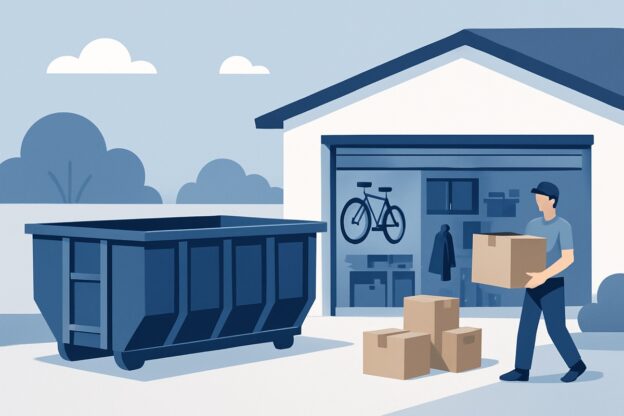
Spring cleaning cleanout involves systematically removing accumulated clutter, unwanted items, and debris from your home and property—typically requiring decisions about what to donate, sell, recycle, or dispose of in a roll-off dumpster for larger volumes of junk. Most homeowners underestimate the volume they’ve accumulated over winter months, which is why nearly half of spring cleanouts stall midway when people realize their curbside trash service can’t handle old furniture, garage debris, and years of stored items all at once. The difference between a successful cleanout and boxes that sit in your garage until fall comes down to having a clear plan for sorting and a realistic strategy for disposal. This guide walks through the room-by-room decisions that determine whether your spring cleaning cleanout actually clears space or just shuffles clutter around, plus the practical disposal options that match different project scales—from a carload of donations to a full dumpster of renovation debris.
Renting a Dumpster for This Project?
For most of these jobs, a roll-off dumpster delivered to your driveway is the simplest, cheapest way to handle the haul. Compare local providers and get a free quote in minutes.
Find Dumpster Rental in Your City →
Planning Your Spring Cleaning Cleanout
Successful spring cleaning requires a structured approach that breaks the overwhelming task into manageable pieces. Start by assessing each room individually and setting specific goals based on what you actually use, then assemble all necessary supplies before you touch a single item. This prevents the common trap of starting strong in one area only to lose momentum when you realize you’re missing boxes, bags, or a way to haul away the mountain of discards you’ve created.
Set Realistic Goals by Room
Walk through your home with a notebook and assign each room a priority level based on clutter severity and how much the space affects your daily life. Your kitchen and primary bedroom might be level one priorities, while the guest room or basement can wait. For each space, write down one specific outcome—”clear counters completely” works better than “organize kitchen” because you’ll know exactly when you’re done.
Give yourself actual time limits per room. A bathroom cleanout might take two hours; a garage could need three full days spread across weekends. Most people underestimate by half, so if you think a space needs four hours, block eight. The goal isn’t speed—it’s creating a system you’ll stick with instead of abandoning halfway through when life interrupts.
Gather Supplies Before You Start
Set up a staging area with heavy-duty trash bags, medium cardboard boxes, permanent markers, and basic cleaning products. You’ll need at least three categories for every room: keep, donate, and trash. Add a fourth “relocate” box for items that belong in other rooms. Label everything immediately—a box marked “basement—holiday decorations” prevents the archeological dig six months from now when you can’t remember what’s inside.
For larger cleanouts involving furniture, old appliances, or years of accumulated basement debris, arrange a roll-off dumpster before you start pulling things out. Scheduling it for the morning of day one means you can immediately toss broken items instead of piling them in your driveway for weeks. Match the dumpster size to your project scope—a whole-house cleanout typically needs more capacity than you’d guess, while a single-room refresh might work with curbside pickup if your local service allows bulk items.
What to Keep, Donate, or Throw Away
Making keep-donate-toss decisions becomes manageable when you apply consistent criteria to each item: whether you’ve used it in the past year, if it works properly, and whether it adds genuine value to your space. The goal isn’t to achieve minimalist perfection but to remove things that occupy space without earning their keep—broken items you won’t repair, duplicates that serve no purpose, and belongings from past versions of yourself that no longer fit your life.
Decision-Making Framework for Each Item
Ask three questions in order. First: “Have I used this in the past 12 months?” If yes, keep it unless it’s broken beyond reasonable repair. If no, move to question two: “Do I have a specific plan to use this in the next three months?” Vague intentions don’t count—you need an actual project, event, or purpose. A bread maker for the sourdough you’ll start “someday” fails this test. A bread maker for the baking class you’ve registered for next month passes. If the answer is still no, ask the final question: “Does this item have significant monetary or sentimental value?” If it clears none of these hurdles, it goes.
This framework prevents the two biggest decision-making traps: keeping things “just in case” and discarding items you’ll need to rebuy within weeks. Items in good condition that failed your keep test but might serve someone else—kitchen gadgets, clothing that no longer fits, unopened toiletries—belong in the donation pile. Genuinely broken items, stained textiles, incomplete sets, and anything that poses a health hazard goes straight to disposal. For larger purges involving furniture, construction debris, or room-by-room overhauls, a roll-off dumpster handles the volume more efficiently than multiple garbage bags hauled to the curb over several weeks. The three-pile system only works if you’re honest about which pile each item belongs in—donation isn’t a holding area for things you’re not ready to part with.
Disposing of Unwanted Items Efficiently
Once you’ve sorted your spring cleaning haul, the next challenge is getting everything to its proper destination without multiple trips or wasted effort. The most efficient approach combines three disposal methods: a roll-off dumpster for bulk items and general trash, donation drop-offs for usable goods, and specialized recycling for materials that can’t go in standard waste streams. This strategy eliminates the common mistake of making endless car trips to various locations.
Rent a Dumpster for Large-Volume Disposal
A dumpster rental handles the heaviest lifting of your cleanout — literally. When you’re clearing out a basement, garage, or entire home, a 10 or 20-yard roll-off dumpster sits in your driveway and accepts everything from broken furniture to bags of trash to construction debris from small renovation projects. You load at your own pace over several days or a week, then the rental company hauls it all away at once.
The cost typically ranges from $300 to $600 for a week-long rental in most markets, depending on dumpster size and your location. That price usually includes delivery, pickup, disposal fees, and a weight limit (often 2-4 tons for residential cleanouts). Compare that to the fuel, time, and dump fees for five trips to the landfill in your pickup truck, and the math often favors the dumpster — especially when you factor in the physical strain of loading and unloading repeatedly.
Separate Donations Before Loading
Before anything goes into the trash, pull out items that still have usable life. Thrift stores accept clothing, household goods, small furniture, books, and working electronics. Many will even arrange pickup for large furniture donations, saving you a trip. The key is to be realistic about condition — stained clothing, broken appliances, and furniture with structural damage aren’t donations; they’re waste dressed up with good intentions.
Create a staging area in your garage or driveway for donation items. Load them into your car and drop them off within a day or two, before they migrate back into your house. If you wait a week, those boxes become permanent fixtures. Most donation centers provide receipts for tax deductions, so keep track of what you’re giving away if you itemize deductions.
Use Municipal Recycling for Specialty Items
Electronics, paint, chemicals, and appliances typically can’t go in a standard dumpster due to local regulations and environmental concerns. Most municipalities run collection events or permanent drop-off centers for these materials. Electronics recycling is often free — you drop off old computers, TVs, and phones at designated centers. Hazardous waste like paint, pesticides, and motor oil requires special handling, but most counties offer quarterly collection days where residents can dispose of these items at no charge.
Check your city or county website for the schedule and locations. These programs exist because improper disposal creates environmental hazards, so they’re designed to be convenient. Some areas also collect scrap metal, mattresses, and tires separately — materials that rental companies often charge extra to accept in a dumpster. Knowing what your municipality accepts directly can save you surcharges and ensure proper disposal.
Using a Roll-Off Dumpster for Large Cleanouts
A roll-off dumpster turns overwhelming spring cleanouts into manageable projects by giving you a central drop point for everything you’re hauling out. Instead of making dozens of trips to the dump or coordinating multiple pickup services, you toss debris directly into a container that sits in your driveway for days or weeks. Most homeowners rent 10-yard units for garage and attic work, while 20-yard dumpsters handle whole-house purges that include furniture and appliances.
Choosing the Right Dumpster Size
The difference between dumpster sizes isn’t just capacity—it’s what actually fits through the opening. A 10-yard unit works for closet cleanouts, garage organization, and single-room projects where you’re mostly dealing with boxes, clothes, and small furniture. You’ll fill it with about 50-60 trash bags worth of material, or roughly three pickup truck loads.
Step up to a 20-yard container when you’re clearing multiple rooms, disposing of bulky furniture, or tackling a basement that’s accumulated years of stored items. The extra width matters more than you’d think—couches and mattresses that require awkward maneuvering in a smaller bin slide right into a 20-yarder. If your spring cleaning includes replacing old carpeting, removing built-in shelving, or gutting a home office, this size prevents the frustration of playing Tetris with your debris pile.
What You Can and Can’t Toss
Most household cleanout debris goes straight into a rental dumpster without issue: furniture, carpeting, drywall, wood trim, cardboard boxes, clothes, toys, books, and general household junk. You can load broken appliances like washing machines and refrigerators, though rental companies typically charge an additional fee ranging from $25 to $75 per appliance because they require special handling at the landfill.
The exclusion list is shorter but absolute. Hazardous materials—paint cans with liquid paint, motor oil, pesticides, propane tanks, car batteries, and anything flammable or toxic—will get your dumpster flagged at the landfill and trigger extra fees. Electronics often fall into a gray area; some companies allow them while others prohibit TVs and computers due to local e-waste regulations. Tires always require separate disposal. When you call for a quote, ask specifically about anything you’re unsure of rather than discovering restrictions after the dumpster arrives.
Timing Your Rental Period
Standard rental periods run 7-10 days, which sounds generous until you’re actually emptying a packed garage while juggling work and family obligations. Request your dumpster for a Friday delivery if possible—you’ll have the weekend to make serious progress before weekday schedules slow you down. Most companies offer extensions for $5-15 per day, cheaper than rushing through the job or renting a second container.
Start your cleanout in the area farthest from the dumpster and work your way toward it. Clear the attic first, then second-floor rooms, then the main level, saving the garage or basement for last. This approach prevents carrying heavy loads up and down stairs repeatedly. Break down furniture and remove doors from cabinets before tossing them—you’ll fit far more in the container and avoid that sinking feeling of running out of space with three rooms left to clear.
Ready to get started?
Find a Dumpster Near You