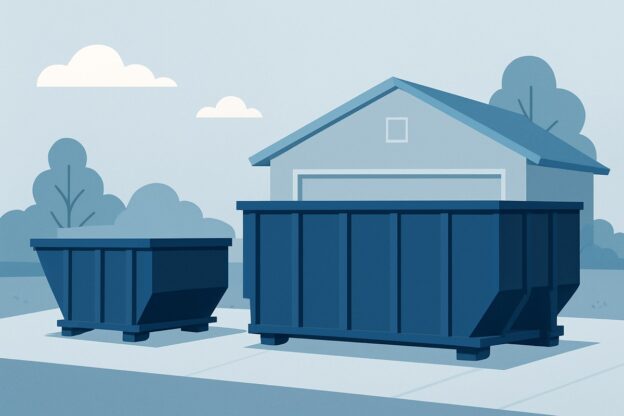
A 30 yard dumpster measures roughly 22 feet long, 8 feet wide, and 6 feet high — about the size of a standard parking space with walls that reach chest height on most adults, holding the equivalent of nine pickup truck loads of debris. Understanding these dimensions matters because ordering a container that’s too small means paying for a second haul or overfilling and risking additional fees, while going too large wastes money on unused capacity. Most contractors and homeowners underestimate how quickly bulky materials like furniture, drywall, or roofing shingles fill vertical space, which is why knowing how big a 30 yard dumpster actually is helps you match the container to your project scope. This guide breaks down the physical footprint, capacity in practical terms, what actually fits inside, and when a 30 yarder makes sense versus smaller or larger roll-off options.
Renting a Dumpster for This Project?
For most of these jobs, a roll-off dumpster delivered to your driveway is the simplest, cheapest way to handle the haul. Compare local providers and get a free quote in minutes.
Find Dumpster Rental in Your City →
30 Yard Dumpster Dimensions and Physical Size
A 30 yard dumpster typically measures 22 feet long, 8 feet wide, and 6 feet tall. These dimensions make it comparable to parking three compact cars end-to-end. The container holds 30 cubic yards of debris — roughly nine pickup truck loads — making it the second-largest roll-off dumpster size available for most residential and commercial projects.
Length, Width, and Height Measurements
The standard 22-foot length dominates the footprint of a 30 yard dumpster. You’ll notice the length first when the truck backs it into your driveway — it stretches about as far as a single-car garage is deep. The 8-foot width matches a standard parking space, which helps when planning placement along a curb or in a lot.
At 6 feet tall, the sides reach chest-height on most adults. You can toss lighter materials over the edge without much trouble, but bulky items like furniture or drywall sheets work better if you walk them up to the open rear door. Some contractors keep a small stepladder nearby for easier loading. The rectangular shape — much longer than it is wide or tall — makes these containers efficient for stacking dimensional lumber, roofing materials, or boxed debris.
Space Needed for Placement
Plan for at least 60 feet of straight clearance from the street to your placement spot. The delivery truck needs this runway to extend its hydraulic hoist and safely lower the container. Width clearance matters too — allow 10-11 feet to account for the dumpster itself plus a foot of breathing room on each side for the truck’s positioning equipment.
Vertical clearance catches people off guard. The truck lifting mechanism extends 23-25 feet high during delivery, so overhanging tree branches, power lines, or eaves can block placement. Walk the path from street to final spot and look up — if you see utility lines or branches lower than a two-story roofline, you’ll need to choose a different location or arrange for temporary line clearance. Driveway placement works for most homes, but steep inclines or soft surfaces like fresh asphalt may require street placement with a permit. The dumpster rental company can assess your specific site during scheduling if you’re uncertain about clearances.
How Much a 30 Yard Dumpster Holds
How Much a 30 Yard Dumpster Holds
A 30 yard dumpster holds approximately 9 pickup truck loads of material when filled to capacity. This assumes a standard full-size pickup with an 8-foot bed loaded level with the sides. The actual number varies based on what you’re throwing away—dense materials like dirt or concrete compact differently than bulky items like furniture or construction debris.
Volume Capacity in Pickup Truck Loads
The 9-truck-load estimate works for most residential cleanouts and renovation projects where you’re mixing materials. Picture hauling out everything from a three-bedroom house renovation: old cabinets, drywall scraps, flooring, trim, and fixtures. Making nine round trips to the landfill would burn through a weekend and cost more in dump fees and gas than renting a roll-off dumpster for a week.
The comparison breaks down when you’re dealing with heavy, dense waste. A 30 yard dumpster maxes out at weight limits—typically around 3.5 to 5 tons depending on your rental company—long before it fills with materials like soil, brick, or roofing shingles. You might only get 4-5 pickup loads of asphalt shingles before hitting the weight cap. Conversely, with lightweight yard waste like branches and leaves, you could pack in material equivalent to 10 or more loose pickup loads because the debris compresses as you fill the container. The bed dimensions matter too. A compact pickup with a 5-foot bed holds roughly half what an 8-foot bed carries, which would push your truck-load equivalent closer to 15-16 trips.
Best Projects for a 30 Yard Dumpster
A 30 yard dumpster handles major residential renovations, full-home cleanouts, and commercial construction projects that generate 15-20 pickup truck loads of debris. This size works when you’re tearing out multiple rooms, replacing an entire roof, or clearing years of accumulated materials from a property. The container holds roughly 170-190 standard contractor bags worth of waste.
Complete Home Renovations
Gutting a kitchen and two bathrooms simultaneously fills a 30 yard container to about 75% capacity. You’re removing cabinets, countertops, tile, drywall, flooring, and fixtures — materials that add up fast once demolition begins. A typical kitchen gut produces 8-12 cubic yards alone when you account for the bulky cabinet boxes and dense countertop materials.
Whole-house remodels that touch 4-5 rooms need this capacity. Tearing out old carpet from 2,000 square feet, removing popcorn ceilings, and replacing outdated trim generates a surprising volume. The roll-off dumpster stays on-site for 2-3 weeks during these projects, letting crews work at a steady pace without worrying about overflow.
Roof Replacements on Larger Homes
A 2,500-3,000 square foot roof replacement fills a 30 yard dumpster completely. Asphalt shingles are deceptively heavy and bulky — a single square (100 square feet) of old roofing with underlayment weighs 250-400 pounds and takes up significant space once torn off in sheets and clumps.
Metal roofing tearoffs from large buildings fit better in this size than smaller containers. The panels nest somewhat when stacked, but commercial or agricultural buildings with 4,000+ square feet of metal still need the extra capacity. Roofers typically load one section at a time, and the dumpster rental period accommodates weather delays that stretch the job timeline.
Estate Cleanouts and Hoarding Situations
Clearing a 3-4 bedroom home after decades of accumulation requires this capacity. These aren’t normal cleanouts — you’re removing furniture from every room, clearing packed closets, emptying a full basement and attic, and hauling away yard equipment from the garage. A 20 yard container would need multiple swaps, driving up costs and extending the timeline.
Hoarding cleanouts involving floor-to-ceiling materials in multiple rooms need a 30 yard dumpster as the baseline. You might remove 40-50 years of newspapers, broken appliances, clothing, and damaged furniture. Having the larger container means one rental cycle instead of coordinating pickups while family members are trying to process a difficult situation.
Large Deck or Fence Removal
Demolishing a 400-500 square foot deck fills about half of a 30 yard container. Treated lumber is heavy, and deck boards, joists, posts, and stairs create a dense load even after breaking down the structure. If you’re also removing concrete footings or a brick patio underneath, you’ll use the remaining capacity.
Removing 200+ linear feet of privacy fence justifies this dumpster size. Six-foot wooden fence panels with posts pulled from the ground take up more room than most homeowners expect. Chain link fence from a large property — especially commercial fencing around a parking lot — compresses better but still needs the volume when you’re pulling posts and rolling up sections of fabric.
Commercial Construction and Demolition
Light commercial buildouts use 30 yard dumpsters for interior demo work. Removing walls, drop ceilings, and flooring from a 3,000-4,000 square foot retail space generates enough debris to fill the container. Contractors appreciate the capacity because it handles unexpected finds — extra layers of flooring, hidden soffits, or thicker-than-expected walls.
Small building demolitions work if you’re selective about materials. Tearing down a detached 2-car garage or small shed means separating metal, wood, and concrete. The wood framing and roofing materials fit in a 30 yard dumpster, though you’ll need separate handling for the foundation unless you’re mixing materials and accepting higher disposal fees.
Weight Limits and What You Can Load
**Weight Limits and What You Can Load**
A 30 yard dumpster typically holds 3.5 to 5 tons (7,000 to 10,000 pounds) of material, though the exact limit depends on your rental company and local hauling regulations. This weight restriction matters more than the container’s physical capacity—you can fill the dumpster to the top with light debris like drywall or insulation, but dense materials like concrete or dirt will max out the weight limit long before you fill the space.
**Understanding Tonnage Limits**
Most rental agreements include a base tonnage allowance, commonly 2 to 3 tons for residential projects. You’ll pay overage fees for every ton beyond that threshold, generally ranging from $50 to $100 per additional ton in 2026. The math matters: a kitchen demolition generating broken tile, cabinets, and appliances might weigh 4 tons total, while a similar-sized pile of cardboard boxes and wood framing could weigh less than 2 tons.
Rental companies calculate weight at the landfill or transfer station using certified scales. Your roll-off dumpster gets weighed when full, then again after emptying, with the difference determining your final weight charge. Always ask about the included tonnage and overage rates upfront—these costs can swing your project budget by several hundred dollars.
**Materials That Hit Weight Limits Fast**
Soil, sand, and concrete are the heaviest common materials, averaging 2,000 to 3,000 pounds per cubic yard. A 30 yard container filled even halfway with clean dirt will exceed most weight limits. That’s why demolition contractors often separate concrete and asphalt into dedicated loads rather than mixing them with lighter construction debris.
Roofing shingles also add weight quickly. A typical residential roof tear-off generates 2 to 4 tons of asphalt shingles, meaning one roof might consume your entire weight allowance. Brick, stone, and ceramic tile fall into the same category—beautiful materials that become expensive to dispose of in volume. If your project centers on these dense materials, discuss weight-based pricing with your dumpster rental company before delivery.
Ready to get started?
Find a Dumpster Near You