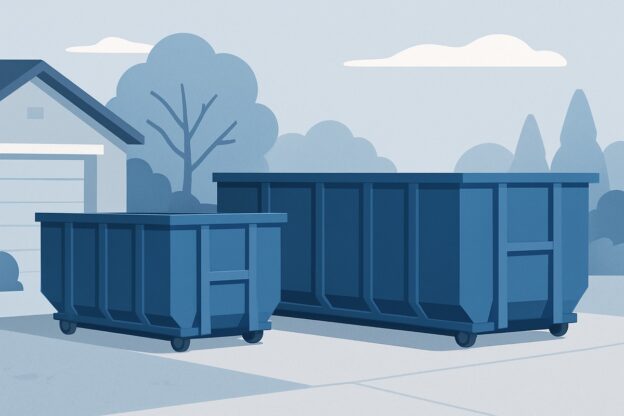
A 40 yard dumpster measures approximately 22 feet long, 7.5 feet wide, and 8 feet high, making it the largest roll-off container most rental companies offer and capable of holding roughly 240 standard trash bags or 12 pickup truck loads of debris. That footprint—about the size of a large moving truck parked in your driveway—matters when you’re planning major demolition work, whole-house cleanouts, or commercial construction projects where hauling debris off-site repeatedly would kill your timeline and budget. Most contractors and property managers who ask how big is a 40 yard dumpster are really trying to figure out whether it’ll fit their site, handle their debris volume, and make financial sense compared to multiple smaller containers. The physical dimensions tell only part of the story—weight limits, prohibited materials, placement requirements, and the actual usable space inside shape whether this size works for your specific project. Understanding how big is a 40 yard dumpster in practical terms helps you avoid the expensive mistake of ordering too small and needing a second delivery, or too large and paying for capacity you never use.
Renting a Dumpster for This Project?
For most of these jobs, a roll-off dumpster delivered to your driveway is the simplest, cheapest way to handle the haul. Compare local providers and get a free quote in minutes.
Find Dumpster Rental in Your City →
Physical Dimensions of a 40 Yard Dumpster
A standard 40 yard roll-off dumpster measures approximately 22 feet long, 8 feet wide, and 8 feet high. These containers occupy roughly 176 square feet of ground space and require additional clearance for delivery and pickup — you’ll need a straight access path at least 10 feet wide and 60 feet long from the street to your placement spot.
Length, Width, and Height
The 22-foot length makes a 40 yard dumpster about as long as a standard parking space stretched end-to-end twice. Picture a mid-size pickup truck parked bumper-to-bumper with a compact sedan — that gives you the footprint. The 8-foot width matches a typical single-car garage door opening, while the 8-foot height reaches roughly to the rain gutters on a single-story house.
These measurements stay consistent across most rental companies, though you might find variations of a foot or so in length depending on the manufacturer. The container sits on wheels that add roughly 6 inches of clearance underneath. Sidewalls are steel, typically 14-gauge or heavier, which means they don’t flex or bulge even when fully loaded with heavy debris.
Footprint and Clearance Requirements
Beyond the container itself, you need space for the delivery truck to maneuver. The typical roll-off truck extends 35 to 45 feet long and needs to back straight into position to roll the dumpster off its bed. That means your access route should be at least 60 feet of unobstructed path — no low-hanging branches, power lines below 20 feet, or tight turns the truck can’t navigate.
Plan for the dumpster to sit at least 10 feet from any building, fence, or overhead obstruction. Delivery drivers appreciate a flat, hard surface like concrete or asphalt, but they can place containers on gravel or even grass if the ground is firm and level. If you’re setting the dumpster in a driveway, make sure garage doors can still open fully and cars can get past if needed. Most driveways can’t accommodate both a 22-foot container and regular vehicle access unless they’re particularly wide or long.
Weight Capacity and Volume
Weight Capacity and Volume
A 40-yard dumpster typically holds 40 cubic yards of material — equivalent to about 12 pickup truck loads — and can handle weight limits ranging from 4 to 10 tons depending on your rental company’s policy and local regulations. That capacity translates to roughly 240 standard 33-gallon trash bags or enough space to clear out a 2,500-square-foot home during a major renovation.
How Much Debris It Holds
The 40 cubic yards represents pure volume, but what that means in practical terms depends entirely on what you’re tossing. Picture the volume this way: you could fit approximately 800 square feet of standard drywall, 2,400 square feet of carpeting, or the contents of a three-bedroom house including furniture and belongings. For construction debris, you’re looking at enough capacity for a complete roof tear-off on a 3,000-square-foot home, including shingles, underlayment, and typical waste.
Weight becomes your limiting factor before volume does in most scenarios. A roll-off dumpster filled with heavy materials like concrete, brick, or soil will hit its tonnage limit well before you fill the container to the top. As a reference point, a completely full 40-yarder loaded with mixed household debris — furniture, boxes, general waste — typically weighs 3 to 5 tons. That same container filled halfway with asphalt shingles might already exceed your 6-ton weight allowance. Most rental agreements include a base weight allowance (commonly 4 to 6 tons) with overage charges per additional ton, so understanding your material’s density matters as much as its volume when planning a dumpster rental.
Best Projects for a 40 Yard Dumpster
A 40 yard dumpster works best for large-scale projects that generate 12 or more tons of debris—think whole-house renovations, commercial buildouts, major demolitions, and roofing jobs on buildings over 5,000 square feet. This is the size contractors choose when smaller dumpsters would require multiple hauls or when a project timeline doesn’t allow for swap-outs.
Complete Home Demolitions and Teardowns
Tearing down a residential structure creates an enormous volume of mixed debris. A typical single-family home demolition fills a 40 yard roll-off dumpster completely—sometimes requiring a second container depending on the home’s square footage and construction materials. Older homes with plaster walls, multiple layers of roofing, and dense framing generate more weight and volume than modern stick-built houses.
The real advantage shows up in the project timeline. Demolition crews work fast, and stopping to wait for a dumpster swap kills momentum. Having a 40 yarder on site from day one means the crew can tear out walls, rip up flooring, and pull down framing continuously. For contractors managing teardowns on tight schedules, eliminating mid-project hauls prevents costly delays.
Large Commercial Renovation Projects
Commercial renovations—office build-outs, retail remodels, restaurant conversions—produce steady streams of construction debris over weeks or months. A 40 yard dumpster rental serves as a central collection point that doesn’t need frequent servicing. Crews working across multiple floors or large open spaces can dispose of drywall, old fixtures, HVAC components, and partition materials without coordinating constant pickups.
Retail chain renovations particularly benefit from this capacity. When a big-box store updates its interior layout, the project generates pallets of old shelving, dropped ceiling tiles, carpeting, and wall materials—all while the business tries to minimize disruption. One large container handles the entire remodel cycle from demolition through final cleanup.
Multi-Unit Roofing Replacements
Roofing companies tackling apartment buildings, condo complexes, or commercial structures need serious debris capacity. A building with 10,000+ square feet of roof surface generates multiple tons of old shingles, underlayment, and decking repairs. Asphalt shingles are deceptively heavy—roughly 250-300 pounds per roofing square—so a large apartment complex tearoff easily fills a 40 yarder with room for the inevitable extras like damaged plywood and flashing.
The container stays on site throughout the multi-day job, allowing crews to work continuously across different building sections. For properties where access is limited or positioning equipment is complicated, avoiding mid-project swaps prevents the headache of repositioning a dumpster in tight parking areas or having to coordinate with property management multiple times.
Estate Cleanouts and Hoarding Situations
Clearing out a house after decades of accumulation requires substantial capacity. Estate cleanouts—especially from multi-generation homes—often uncover basements, attics, and garages packed with furniture, boxes, appliances, and miscellaneous items spanning 40+ years. A 40 yard container gives you room to tackle the entire property in one push rather than filling smaller dumpsters repeatedly while sorting through belongings.
Hoarding cleanouts demand even more capacity. These situations involve not just furniture and household goods but layers of newspapers, clothing, packaged items, and debris throughout every room. Professional cleanout teams prefer the largest dumpster available because the sheer volume is difficult to estimate upfront, and underestimating means work stops while waiting for another container.
Delivery and Placement Considerations
A 40-yard dumpster requires a delivery area at least 60 feet long and 10-12 feet wide with 23 feet of overhead clearance—roughly the footprint of three parking spaces end-to-end. The truck delivering it weighs over 20 tons when loaded, so the surface must support heavy equipment without cracking or sinking. You’ll also need to ensure the route from the street to your placement spot is free of low-hanging wires, overhanging branches, and tight turns that a 50-foot truck can’t navigate.
Clearance Requirements for Safe Delivery
The delivery truck extends roughly 50 feet from cab to rear axle, which means it needs a straight approach to your site. Residential driveways with sharp curves near the street or properties tucked behind other buildings often can’t accommodate the turning radius. Measure the height from ground to the lowest obstruction along the delivery path—power lines typically hang 18-20 feet above residential streets, but service drops to individual homes can sag lower, especially near the pole. Tree canopies cause problems too. A driver won’t risk scraping branches or snagging a wire, so they’ll place the dumpster wherever the truck can safely reach, which might not be your preferred spot.
Surface Conditions and Weight Distribution
Asphalt driveways less than three inches thick often develop permanent depressions under a loaded 40-yard dumpster, especially in summer heat when pavement softens. Concrete handles the weight better but can still crack if the slab is thin or the ground underneath has settled unevenly. Gravel and dirt surfaces work only if they’re dry and compacted—spring thaw or heavy rain turns them into ruts. If you’re placing the container on grass, expect dead patches and divots. The dumpster itself weighs around 8,000 pounds empty; fill it with construction debris, and you’re looking at 15-20 tons concentrated on two steel rails that are only six inches wide. Placing plywood sheets under the rails spreads the load but doesn’t eliminate the risk on fragile surfaces.
Permit and Property Access Rules
Municipal codes often require permits for any roll-off dumpster placed on a public street or right-of-way, which includes the area between the sidewalk and curb. Permit fees typically range from $25 to $100 in most areas for a two-week period, though some cities charge more or deny permits altogether on narrow streets where the container would block traffic. Homeowner associations add another layer. Many have rules about where you can place a dumpster, how long it can stay, and whether it needs screening from street view. Gated communities may require advance notice to arrange truck access, and some won’t allow deliveries during certain hours. Check these restrictions before scheduling delivery—rescheduling because you didn’t get the right approvals costs you time and sometimes extra fees.
Part of our Dumpster Sizes Explained: Find the Right Size for Your Home or Commercial Project series.
Ready to get started?
Find a Dumpster Near You