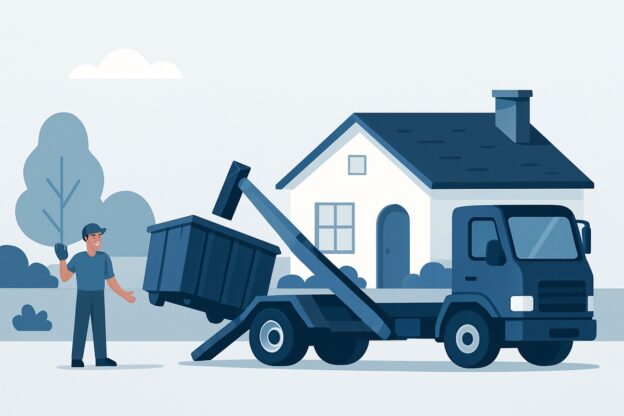
A roll-off dumpster is a large, rectangular waste container designed to be delivered by a specialized truck that “rolls” the container off its bed onto your property, then picks it up the same way when you’re done. These open-top containers range from 10 to 40 cubic yards and serve as temporary disposal solutions for construction debris, major cleanouts, or renovation projects that generate more waste than regular trash pickup can handle. Choosing the right size and understanding how roll-off rental works directly affects your project timeline and budget—order too small and you’ll pay for a second delivery, too large and you’re paying for capacity you don’t need. Most homeowners and contractors encounter roll-off dumpsters during roofing jobs, home demolitions, estate cleanouts, or large landscaping projects where you need several days or weeks to fill a container. This guide walks through how these containers actually work, what sizes fit different project types, and the practical details rental companies don’t always explain upfront.
Renting a Dumpster for This Project?
For most of these jobs, a roll-off dumpster delivered to your driveway is the simplest, cheapest way to handle the haul. Compare local providers and get a free quote in minutes.
Find Dumpster Rental in Your City →
How Roll Off Dumpsters Work
How Roll Off Dumpsters Work
Roll off dumpsters operate on a straightforward system: a specialized truck with a hydraulic hoist delivers the container to your property, tilting its bed so the dumpster rolls off onto the ground. You fill it at your own pace, then the same truck returns to reverse the process—tilting the bed, winching the container back on, and hauling it to a disposal facility. The wheels stay on the truck, not the dumpster itself.
Delivery and Placement Process
The delivery truck backs into your chosen spot with the dumpster already loaded on its tilted bed. As the driver raises the front of the bed, the container slides backward off the truck on built-in rails, settling gently onto the ground. The entire drop takes about five minutes if the location is clear and accessible.
Your driveway or work site needs a flat, hard surface at least 60 feet long for most residential sizes—10 yards typically require 14 feet of space, while 30-yard containers need 22 feet. The driver will place plywood boards under the dumpster if you’re concerned about asphalt or concrete damage. Overhead clearance matters too: power lines, tree branches, or garage door openings under 23 feet can block the truck’s hydraulic arm during delivery.
Pickup and Disposal
When you call for pickup, the truck returns and reverses the delivery process. The driver positions the vehicle so the bed aligns with the dumpster, then uses a cable system to pull the container back onto the tilted bed. Once secured, the bed lowers and the truck hauls your waste to a transfer station or landfill.
Most dumpster rental periods run 7-14 days, though you can request early pickup or schedule extensions if your project timeline shifts. The disposal facility sorts through mixed debris to pull out recyclables like metal and cardboard before landfilling the rest. Weight matters here—overloaded containers cost extra because disposal fees are charged by the ton, and overfilled dumpsters create safety hazards during transport.
Common Sizes and Capacities
Common Sizes and Capacities
Roll-off dumpsters come in four standard sizes: 10, 20, 30, and 40 cubic yards. A 10-yard dumpster holds roughly three pickup truck loads and works for small cleanouts. A 20-yard fits most single-room renovations. A 30-yard handles whole-house cleanouts or large remodels. A 40-yard is designed for commercial construction projects or complete home demolitions.
Choosing the Right Size
Match the dumpster size to your project scope, not just the volume of debris. A bathroom remodel generates less waste than a kitchen gut, but both might need a 20-yard dumpster because of bulky items like cabinets and vanities. The size you need depends on what you’re throwing away, not just how much.
Most people underestimate their needs. A garage cleanout that “shouldn’t be much” often fills a 10-yard dumpster once you account for old furniture, shelving units, and years of accumulated storage. Contractors typically order one size larger than their initial estimate because construction debris is difficult to compress—drywall sheets, framing lumber, and shingles take up more space than you’d think when tossed in a container. If you’re between sizes, the larger option usually costs less than ordering a second dumpster rental mid-project.
Typical Projects That Need Roll Off Dumpsters
Roll-off dumpsters serve projects that generate more waste than weekly trash pickup can handle. Home renovations, construction sites, estate cleanouts, and roofing jobs consistently require these containers. The common thread: you’re creating debris in concentrated bursts rather than normal household waste, and you need a dedicated spot to consolidate everything before hauling it away.
Home Renovations and Remodeling
A kitchen or bathroom remodel generates a surprising volume of material. Old cabinets, countertops, tile, drywall, and subflooring add up fast. A typical kitchen gut creates 3-4 tons of debris—far more than a pickup truck can handle in one trip, and certainly more than you want cluttering your driveway for weeks.
The timing matters here. Contractors work faster when they have a dumpster on-site. They can toss materials immediately instead of stacking them in your garage or making daily dump runs. For whole-house renovations, many homeowners rent a dumpster for the demolition phase, remove it during construction, then bring one back for final cleanup. This two-rental approach keeps costs down while matching the actual debris flow.
Roofing Projects
Roof tear-offs create concentrated weight in a small footprint. Asphalt shingles are heavy—a typical residential roof produces 2-3 tons of old shingles, felt paper, and damaged decking. Roofers prefer dumpsters positioned close to the house so they can slide materials directly off the roof into the container.
One detail that catches people off guard: shingles compact poorly. A 10-yard dumpster might seem large enough for a 1,500-square-foot roof, but you’ll fill it to the weight limit before it looks full. Most roofing contractors automatically order 20-yard containers to avoid mid-job overages. The rental period is short—usually 3-5 days—because roof replacements happen quickly when weather cooperates.
Construction and Demolition Sites
New construction generates steady waste throughout the build: lumber cutoffs, drywall scraps, packaging materials, concrete forms. A crew building a single-family home typically keeps a 30-yard dumpster on-site for months, swapping it out as it fills. Commercial projects often need multiple containers simultaneously—one for wood, another for metal, a third for general construction debris.
Demolition creates a different challenge. Tearing down a structure produces everything at once: framing, siding, insulation, fixtures, concrete, asphalt. A full house demo can generate 300-400 cubic yards of material. Contractors stage these jobs carefully, sometimes crushing concrete on-site to reduce volume before loading. The roll-off dumpster becomes the project’s central organizing point—everything flows toward it.
Estate Cleanouts and Downsizing
Clearing out a house after someone passes or moves to assisted living reveals decades of accumulated belongings. It’s not just furniture and clothes—it’s garage storage, attic boxes, basement workshops, and yard equipment. These cleanouts often fill a 20-yard dumpster completely, sometimes requiring a second container for outdoor items like swing sets or sheds.
The rental period runs longer here than construction projects. Families need time to sort through belongings, decide what sells or donates, and coordinate multiple people’s schedules. A two-week rental gives enough breathing room to work methodically without paying rush fees for hasty decisions. The dumpster stays in the driveway while family members make repeated trips to fill it, preventing the “where do we put all this?” paralysis that stalls cleanouts.
What You Can and Cannot Put Inside
Most construction debris, household junk, and yard waste can go in a roll-off dumpster — wood, drywall, flooring, furniture, appliances without refrigerants, and general trash. You cannot dispose of hazardous materials like paint, chemicals, asbestos, tires, or electronics. Refrigerators and air conditioners require special handling. Before loading, confirm restrictions with your rental provider since local regulations and landfill policies vary.
Accepted Materials
Standard dumpster rental accepts the bulk of what you’ll clear from a renovation or cleanout. Construction debris like lumber, concrete, brick, metal, and roofing materials all qualify. Household items work too — old furniture, carpet, mattresses, and general trash from decluttering projects. Yard waste such as branches, stumps, and dirt typically goes in, though some companies run dedicated green waste containers for landscaping jobs.
Appliances get trickier. Stoves, dishwashers, and water heaters are fine. Anything containing refrigerant — freezers, air conditioners, dehumidifiers — needs the coolant professionally removed first. Most rental companies either charge extra for this service or require you to handle it separately. A typical approach is bringing those items to a scrap metal facility that processes refrigerant-bearing appliances rather than tossing them in the dumpster.
Prohibited Items
Hazardous waste stays out entirely. This means paint (liquid or dried), motor oil, pesticides, cleaning chemicals, propane tanks, and batteries. These materials require special disposal facilities and create liability issues for haulers. Asbestos-containing materials fall under strict regulations — you need certified removal and dedicated disposal sites, not a rental dumpster.
Electronics rarely make the cut. Televisions, computers, and monitors contain materials that shouldn’t enter standard landfills. Most areas run e-waste recycling programs through municipal facilities or retailers. Tires also face restrictions at most landfills, making them unwelcome in dumpsters. Medical waste, including needles and biohazard materials, always requires specialized disposal regardless of quantity.
Weight and Loading Restrictions
Every dumpster carries a weight limit, generally ranging from two to eight tons depending on size. Exceeding that limit triggers overage fees that generally run $50 to $100 per ton in 2026. Heavy materials like concrete, dirt, or brick fill weight capacity faster than volume — a 20-yard container might hold fifteen tons of trash but only four tons of concrete before hitting limits.
How you load matters beyond just weight. Distribute heavy items across the container floor rather than piling everything at one end. This prevents the truck from struggling during pickup and keeps the container from shifting during transport. Fill level also has rules: nothing should extend above the top edge. Overloaded containers create road hazards and often mean the hauler refuses pickup until you remove excess material.
Ready to get started?
Find a Dumpster Near You