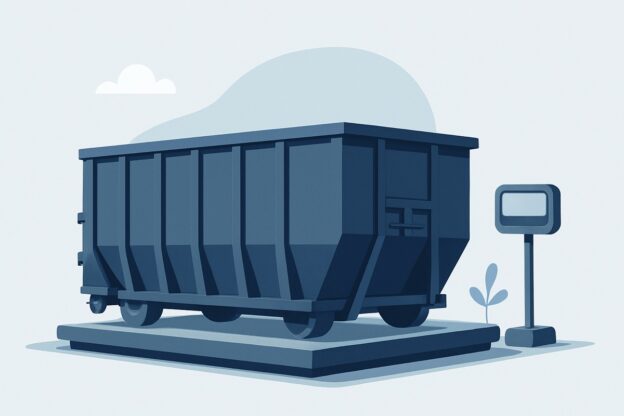
Dumpster weight limits specify the maximum tonnage allowed in your container before triggering overage fees, and they vary by dumpster size and rental company — a 10-yard dumpster typically holds 1-2 tons, a 20-yard holds 2-3 tons, a 30-yard holds 3-4 tons, and a 40-yard holds 4-5 tons, though these limits shift based on what you’re throwing away. Misjudging your debris weight is one of the fastest ways to blow past your quoted price, since most companies charge $50-$100 per ton over your limit. The problem isn’t just math — a cubic yard of asphalt weighs seven times more than a cubic yard of furniture, so intuition fails here. Understanding how rental companies set these limits, what actually counts toward your weight total, and how to estimate your debris type before you load helps you pick the right container size and avoid surprise charges when the truck arrives to haul it away.
Renting a Dumpster for This Project?
For most of these jobs, a roll-off dumpster delivered to your driveway is the simplest, cheapest way to handle the haul. Compare local providers and get a free quote in minutes.
Find Dumpster Rental in Your City →
How Weight Limits Work for Roll-Off Dumpsters
How Weight Limits Work for Roll-Off Dumpsters
Roll-off dumpsters come with a maximum weight allowance, typically measured in tons, that varies by container size. Rental companies weigh the dumpster when they drop it off and again at pickup, charging you for the difference. If your debris exceeds the included weight limit—say, 2 tons for a 10-yard or 4 tons for a 30-yard—you’ll pay overage fees, which generally range from $40 to $100 per additional ton in 2026.
Weight Allowances by Dumpster Size
A 10-yard dumpster typically includes 1 to 2 tons of weight in the base rental price. This works for lighter debris like household junk or yard waste, but fills up fast with dense materials. Most contractors skip this size for anything involving concrete or dirt.
The 20-yard sits at 2 to 3 tons included, while a 30-yard usually covers 3 to 4 tons. A 40-yard dumpster often allows 5 to 6 tons, though some companies cap it lower depending on local landfill restrictions. The allowance doesn’t scale linearly with size—doubling the container volume doesn’t double the weight limit. That mismatch catches people off guard when they rent a larger dumpster assuming they can load it with heavy material to the brim.
How Rental Companies Calculate Weight
The truck driver records the vehicle’s weight at a certified scale before delivery, then weighs again after picking up your loaded dumpster. The difference is your debris weight. Some companies use onboard truck scales; others route through a landfill or transfer station scale. Either way, you’ll see the weight on your final invoice.
Rental companies set their base weight limits based on what their trucks can legally haul and what landfills accept per load. A standard roll-off truck maxes out around 10 tons total—truck plus dumpster plus debris. If the dumpster itself weighs 3 to 4 tons empty, that leaves 6 to 7 tons for your materials before hitting legal road limits. Companies build in a margin to avoid overweight violations, which explains why a 40-yard dumpster doesn’t come with an 8-ton allowance even though the physical container could theoretically hold it.
Common Materials and Their Weights
Common Materials and Their Weights
Understanding what different materials weigh helps you choose the right dumpster size and avoid overweight fees. Construction debris like concrete and dirt are deceptively heavy — a cubic yard of concrete weighs around 4,000 pounds, while the same volume of drywall weighs only about 500 pounds. Household junk and lighter renovation debris weigh significantly less than dense construction materials, meaning you can typically fill the container higher without hitting weight restrictions.
Estimating Debris Weight by Material Type
Heavy construction materials concentrate weight fast. Concrete, asphalt, brick, and stone all clock in at roughly 3,000-4,000 pounds per cubic yard. A 10-yard dumpster filled completely with concrete debris would weigh around 20 tons — well over most weight limits for that size. Dirt and soil are equally dense, particularly when wet. Even clean fill dirt runs about 2,200 pounds per cubic yard when dry, and that number climbs when moisture is present.
Wood framing and dimensional lumber sit in the middle range at approximately 500-750 pounds per cubic yard for clean wood. That estimate jumps for treated lumber, which holds more moisture and often includes hardware. Roofing shingles are surprisingly heavy for their size — asphalt shingles weigh roughly 800 pounds per square (100 square feet of coverage), and tearing off multiple layers from an older roof adds up quickly. Drywall and plaster are lighter than most people expect. Standard drywall runs about 500 pounds per cubic yard, though older plaster walls with wood lath can be heavier. Household items like furniture, clothing, and general junk typically weigh 300-400 pounds per cubic yard — light enough that you’ll run out of space before hitting dumpster weight limits in most cases.
What Happens When You Exceed the Limit
What Happens When You Exceed the Limit
Exceeding your dumpster’s weight limit triggers overage fees that typically range from $50 to $100 per ton over the agreed limit in 2026. The rental company weighs your container at the landfill, calculates the excess tonnage, and bills you for the difference. In extreme cases where weight creates safety hazards during transport, drivers may refuse to haul the dumpster until you remove material.
Safety Risks During Transport
An overloaded roll-off dumpster becomes unstable on the truck bed. The hydraulic lift strains under excessive weight, creating potential failure points that put the driver and other motorists at risk. Drivers perform visual assessments before loading—if debris is piled above the fill line or the container visibly sags, they’ll note the concern on your service ticket.
Material can shift or fall during transit when containers carry too much weight. A 30-yard dumpster loaded with 8 tons of concrete, for example, might shed chunks on residential streets if not properly secured. Most rental agreements include language allowing drivers to refuse transport when they judge the load unsafe, leaving you responsible for lightening the container before pickup.
Damage to Driveways and Property
Overweight containers concentrate enormous force on small contact points. A 10-yard dumpster holding 6 tons of roofing shingles—well above its typical 2-3 ton limit—can crack asphalt driveways or punch through weakened concrete. The pressure intensifies when the truck’s hydraulic system tilts the container for loading, shifting the entire weight onto the front wheels.
Rental companies don’t typically cover property damage caused by overweight dumpsters. Your homeowner’s insurance might apply, but you’ll need to prove the damage wasn’t preventable. Placing plywood sheets under the container distributes weight more evenly, but that only helps if you stay within reasonable limits. Once you’ve exceeded capacity by a full ton or more, even reinforcement won’t prevent surface damage on standard residential driveways.
Additional Fees and Charges
Overage calculations happen at the landfill scale. If you rented a container with a 2-ton limit and the scale reads 3.4 tons, you’re paying for 1.4 tons of excess. At $75 per ton—a common rate in many markets—that’s an extra $105 on top of your base rental fee. Some companies round up to the nearest half-ton, so 3.2 tons becomes 3.5 tons for billing purposes.
Redelivery fees apply when drivers can’t safely transport your dumpster. If the driver red-tags your container as overweight and you need to remove material before they’ll attempt pickup again, expect charges between $100 and $200 for the return trip. This stacks on top of any overage fees you’ll still owe once the container reaches an acceptable weight. Heavy materials like dirt, concrete, and stone trigger these situations most often—a single yard of soil weighs roughly half a ton, making it easy to misjudge total weight in larger containers.
Choosing the Right Size to Avoid Overages
Choosing the Right Size to Avoid Overages
Matching dumpster size to your project’s debris volume and weight prevents overage fees and the hassle of ordering a second container mid-job. Estimate your material type and total volume first, then select a container size with enough weight capacity for that specific debris—a 20-yard dumpster works for most household cleanouts, while dense materials like concrete require smaller containers with higher weight limits.
Calculate Volume Before You Rent
Walk through your space and measure the footprint of what you’re removing. A standard bedroom’s worth of furniture and belongings fills roughly 10-12 cubic yards. Multiply room dimensions (length × width × height) and divide by 27 to convert cubic feet to cubic yards. For renovation debris, account for wall thickness and the air gaps between broken materials—demolished drywall takes up more space than the original square footage suggests.
Contractors often photograph debris piles and compare them to familiar references. A pickup truck bed holds about 2 cubic yards, so a pile equivalent to five truck loads means you need a 10-yard roll-off dumpster. When estimating roofing projects, use the square footage of your roof—every 100 square feet of shingles produces roughly one cubic yard of debris.
Match Container Capacity to Material Density
Heavy materials require smaller containers even when volume seems minimal. A 10-yard dumpster handles approximately 2-3 tons of asphalt, brick, or concrete—filling it completely would exceed the weight limit. For these jobs, request a container specifically rated for heavy debris, which typically includes reinforced floors and higher weight allowances.
Light household items like furniture, carpet, or yard waste fill space without approaching weight limits. You can safely fill a 30-yard or 40-yard container to the rim with these materials. Mixed loads require judgment—if you’re combining kitchen cabinets with tile and countertops, size up to ensure both volume and weight capacity. A dumpster rental company can provide weight guidelines based on your specific material mix, helping you avoid the common mistake of underestimating how quickly dense debris adds up.
More Weight Limit Guides
Ready to get started?
Find a Dumpster Near You