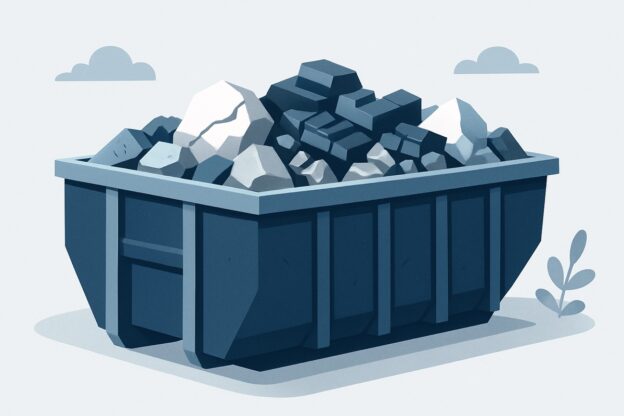
Disposing of concrete requires one of three approaches: renting a roll-off dumpster for volumes over half a cubic yard, hauling smaller amounts to a recycling facility yourself, or breaking it into gravel-sized pieces for reuse on your property as fill or drainage material. The method you choose depends on how much concrete you’re dealing with and whether you’re willing to do the physical work of breaking and moving it. Most contractors and DIYers underestimate how quickly concrete debris adds up—a simple 10×10 patio removal generates roughly two tons of material, far beyond what fits in a pickup truck. Knowing how to dispose of concrete properly also means understanding local regulations, since many landfills won’t accept it and dumping it illegally carries steep fines. This guide walks through each disposal method, what it actually costs, and which situations call for which approach based on project size and timeline.
Renting a Dumpster for This Project?
For most of these jobs, a roll-off dumpster delivered to your driveway is the simplest, cheapest way to handle the haul. Compare local providers and get a free quote in minutes.
Find Dumpster Rental in Your City →
Why Concrete Disposal Requires Special Handling
Concrete’s density and local regulations make disposal more complex than typical construction waste. A cubic yard of broken concrete weighs around 4,000 pounds — heavy enough to exceed weight limits for standard waste hauling and damage equipment not designed for masonry debris. Most municipalities also classify concrete as inert fill material, which means it faces different disposal rules than household trash or mixed construction waste.
Weight and Transportation Challenges
The density of concrete creates practical problems the moment you start loading it. A half-ton pickup truck bed can handle maybe 1,000 pounds safely, but a single cubic yard of concrete chunks exceeds that by three times. Even a 10-yard roll-off dumpster filled with concrete approaches 40,000 pounds — enough to damage driveways, sink into soft ground, or exceed the towing capacity of standard hauling trucks.
Breaking concrete into smaller pieces before disposal doesn’t reduce the weight problem. Sledgehammering a 4-inch thick patio slab into rubble just converts one heavy mass into many heavy pieces that still add up to thousands of pounds per cubic yard. Professional haulers often charge by weight for concrete loads because transportation costs scale directly with tonnage. A truck rated for mixed debris might handle 10 tons, but the same truck carrying concrete might max out at 6-7 tons to stay within axle weight limits and safety margins.
Environmental and Legal Regulations
Many jurisdictions ban concrete from standard landfills because it’s chemically inert and takes up space that could handle actual waste. Instead, local codes often require concrete to go to dedicated C&D (construction and demolition) facilities or aggregate recycling centers. Some areas impose fines for mixing concrete with other materials in commercial dumpsters — a practice that contaminates the load and prevents proper recycling.
The recycling angle isn’t just environmental preference. Crushed concrete works as road base, drainage fill, or new concrete aggregate, which makes it valuable enough that some facilities accept it at reduced tipping fees compared to true waste. This economic reality shapes disposal logistics: a dumpster rental company might route concrete to a recycling center thirty miles away rather than a closer landfill because the facility will actually accept the material. Check local regulations before starting demo work. What counts as acceptable concrete disposal in one county might trigger violations in the next.
Recycling Concrete at Processing Facilities
Recycling Concrete at Processing Facilities
Concrete recycling facilities crush old concrete into graded aggregate that can replace virgin stone in new construction projects. The process typically recovers 95% or more of the material by weight. Most facilities accept broken concrete, foundations, sidewalks, and demolished structures — though they’ll reject pieces with significant rebar, asphalt contamination, or attached wood framing.
How Concrete Recycling Works
Processing starts at the intake area, where operators inspect loads and reject contaminated material. Workers remove obvious debris like wood, plastic, and metal before feeding concrete into a primary crusher. This machine, usually a jaw crusher or impact crusher, breaks large chunks into pieces roughly 6-12 inches across.
The crushed material moves through magnetic separators that pull out rebar and wire mesh, then passes over vibrating screens that sort it by size. Smaller particles become base material for roads and parking lots. Larger pieces get processed again or sold as riprap for erosion control. A single facility can process 300-500 tons daily, turning a roll-off dumpster full of concrete into usable aggregate in about an hour. The resulting recycled concrete aggregate costs 30-40% less than quarried stone in most markets, making it attractive for road projects, pipe bedding, and new concrete mixes where it can replace up to 30% of virgin aggregate without compromising strength.
Using a Roll-Off Dumpster for Concrete Removal
A roll-off dumpster offers the most practical solution for disposing of concrete debris from demolition or renovation projects. You’ll rent a heavy-duty container designed specifically for dense materials, load your broken concrete, and have it hauled to a recycling facility or approved disposal site. Most companies provide 10-, 20-, or 30-yard dumpsters rated for concrete’s weight, though you’ll pay based on tonnage rather than container size.
Choosing the Right Dumpster Size for Concrete
Concrete’s density makes size selection different from typical debris. A 10-yard dumpster holds roughly 10 tons of concrete — about 400 square feet of 4-inch-thick slab. That same container would be overweight if you tried filling it to the brim. The 20-yard option handles around 20 tons, suitable for a two-car garage floor or a residential driveway. Professional demolition crews typically order 30-yard containers for commercial projects, but even these max out at weight limits before reaching full capacity.
Calculate your needs by measuring the concrete’s square footage and thickness. A patio measuring 12×16 feet at 4 inches thick equals roughly 2.5 tons. Add 20% for irregular chunks and broken pieces that don’t pack efficiently. If you’re demolishing a foundation or large slab, consider ordering multiple smaller dumpsters rather than one large container — it spreads out the weight and gives you flexibility if your project timeline changes.
Weight Limits and Overage Fees
Rental agreements cap concrete loads at specific tonnage, typically 10 tons for smaller containers regardless of physical space remaining. Exceed that limit and you’ll pay overage fees ranging from $50 to $100 per additional ton in most markets as of 2026. A half-filled 20-yard dumpster can easily hit the weight threshold if packed with solid concrete chunks.
Your rental company weighs the container at the landfill or recycling center, then bills you for any excess. Some providers include one or two tons of overage in their base price, while others charge from pound one over the limit. Ask about the weight allowance when you book. Breaking concrete into smaller pieces before loading doesn’t reduce total weight, but it does let you pack more efficiently and estimate your tonnage more accurately. If you’re close to the limit, leave some space rather than topping off — the cost of a second trip generally beats overage penalties.
Loading Tips for Concrete Debris
Distribute weight evenly across the dumpster floor rather than piling everything at one end. Uneven loads can make pickup difficult and create safety issues during transport. Start with your largest pieces flat on the bottom, then fill gaps with smaller chunks. This approach maximizes space and keeps the load stable.
Break concrete into manageable pieces before loading — slabs 2 feet square or smaller work best. Use a sledgehammer or concrete saw for controlled breaking. Rebar-reinforced concrete requires extra effort; cut the rebar with an angle grinder or reciprocating saw fitted with a metal blade before breaking the surrounding concrete. Stack pieces vertically along the walls when possible, creating a stable structure that won’t shift during hauling. Stop loading when you reach the fill line painted inside the container, even if you haven’t hit the weight limit. Overloaded dumpsters can’t be safely transported and may result in refused pickup.
Breaking Up and Preparing Concrete for Disposal
Breaking up concrete requires matching your demolition method to the slab’s thickness and your physical capability. For residential slabs under 4 inches thick, a sledgehammer or electric jackhammer will create manageable pieces. Thicker concrete demands hydraulic breakers or professional sawcutting. Proper preparation means sizing pieces to lift safely—nothing over 50 pounds if you’re loading by hand—and clearing all rebar, wire mesh, and attached materials before transport.
Assessing Your Concrete Breaking Needs
Walk the entire area and measure thickness at multiple points before selecting tools. A 3-inch patio slab breaks differently than a 6-inch driveway approach. Check for reinforcement by drilling a pilot hole or examining broken edges—rebar changes everything about your approach.
Surface area matters as much as thickness. A 10×10 patio is a weekend project with hand tools. A 500-square-foot driveway justifies renting powered equipment or hiring a contractor. Calculate the volume (length × width × depth in feet, divided by 27) to estimate cubic yards. This number determines whether you need a standard roll-off dumpster or multiple haul-aways.
Hand Tools vs. Powered Equipment
A 12-pound sledgehammer handles most residential work under 4 inches thick. Start at existing cracks or edges, striking at a 45-degree angle to create fracture lines. Expect to break 20-40 square feet per hour depending on your strength and the concrete’s age. Older, weathered concrete fractures more easily than fresh pours.
Electric jackhammers (also called demolition hammers) multiply your productivity by 5-10 times. A 40-pound model rents for $75-$150 per day and punches through 4-inch slabs with minimal effort. Heavier 60-90 pound breakers tackle 6-inch slabs but require two people to maneuver safely. For anything thicker than 6 inches, hydraulic breakers mounted on skid steers or excavators become cost-effective despite the $300-$600 daily rental rate.
Creating Manageable Pieces
Target chunks no larger than 12×12 inches for hand-loading. A piece this size from a 4-inch slab weighs roughly 40 pounds—manageable but substantial. Mark a grid pattern with chalk before breaking to maintain consistent sizing. Random breaking creates awkward shapes that don’t stack well in a dumpster or trailer.
Cut rebar with an angle grinder fitted with a metal cutoff wheel as you expose it. Leaving rebar attached creates dangerous protruding edges and makes pieces impossible to stack. Wire mesh can often be peeled away after breaking the concrete around it. For heavily reinforced slabs, a reciprocating saw with metal-cutting blades speeds the process significantly.
Safety Protocols During Demolition
Concrete chips become projectiles during breaking. Safety glasses aren’t optional—they’re mandatory every second you’re swinging or operating equipment. Flying fragments regularly cause eye injuries serious enough to require emergency care.
Wear steel-toed boots rated for impact. A dropped chunk can easily break bones in regular shoes. Hearing protection matters with powered tools—jackhammers produce 100-115 decibels, well into the range that causes permanent hearing damage after 15 minutes of exposure. Leather gloves prevent blisters and protect against the jagged edges you’ll grip constantly while moving debris.
Work in 20-30 minute intervals with breaks, especially in heat. Concrete dust mixed with sweat creates a cement paste that irritates skin. Wash exposed areas regularly and change clothes immediately after finishing. For indoor demolition or enclosed spaces, a respirator rated N95 or better filters the silica dust that causes long-term lung damage.
Ready to get started?
Find a Dumpster Near You