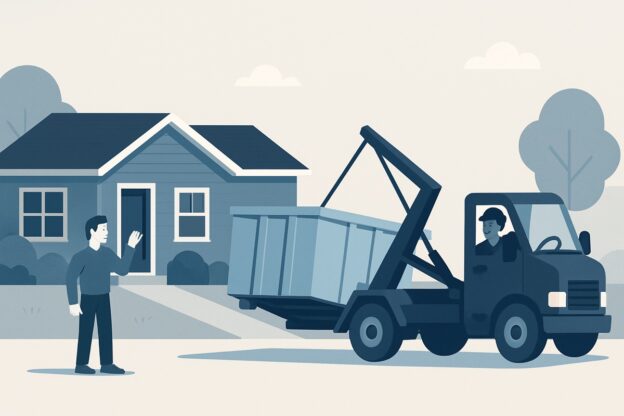
Plywood disposal requires either breaking down sheets for curbside pickup (if your municipality accepts construction debris), hauling it to a landfill or transfer station that processes wood waste, or renting a roll-off dumpster for renovation projects generating multiple sheets. Most homeowners face this question after tearing out subfloors, removing old sheathing, or dismantling built-ins — and the wrong choice means either a rejected pickup or multiple trips in a vehicle never designed to carry 4×8 sheets. The challenge isn’t just volume; treated plywood, painted plywood, and structural panels with adhesive each face different acceptance rules at different facilities. Knowing how to dispose of plywood correctly saves you from the frustration of loading your truck twice or discovering that your local transfer station won’t accept the laminated underlayment you just spent an afternoon removing. Getting this right the first time means understanding your local waste rules, recognizing which plywood types go where, and matching your disposal method to the scale of your project.
Renting a Dumpster for This Project?
For most of these jobs, a roll-off dumpster delivered to your driveway is the simplest, cheapest way to handle the haul. Compare local providers and get a free quote in minutes.
Find Dumpster Rental in Your City →
Check if Your Plywood is Treated or Untreated
Check if Your Plywood is Treated or Untreated
Treated plywood contains chemical preservatives that protect against rot, insects, and moisture, while untreated plywood is simply bonded wood veneers without added chemicals. You can identify treated plywood by looking for stamps or tags that say “pressure-treated” or list chemicals like ACQ or CA-B, and by its greenish or brownish tint. This distinction matters because treated plywood requires different disposal methods and cannot be burned or recycled like untreated wood.
Identifying Treated Plywood
Most pressure-treated plywood carries an ink stamp on the surface or an attached tag that lists the treatment type, retention level, and manufacturer. Look for codes like ACQ (alkaline copper quaternary), CA-B (copper azole), or the older CCA (chromated copper arsenate). The wood itself often has a green or brown color from the copper-based chemicals, though this can fade over time with sun exposure.
If there’s no visible stamp, consider where the plywood was used. Exterior sheathing, foundation work, and any contact with soil or moisture typically requires treated lumber. Indoor subflooring, cabinet backing, and interior wall sheathing almost always uses untreated material. When in doubt, treat it as chemically preserved—better to dispose of it safely than risk contamination.
Why Treatment Affects Disposal
The chemicals in treated plywood make it hazardous when burned, releasing toxic compounds into the air. Many municipal yard waste programs and composting facilities refuse treated lumber entirely because the preservatives contaminate organic material and persist in soil. Standard recycling facilities that process clean wood also reject treated plywood since the chemicals interfere with manufacturing new products.
Your disposal options narrow considerably with treated material. Landfills accept it, but some charge premium rates for construction debris. A roll-off dumpster works well for demolition projects with mixed treated and untreated plywood, letting you dispose of everything at once without sorting. Specialized wood recyclers occasionally process treated lumber for fuel in industrial boilers equipped with proper emission controls, though this option isn’t widely available in most areas.
Curbside and Municipal Disposal Options
Curbside and Municipal Disposal Options
Most municipalities offer bulk trash pickup for plywood disposal, but they require advance scheduling and impose strict limits on volume and preparation. Your plywood must typically be cut into manageable pieces (often 4 feet or shorter), bundled, and placed curbside on designated collection days. Expect weight limits of 50-100 pounds per bundle and restrictions on nails or protruding hardware that could injure sanitation workers.
Bulk Trash Pickup Requirements
Call your city’s sanitation department at least 48-72 hours before your desired pickup date. Most programs limit residents to one or two bulk collections per month, so if you’re clearing out a renovation project with multiple sheets of plywood, you may need to spread disposal across several weeks. Some municipalities charge a per-item fee (generally ranging from $10-40 in 2026), while others include a set number of annual pickups with your regular trash service.
Preparation matters more than most people realize. Crews will refuse bundles that exceed dimensional limits or contain hazardous materials. A sheet of 3/4-inch plywood measuring 4×8 feet weighs roughly 60 pounds—already pushing or exceeding many programs’ weight caps. You’ll need to cut larger sheets into halves or thirds, remove all nails and screws, and tie bundles with natural fiber twine (not wire or plastic strapping that can damage collection equipment). If you’re dealing with painted or treated plywood, confirm your municipality accepts it; some programs reject pressure-treated lumber due to chemical content. For projects generating more than a few sheets, a roll-off dumpster rental often proves more practical than coordinating multiple pickups and cutting everything to specification.
Reuse, Recycle, and Donation Alternatives
Before tossing plywood in a dumpster, consider that most sheets still have value even after their first use. Construction nonprofits regularly accept partial sheets and offcuts for community projects. Salvage yards pay for clean material, and creative reuse centers welcome damaged plywood for art installations and maker workshops. These alternatives keep usable wood out of landfills while serving people who need affordable building materials.
Donation Options for Usable Plywood
Habitat for Humanity ReStores accept plywood donations in decent condition—typically half-sheets or larger with minimal water damage or delamination. They resell donated materials to fund home construction projects. Call ahead because individual locations set their own acceptance criteria. Some stores won’t take exterior-grade plywood that’s been exposed to weather for extended periods, while others accept it for use as temporary barriers during builds.
Theater groups and high school technical programs often need plywood for stage sets and shop classes. A 4×8 sheet that seems worthless to you might be perfect for someone building flats or practice projects. Community bulletin boards, local Facebook groups, and Nextdoor posts often connect donors with takers within a day or two.
Salvage Yards and Reclaimed Wood Buyers
Architectural salvage yards purchase clean plywood, particularly marine-grade and hardwood-face sheets. Pricing depends on thickness, condition, and local demand—expect anywhere from a few dollars for OSB to $20-30 for intact birch or oak veneer sheets. The wood needs to be free of paint, major fasteners, and rot. Some yards will take painted sheets at a lower rate if the paint isn’t lead-based.
Reclaimed lumber dealers focus on solid wood but occasionally accept high-quality plywood for custom furniture makers. This market favors unusual materials: old-growth fir subfloors, thick marine plywood from boat refits, or vintage Baltic birch. Standard construction-grade sheets rarely qualify unless they’re from an interesting source like a decommissioned grain silo or historic building.
Creative Reuse Projects
Makers and DIY communities treat scrap plywood as free raw material. Quarter-sheets work for jigs, workbench surfaces, and shop storage. Strips become drawer dividers, garden bed edging, or paint mixing boards. One contractor keeps a pile of plywood scraps specifically for concrete forms—the sheets take a beating and get discarded after one pour, making damaged material ideal.
Outdoor projects consume plywood that’s too weathered for indoor use. Composters build three-sided bins from old sheathing. Gardeners use it as weed barriers under gravel paths or as temporary ground cover during muddy construction phases. The material breaks down within a few seasons, so it suits short-term applications where treated lumber would be overkill. When you’re sorting through a major cleanout and need capacity for genuinely unusable material, a roll-off dumpster handles the volume while you route salvageable sheets elsewhere.
When to Rent a Dumpster for Plywood
Rent a dumpster for plywood disposal when you’re dealing with more than a few sheets, when the wood is painted or treated and can’t go curbside, or when you’re clearing out demolition debris that includes other construction waste. A roll-off dumpster becomes the practical choice for renovation projects, large-scale cleanups, or situations where multiple trips to the landfill would eat up time and fuel costs.
Volume Triggers That Make Rental Worth It
Half a sheet of plywood broken down fits in a standard trash bin. Twenty sheets of full or partial plywood from a deck tear-out do not. The breakpoint typically hits around 8-10 full sheets of plywood or equivalent volume. Beyond that amount, you’re looking at multiple vehicle trips to a disposal facility — assuming your vehicle can even haul full sheets safely. Factor in your time, gas, and the disposal fees charged per trip at most transfer stations, and a dumpster rental becomes the more efficient option.
The math changes further when plywood mixes with other materials. A bathroom remodel might generate three sheets of old subfloor, plus drywall, fixtures, and framing lumber. That combined volume quickly fills a pickup truck bed twice over. A 10-yard dumpster holds roughly three pickup loads, giving you room to work without constant hauling interruptions.
Project Types That Justify a Roll-Off Dumpster
Roof decking replacement puts you squarely in dumpster territory. A typical residential roof uses 30-50 sheets of plywood sheathing, and most of it comes off in chunks rather than neat pieces you can stack. Add old shingles and felt paper to that pile, and you’re generating several cubic yards of material within a day or two.
Whole-house renovations create a steady stream of plywood scraps from subfloors, wall sheathing, and cabinet removal. Rather than staging piles in your driveway for weeks or making daily dump runs, a dumpster sits on-site for the duration of your project. Contractors working on flips or gut rehabs almost always use dumpsters for this reason — the labor savings alone justify the cost when you’re paying hourly for a crew that would otherwise spend time loading trucks.
When Treated or Painted Plywood Limits Your Options
Pressure-treated plywood and sheets with lead-based paint can’t go in standard yard waste collection, and many municipal dumps charge premium tipping fees for treated lumber. If you’re tearing out an old deck with treated plywood or removing painted shelving from a pre-1978 home, check whether your local transfer station even accepts this material. Some facilities require treated wood to go in designated areas with higher fees.
A dumpster rental sidesteps this hassle when the rental company handles disposal logistics. Reputable services know which facilities accept treated materials and factor those costs into their pricing. You avoid the rejection scenario where you drive 30 minutes to the dump only to learn they won’t take your load.
Ready to get started?
Find a Dumpster Near You