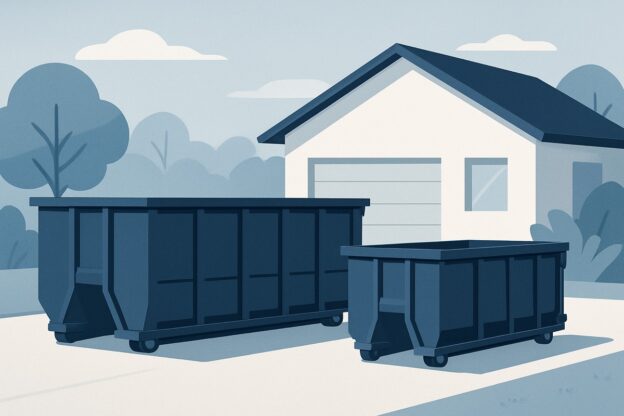
A 10 yard dumpster measures approximately 14 feet long, 7.5 feet wide, and 3.5 feet high, holding roughly 10 cubic yards of material — about the same volume as three pickup truck loads or enough space to clear out a single-room renovation, small garage cleanout, or minor landscaping project. Understanding how big a 10 yard dumpster actually is matters because ordering too small means paying for a second haul, while ordering too large wastes money on unused capacity you’re still charged for. The physical footprint also determines whether it fits in your driveway, alleyway, or street parking spot without blocking traffic or violating local codes. This guide breaks down the actual dimensions you’ll encounter on delivery, translates cubic yards into real-world debris scenarios, and shows you how to assess whether a 10 yarder handles your specific project or whether you need to size up.
Renting a Dumpster for This Project?
For most of these jobs, a roll-off dumpster delivered to your driveway is the simplest, cheapest way to handle the haul. Compare local providers and get a free quote in minutes.
Find Dumpster Rental in Your City →
Actual Dimensions of a 10 Yard Dumpster
A 10 yard dumpster typically measures 14 feet long, 7.5 feet wide, and 3.5 feet high. These dimensions create a container about the size of a large parking space with walls roughly waist-high on most adults. The relatively low profile makes loading materials straightforward without requiring ladders or awkward lifting overhead.
Length, Width, and Height
The 14-foot length runs parallel to the truck that delivers it, slightly longer than a compact car. This footprint works well in standard residential driveways without blocking garage access or extending into the street in most cases. The 7.5-foot width matches the approximate width of a single-car garage door, making the roll-off dumpster easy to maneuver into tight spots.
At 3.5 feet tall, the sidewalls sit at a comfortable throwing height. You can toss bags of debris or broken-down boxes over the edge without straining. Heavier items like concrete chunks or old appliances go in through the rear door that swings open. This low clearance also means the container won’t obstruct sightlines if placed near a driveway entrance.
Space Needed for Delivery
Plan for at least 60 feet of straight, unobstructed clearance from the street to your placement spot. The delivery truck needs roughly 50 feet to extend its hydraulic arm and roll the dumpster off the truck bed, plus room to maneuver. Width requirements are less demanding—most delivery trucks need only 10 to 11 feet of lateral space to navigate safely.
Account for vertical clearance too. Overhanging tree branches, power lines, or garage door headers below 23 feet can prevent safe delivery. The truck’s arm extends upward during placement, and drivers won’t risk contact with obstacles. A flat, firm surface matters as well—soft ground, fresh asphalt, or steep slopes can cause the dumpster to settle unevenly or damage your property. If you’re renting during wet weather, consider placing plywood under the container to distribute weight and protect grass or pavers.
How Much Fits Inside a 10 Yard Dumpster
A 10 yard dumpster holds about three pickup truck loads of material. In practical terms, that means you can dispose of roughly 2-3 tons of debris, though the actual weight limit depends on your rental company and the type of material you’re throwing away. Think of it as enough space for a small bathroom remodel, clearing out a garage, or replacing a section of roof.
Typical Capacity
The volume tells only part of the story. A 10 yard roll-off dumpster can physically hold about 50-60 standard 13-gallon trash bags if you’re dealing with light household items. For bulkier projects, you might fit an old deck that’s roughly 10 feet by 10 feet, a worn-out carpet from two average bedrooms, or the debris from tearing out a kitchen’s worth of cabinets and countertops.
What catches people off guard is how quickly heavy materials eat up capacity without filling the container. A bathroom renovation generates tile, a cast-iron tub, and wet drywall — all compact but dense. You might only fill the dumpster halfway before hitting weight limits. Yard waste works the opposite way: brush, branches, and leaves are bulky but light, so you’ll likely max out the physical space before approaching weight restrictions.
Weight Limits
Most dumpster rental companies set weight limits between 2-3 tons for a 10 yarder, though some cap it at 1-2 tons depending on your location and the hauling setup. Cross that threshold and you’ll typically pay overage fees that generally range from $40-$100 per additional ton in 2026.
Material type matters more than volume here. A dumpster loaded with dirt, concrete chunks, or roofing shingles hits weight limits fast — sometimes with just a third of the container filled. Asphalt shingles are particularly deceptive; a single roof layer from a small garage can push close to the limit. Contractors usually rent separate containers for heavy materials like concrete or request a higher weight allowance upfront. For mixed household cleanouts with furniture, boxes, and general junk, you’ll almost always run out of space before you run out of allowable weight.
What Projects Work Best With This Size
What Projects Work Best With This Size
A 10-yard dumpster handles small-scale cleanouts and renovations that produce 3-4 pickup truck loads of debris. This size works well for clearing out a garage or basement, removing a deck under 300 square feet, replacing flooring in 2-3 rooms, or handling yard cleanup from storm damage. The container fits comfortably in a standard driveway and handles projects that take 2-5 days to complete.
Single-Room Renovations
Kitchen and bathroom remodels generate concentrated amounts of heavy debris — cabinets, countertops, tile, drywall, and fixtures — that quickly fill smaller containers. A 10-yard roll-off dumpster gives you enough capacity to gut one full bathroom or handle a kitchen refresh where you’re replacing cabinets and counters but keeping the layout intact.
If you’re tearing out tile, expect each square foot to weigh considerably more than drywall or wood. A typical bathroom demo (60-80 square feet of floor tile, shower surround, vanity, and toilet) fills roughly half the container. The weight limit matters more than volume here — tile and concrete debris can max out the weight allowance before you fill the bin.
Garage and Attic Cleanouts
Years of accumulated storage turn into surprising amounts of waste. Broken furniture, old appliances, boxes of outdated belongings, and construction scraps from previous projects add up faster than most people expect. A garage cleanout where you’re removing roughly 60-70% of stored items typically fills a 10-yard container.
Attic cleanouts follow similar volume patterns but come with access challenges. If you’re hauling debris down narrow stairs, budget extra time for the project. Insulation removal creates bulk without much weight — you can fit 1,200-1,500 square feet of blown-in or batt insulation in this dumpster size, though the weight stays well under the limit.
Small Deck Removal
Wood decks under 300 square feet break down into manageable debris volumes for a 10-yard container. A typical 12×20-foot deck with railings and stairs generates enough material to fill 70-80% of the bin. Cutting deck boards and framing into 4-foot sections helps you pack efficiently and avoid air gaps.
Composite decking weighs more than pressure-treated lumber, which affects how much you can load. If the deck includes concrete footings, those need to stay separate — most dumpster rental companies restrict concrete mixing with other materials. You’ll need to break or cut the footings free and potentially arrange separate disposal.
Flooring Replacement Projects
Ripping out old flooring in 2-3 average-sized rooms (roughly 500-700 square feet total) fits well within a 10-yard dumpster’s capacity. Carpet and padding compress more than hard materials, so you can often handle an entire single-story home’s carpeting if that’s your only debris type. Hardwood, laminate, and tile take up more space and weigh significantly more per square foot.
Underlayment and subfloor removal changes the equation substantially. If you’re going down to the joists and replacing damaged plywood, you’re looking at double or triple the volume. Plan for a 10-yard container to handle flooring replacement in 2 rooms if you’re also removing underlayment, or 3-4 rooms if you’re just pulling up the surface material.
Comparing 10 Yard to Other Dumpster Sizes
A 10 yard dumpster sits at the smallest end of the roll-off dumpster spectrum, holding roughly three pickup truck loads of debris. The next size up — a 15 yard — adds 50% more capacity, while a 20 yard doubles what a 10 can hold. Each jump in size changes both the footprint and the project types you can tackle efficiently.
How a 10 Yard Stacks Up Against Larger Options
The physical difference becomes clear when you see the containers side by side. A 10 yard dumpster typically measures 12-14 feet long, while a 20 yard stretches to 22 feet — nearly twice the length but only about two feet taller. That length matters more than you’d expect. A 10 yard fits comfortably in a single-car driveway with room to walk around it. A 20 yard blocks most driveways entirely and requires careful placement to avoid blocking sidewalks or garage access.
Weight limits shift just as dramatically. Most 10 yard rentals cap weight at 2-3 tons, appropriate for lighter materials like drywall, carpeting, or yard waste. A 20 yard typically allows 3-4 tons, and a 30 yard pushes to 5 tons or more. If your bathroom remodel generates mostly old fixtures and tile — dense materials — you might max out a 10 yard’s weight limit before filling the volume. In that scenario, a 15 or 20 yard dumpster rental makes more sense, even if you don’t need the extra space.
When to Choose Smaller vs. When to Size Up
Choosing a 10 yard makes practical sense for projects with defined, limited scope. Cleaning out a single room, removing an old deck that’s already disassembled, or handling the debris from replacing 15-20 squares of roofing shingles — these fit the 10 yard profile. The moment your project expands to multiple rooms or involves demolition (breaking apart structures rather than removing intact pieces), you’ve likely outgrown this size.
The cost difference between sizes rarely justifies gambling on too-small capacity. Rental companies typically charge $50-150 more to jump from a 10 to a 15 yard, but ordering a second dumpster mid-project because you underestimated often costs $200-300 more than if you’d started with the right size. If you’re on the fence, err toward the next size up — you’ll pay a modest premium for the peace of mind.
Ready to get started?
Find a Dumpster Near You