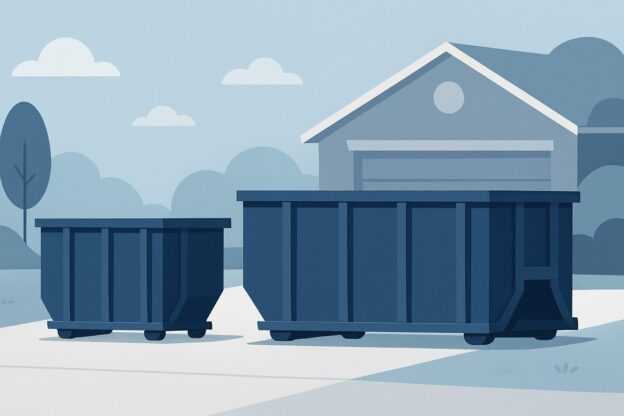
A 6 yard dumpster measures roughly 6 feet long, 5 feet wide, and 4 feet high, holding the equivalent of about nine standard pickup truck loads — enough volume for smaller cleanouts, light renovation debris, or ongoing commercial waste from a restaurant or retail shop. Understanding how big a 6 yard dumpster actually is matters because ordering too small means paying for a second haul or dealing with overflow, while going too large wastes money on unused capacity. Most people underestimate how quickly bulky items like furniture, carpeting, or tree limbs fill a container, so knowing the real-world capacity helps you choose correctly the first time. This guide walks through the physical dimensions, practical load examples, what actually fits, and how to decide if a 6 yarder matches your project or if you need to size up.
Renting a Dumpster for This Project?
For most of these jobs, a roll-off dumpster delivered to your driveway is the simplest, cheapest way to handle the haul. Compare local providers and get a free quote in minutes.
Find Dumpster Rental in Your City →
6 Yard Dumpster Dimensions and Measurements
A 6 yard dumpster typically measures 6 feet long, 5 feet wide, and 6 feet high. This compact roll-off dumpster holds approximately six cubic yards of material—roughly equivalent to 36 standard trash bags or the bed of a full-size pickup truck loaded three times over.
Standard Length, Width, and Height
Most 6 yard dumpsters follow a consistent footprint of 6’L × 5’W × 6’H, though you’ll find slight variations between rental companies. Some manufacturers build these containers at 7 feet long by 4.5 feet wide while maintaining the same six-foot height. The difference rarely matters for residential driveways, but it’s worth confirming dimensions if you’re squeezing a dumpster into a tight alley or narrow side yard.
The six-foot height presents a practical advantage: you can toss material over the side without a step stool, unlike taller 10 or 20 yard containers. This accessibility makes 6 yarders popular for cleanup projects where you’re constantly walking back and forth with armfuls of debris. A bathroom remodel generates exactly this kind of workflow—carrying out sections of vanity, chunks of tile, pieces of flooring throughout the day.
Weight Capacity and Load Limits
The typical weight limit sits between 1 and 2 tons (2,000-4,000 pounds), varying by rental company and local regulations. That tonnage accommodates most light debris—drywall scraps, old carpeting, household junk, yard waste—but fills up quickly with dense materials. A bathroom’s worth of ceramic tile and mortar-backed fixtures can push 1,500 pounds despite occupying just a third of the container’s volume.
Overfilling triggers additional fees, generally ranging from $50 to $100 per ton over the limit in 2026. You’re better off requesting a dumpster rated for heavier loads upfront if you’re disposing of dirt, concrete fragments, or roofing shingles. These materials weigh far more per cubic yard than typical renovation debris. A contractor gutting a small kitchen might fill the entire six yards with cabinets and drywall while staying well under the weight threshold, but that same volume in soil or brick could triple the tonnage limit.
What Fits in a 6 Yard Dumpster
What Fits in a 6 Yard Dumpster
A 6 yard dumpster holds roughly 36 standard 33-gallon trash bags or the equivalent of nine pickup truck loads. This capacity works for small-scale cleanouts that generate 2-4 tons of material — like clearing out a basement room, removing old carpeting from 2-3 rooms, or handling debris from a minor bathroom remodel. The container measures about 6 feet long, 5 feet wide, and 4 feet tall, giving you a compact footprint that fits in tight driveways or alleys.
Typical Project Types
Home cleanouts represent the most common use case. You can clear out an estate sale aftermath, haul away furniture and belongings from a deceased relative’s apartment, or dispose of accumulated items from a hoarding situation in a single bedroom. The 6 yard size handles these jobs without the waste of renting something larger.
Flooring projects fit naturally here. Tearing out carpet, padding, and tack strips from three average bedrooms fills about half the container. Add in old vinyl tile from a kitchen and bathroom, and you’re approaching capacity. Hardwood removal takes up less space but weighs more — a full floor-to-ceiling bedroom renovation with drywall, trim, and subflooring will max out the weight limit before you fill the volume.
Light construction and remodeling work within this range. A shower-to-tub conversion generates enough tile, fixtures, and framing debris to justify a dumpster rental. Same with replacing kitchen cabinets — the old boxes, countertop sections, and demolition waste add up quickly when you’re working in a confined space.
Volume
The actual usable volume depends on what you’re throwing away. Compressible materials like insulation, cardboard boxes, or plastic packaging let you maximize the space. You can pack these items down as you load, fitting substantially more than the rated 6 cubic yards suggests.
Bulky items with irregular shapes waste space. A couch and loveseat might only occupy one-third of the container by weight, but their shape prevents you from filling the remaining area efficiently. Same problem with tree branches — they create air pockets that leave you paying for empty space. For yard debris or furniture-heavy cleanouts, you’ll often need to break down items or accept that you won’t use the full capacity.
Weight restrictions matter more than volume for dense materials. Dirt, concrete, and roofing shingles hit the 2-3 ton weight limit well before they fill the roll-off dumpster. A small concrete patio demolition might only fill the container halfway, but you can’t add anything else without exceeding the weight allowance and triggering overage fees.
Comparing a 6 Yard to Other Dumpster Sizes
A 6 yard dumpster sits at the smaller end of commercial waste containers, holding roughly half the volume of a standard 10 yard roll-off dumpster. While a 6 yard container typically measures around 6 feet long, 5 feet wide, and 3 feet tall, a 10 yard unit stretches to about 12 feet in length at the same width and height. This size difference translates to real-world capacity: a 6 yard works for small retail cleanouts or restaurant waste, while most renovation projects and business operations need the jump to 10 yards or larger.
Standard Commercial Sizes: The Full Lineup
Most dumpster rental companies stock containers in increments from 2 yards up to 40 yards. The progression typically runs 2, 4, 6, 8, 10, 15, 20, 30, and 40 yards. Each size targets specific use cases—2 and 4 yard units serve medical offices and small restaurants with daily pickups, while 20 to 40 yard roll-off dumpsters handle construction debris and major demolition work.
The 6 yard sits in an unusual middle ground. It’s too large for businesses that only need twice-weekly service (a 4 yard would suffice) but too small for most project-based work where you’re hauling away bulk material over several days. This is why you’ll see 6 yard containers primarily at specific business types: hair salons generating constant waste but lacking loading dock space, small grocers with moderate daily volume, or retail shops in historic districts where larger containers would block narrow alleyways.
When to Choose Smaller (2-4 Yards)
A 2 yard dumpster holds roughly the equivalent of three to four standard trash cans. Dental offices, nail salons, and small coffee shops generate this amount of waste every few days. The container footprint measures about 4 feet by 3 feet—small enough to tuck beside a back entrance without blocking pedestrian access. Service schedules run three to six times per week because the container fills quickly.
Four yard units double that capacity and often replace the need for multiple 2 yard containers. A busy sandwich shop or small medical clinic typically produces enough waste to fill a 4 yard bin twice weekly. The physical size increases to roughly 5 feet long by 4.5 feet wide, still compact enough for tight urban spaces but substantial enough that daily pickups become unnecessary. The cost difference between 2 and 4 yard service usually comes down to pickup frequency rather than container rental fees—fewer trips often mean lower monthly costs even with the larger bin.
When You Need Bigger (10+ Yards)
A 10 yard dumpster becomes necessary when waste volume exceeds roughly 60-70 trash bags per week. Restaurants with full kitchens, medium-sized retail stores, and small apartment buildings all generate this level of waste. The container measures approximately 12 feet long by 8 feet wide by 3.5 feet tall—large enough that placement requires a loading area or dedicated pad, not just a spare corner of a parking lot.
Fifteen and 20 yard sizes handle renovation work, office cleanouts, and ongoing construction. A 20 yard container holds about three pickup truck loads of material, making it the standard choice for roofing jobs, kitchen remodels, or estate cleanouts. The physical dimensions grow to roughly 22 feet long, requiring a full parking space or driveway. At this size, you’re typically renting for a specific project with a one-time pickup rather than recurring service. Weight limits become a real consideration—a 20 yard bin filled with concrete or dirt can exceed the 2-3 ton limit most rental agreements specify, triggering overage fees that generally range from $50-100 per additional ton in 2026.
When to Rent a 6 Yard Roll-Off Dumpster
When to Rent a 6 Yard Roll-Off Dumpster
A 6 yard dumpster works best for ongoing waste management at commercial properties rather than one-time cleanouts. Small businesses like restaurants, retail shops, and professional offices typically rent this size when they generate consistent weekly trash that exceeds what standard bins can handle but don’t need the capacity of larger containers. It’s also the right choice for apartment buildings with 8-12 units that need dedicated waste collection beyond municipal pickup.
Small Business Waste Management
Restaurants, coffee shops, and food service businesses generate predictable daily waste that fits a 6 yard container’s footprint and capacity. A typical cafe might fill this size once or twice weekly with food prep scraps, packaging materials, and customer waste. The compact dimensions—usually around 6 feet long, 5 feet wide, and 3 feet high—let you place it in tight urban alleys or small parking areas where larger roll-off dumpsters wouldn’t fit.
Retail stores, salons, medical offices, and similar operations use 6 yard units when their trash volume consistently exceeds what wheeled carts can handle. You’ll see these at strip malls where three or four small tenants share a single dumpster, splitting the cost while keeping the shared waste area manageable. The key is regularity: if you’re filling it on a predictable schedule, this size makes financial sense.
Light Construction and Renovation Projects
Small-scale remodeling jobs—like updating a single bathroom, replacing kitchen cabinets, or refreshing a home office—generate just enough debris to warrant a roll-off dumpster without needing a construction-sized container. A bathroom gut might produce half a tub’s worth of old tile, vanity pieces, and drywall chunks. A kitchen cabinet swap leaves you with the old units, some countertop sections, and miscellaneous hardware.
This size also works for contractors doing maintenance rounds at multiple properties. If you’re replacing water heaters, swapping out HVAC units, or handling small tenant improvement projects across several locations, a 6 yard dumpster stays on-site at your staging area and gets swapped when full. Just remember that weight limits typically range from 1-2 tons—fine for general debris but restrictive if you’re disposing of concrete, dirt, or other dense materials.
Multi-Family Residential Properties
Apartment complexes and condo buildings with fewer than a dozen units often choose 6 yard containers for their main trash collection. This size handles the daily household waste from residents without dominating the property’s limited space. Property managers appreciate that the smaller footprint means less pavement dedicated to waste collection, leaving more room for parking or landscaping.
Homeowners associations sometimes share a 6 yard dumpster between a cluster of townhomes or a small residential community. The arrangement works when you have 6-10 households contributing and the container gets emptied weekly. You avoid the eyesore of individual bins lining the street while keeping costs reasonable through shared service. The setup fails if residents treat it like a free junk removal service for furniture and appliances—that’s when you need clear usage guidelines and occasionally a larger size during spring cleaning season.
Part of our Dumpster Sizes Explained: Find the Right Size for Your Home or Commercial Project series.
Ready to get started?
Find a Dumpster Near You