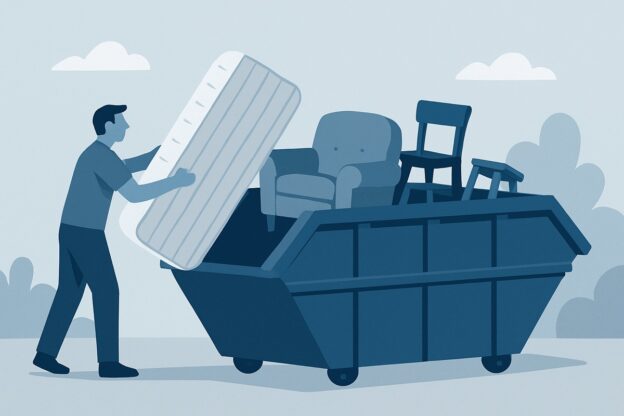
Getting rid of an old couch typically involves one of five methods: hiring a junk removal service, renting a roll-off dumpster for larger cleanouts, arranging municipal bulk pickup where available, donating it if it’s still usable, or disassembling it yourself for regular trash collection. The method you choose depends on your timeline, budget, and whether you’re disposing of just the couch or tackling a bigger project like a move or renovation. A couch in good condition opens up free donation options, while one that’s stained, torn, or structurally damaged limits you to disposal services that charge by weight or volume. Most people underestimate how much wrestling a sectional down a narrow stairwell actually costs in time and potential injury — knowing your options for how to dispose of a couch before you commit to a removal method saves both. We’ll walk through what each disposal method actually entails, what it costs, and which situations make each one the practical choice.
Renting a Dumpster for This Project?
For most of these jobs, a roll-off dumpster delivered to your driveway is the simplest, cheapest way to handle the haul. Compare local providers and get a free quote in minutes.
Find Dumpster Rental in Your City →
Why Proper Couch Disposal Matters
Why Proper Couch Disposal Matters
Improper couch disposal creates environmental hazards and legal risks that affect entire communities. Couches contain foam, flame retardants, and non-biodegradable fabrics that contaminate soil and water when dumped illegally. Most municipalities enforce strict regulations on furniture disposal, with fines starting at several hundred dollars and escalating to criminal charges for repeat offenders or large-scale dumping.
Environmental Impact of Furniture Waste
A single couch occupies roughly 50 cubic feet in a landfill and takes decades to decompose. The foam inside breaks down into microplastics that leach into groundwater, while the flame-retardant chemicals required by fire safety codes—polybrominated diphenyl ethers in older furniture—persist in soil for years. Wood frames treated with formaldehyde or other preservatives add another layer of contamination.
Furniture accounts for nearly 9 million tons of waste in U.S. landfills annually. When you dump a couch in a wooded area or vacant lot, rainwater accelerates the breakdown process, washing these chemicals into nearby streams and affecting local ecosystems. The fabric covering provides little protection—most upholstery materials are synthetic blends that fragment rather than decompose, creating pollution that outlasts the original structure by generations.
Legal Consequences of Illegal Dumping
Municipal codes classify furniture dumping as illegal disposal of solid waste, typically a misdemeanor with fines generally ranging from $250 to $1,000 for first offenses. Many cities have increased enforcement by installing cameras in known dumping zones and using identifying information left on furniture to trace violators. Property owners who allow dumping on their land face similar penalties, even if they didn’t personally discard the items.
Repeat violations carry steeper consequences. A second offense often doubles the fine, and three or more incidents can result in criminal charges with potential jail time of 30 to 90 days. If dumped furniture blocks a roadway or creates a fire hazard, charges may escalate to reckless endangerment. Cities also bill violators for cleanup costs—hiring a crew to retrieve and properly dispose of illegally dumped furniture typically costs $300 to $600, added directly to your fine. Renting a roll-off dumpster for a cleanout project costs less than these combined penalties and eliminates any legal risk.
Best Ways to Get Rid of Your Old Couch
Donation works best when your couch still functions properly, shows minimal wear, and meets basic hygiene standards. Most charities accept sofas without major stains, tears, or structural damage—essentially anything someone would reasonably use in their home. This option costs nothing, supports your community, and keeps usable furniture out of landfills, but timing and logistics matter since organizations have specific pickup schedules and acceptance criteria.
When Donation Makes Sense
Check the couch’s condition honestly before calling a charity. Sit on every cushion and pull out any hideaway bed mechanisms. Small cosmetic issues like faded fabric or minor scuffs qualify for donation, but sagging frames, broken springs, persistent odors, or stains larger than a dinner plate typically disqualify your piece. Charities resell donations to fund their programs—they can’t accept items that won’t sell.
Most organizations schedule pickups one to three weeks out, so plan ahead if you’re working around a moving date. Habitat for Humanity ReStores, Goodwill, and Salvation Army operate their own trucks in many areas and will haul your couch away free. Smaller local shelters might accept quality furniture but often lack pickup services, meaning you’ll need to arrange transport yourself. Call ahead rather than dropping off unannounced—many locations have limited warehouse space and can’t always accept large items immediately.
The timing matters beyond just scheduling. December donation centers overflow with holiday donations, while summer months see less competition for pickup slots. If your couch gets rejected by one organization, that doesn’t mean others won’t take it. A sectional deemed too large for a Goodwill store might work perfectly for a transitional housing program furnishing multi-bedroom apartments.
Using a Roll-Off Dumpster for Furniture Removal
A roll-off dumpster handles couch disposal in one trip, especially when you’re clearing out multiple pieces or tackling a renovation. You rent the container for a set period (typically 3-14 days), toss the couch in along with other debris, and the company hauls everything away when you’re done. This works best when you have several bulky items to discard or need flexible timing for a cleanout project.
When a Dumpster Rental Makes Sense
Renting a dumpster becomes cost-effective around the three-item threshold. If you’re disposing of a couch plus a mattress, old carpet, and broken shelving, paying for a single container often costs less than multiple junk removal appointments or dump runs. The math shifts further in your favor during estate cleanouts, foreclosure cleanups, or whole-house renovations where furniture is just one category among construction debris, old appliances, and household waste.
The timing flexibility matters more than people expect. You’re not rushing to meet a pickup window or coordinating schedules with haulers. Load the couch at midnight if that’s when you finish dismantling it. Add more items as you find them in the garage or attic. The container sits in your driveway until you fill it or hit your rental period limit.
Choosing the Right Dumpster Size
A 10-yard dumpster—roughly the size of a large pickup bed—holds 2-3 couches plus other household items. That’s the minimum most companies rent. Move up to a 20-yard container if you’re clearing a multi-bedroom home or combining furniture disposal with flooring removal or kitchen demolition. The 20-yarder handles 6-8 standard couches, though you’ll rarely fill one with furniture alone.
Sectionals and sleeper sofas with thick frames eat up space fast. A single L-shaped sectional can occupy a quarter of a 10-yard container if you don’t break it down first. Most rental companies let you call for pickup early if you fill the dumpster before your rental period ends, so starting smaller often makes more sense than overestimating.
Breaking Down Furniture for Maximum Space
Remove cushions and legs before loading. Couch legs typically twist off or require a socket wrench—the entire process takes under five minutes per piece. Stand the frame vertically against one wall of the dumpster rather than laying it flat. This single change can double your usable space.
For larger sectionals, separate the pieces at their connection points. Most connect with metal brackets you can unbolt with basic tools. If the frame is solid wood or metal, cutting through the main support beams with a reciprocating saw reduces volume by half. You’re not trying to make the couch unrecognizable—just creating pieces that nest together efficiently. Place seat cushions in the gaps between frames. Wedge throw pillows into corners. The goal is eliminating air pockets that waste vertical space.
Preparing Your Couch for Disposal
Before hauling your couch anywhere, take time to prepare it properly. Remove all cushions and check every crevice for lost items—phones, remotes, and loose change add up fast. Measure your couch’s dimensions and doorways to confirm it fits through your exit route. If you’re renting a roll-off dumpster, disassembling the couch saves significant space and makes loading easier.
Check for Salvageable Parts
Pull off removable cushions and inspect the frame for quality hardwood components. Older couches, particularly those made before the 1990s, often contain solid oak or maple frames worth salvaging for woodworking projects or resale. Metal springs and mechanisms also have scrap value—a typical couch contains 15-30 pounds of recyclable steel.
Look underneath the fabric for identification tags. These tags indicate whether the couch contains flame retardants or other chemicals that affect disposal options. Some recycling centers won’t accept furniture treated with certain brominated compounds, common in couches manufactured between 1975 and 2005.
Measure Doorways and Pathways
Doorways reveal problems fast. Standard interior doors measure 30-32 inches wide, while your couch likely spans 72-96 inches long and 36-42 inches deep. Remove the feet or legs first—most screw off counterclockwise with a wrench or pliers, immediately reducing height by 4-8 inches.
Tilt sectional pieces at a diagonal when navigating corners. The path from your living room to the curb probably includes at least two 90-degree turns where the couch can jam. Walk the route backward from your endpoint, noting ceiling heights in stairwells (typically 80 inches) and any permanent fixtures that narrow the pathway. External doors usually provide 36 inches of clearance, but storm doors and railings cut into that space.
Disassemble When Possible
Most modern couches come apart more easily than you’d expect. Flip the couch upside down and look for bolts connecting sections—sectionals use 3-4 large bolts per connection point that a socket wrench removes in minutes. Reclining mechanisms detach with basic tools once you remove the upholstery staples holding the fabric.
For non-sectional couches, removing the back panel creates two manageable pieces instead of one unwieldy mass. The back typically attaches with screws accessible from underneath or behind the rear cushions. Detached backs stack flat in a dumpster, and separate seat bases slide in alongside them. This disassembly cuts the couch’s volume roughly in half—critical when you’re paying for dumpster rental by size.
Ready to get started?
Find a Dumpster Near You