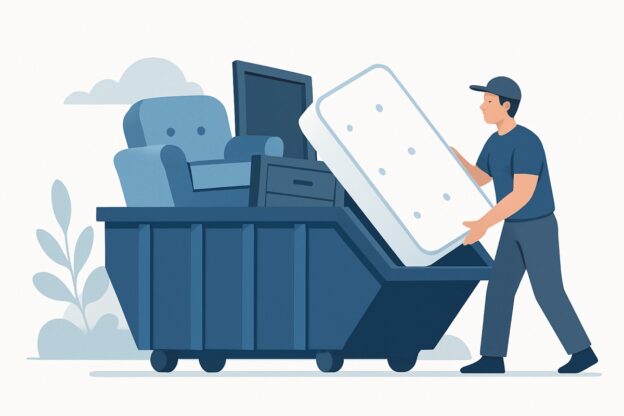
Getting rid of an old sofa typically involves one of four main routes: arranging a bulk trash pickup through your municipality (often free or low-cost), hiring a junk removal service for same-day haul-away, renting a roll-off dumpster if you’re tackling multiple large items, or donating it to a charity if the piece is still in usable condition. The path you choose hinges on timing, whether you have other bulky items to clear out, and the sofa’s condition—because a stained, sagging couch won’t qualify for donation and may require paid removal. Most people underestimate how quickly bulk pickup slots fill during spring cleaning season, which can leave a couch sitting in your driveway for weeks. Knowing how to dispose of a sofa efficiently saves you from that scenario and helps you avoid surprise fees that some removal services tack on for stairs, oversized sectionals, or same-day scheduling. This guide walks through each disposal method with real-world costs, timing expectations, and the specific situations where each option makes the most sense.
Renting a Dumpster for This Project?
For most of these jobs, a roll-off dumpster delivered to your driveway is the simplest, cheapest way to handle the haul. Compare local providers and get a free quote in minutes.
Find Dumpster Rental in Your City →
Free and Low-Cost Sofa Disposal Methods
Free and Low-Cost Sofa Disposal Methods
Getting rid of a sofa without spending much money comes down to three main routes: donating it to organizations that offer free pickup, scheduling your city’s bulk trash collection, or posting it online for someone to haul away. Most donation centers pick up furniture at no charge if the piece is clean and functional, while municipal bulk pickup is typically free for residents on designated collection days.
Donation Centers That Accept Sofas
Goodwill, Salvation Army, and Habitat for Humanity ReStores accept sofas in good condition and usually offer free pickup for larger items. The catch: they’ll refuse anything with rips, stains, pet odors, or sagging cushions. Schedule pickup at least a week ahead during busy seasons—most centers book up quickly in spring and early summer when people are moving.
Smaller local charities often have more flexible standards than national chains. A furniture bank serving low-income families might accept a sofa with minor wear that Goodwill would reject. Call directly rather than using online forms—you’ll get a faster answer about whether your specific piece qualifies and can often schedule same-week pickup.
Curbside Pickup and Bulk Trash Services
Most cities offer free bulk trash pickup once or twice monthly, but the rules vary dramatically. Philadelphia requires scheduling 48 hours in advance and limits you to one large item per pickup. San Antonio provides quarterly collection with no appointment needed—just put items out the night before your designated week. Check your city’s sanitation website for the exact protocol, since putting a sofa out on the wrong day can result in a fine.
Private haulers charge $75-$150 for single-item pickup if you’ve missed your city’s schedule or live somewhere without municipal service. Some waste management companies bundle furniture removal with regular trash service for an added monthly fee. If you’re clearing out multiple pieces or tackling a full cleanout, renting a roll-off dumpster becomes more economical than paying per-item pickup fees.
Renting a Dumpster for Large Furniture
Renting a Dumpster for Large Furniture
A roll-off dumpster makes financial sense when you’re disposing of multiple large items at once or tackling a cleanout that generates more waste than a sofa alone. If you’re clearing out an entire room, renovating a space, or dealing with an estate cleanout, the per-item cost drops significantly compared to hiring separate haulers for each piece of furniture.
When a Roll-Off Dumpster Makes Sense
Renting works best for batch disposal projects. Picture this: you’re replacing all the furniture in your living room, cleaning out a deceased relative’s home, or preparing a rental property for new tenants. In these situations, you’re dealing with couches, chairs, tables, mattresses, and boxes of miscellaneous items. A 10-yard dumpster can typically hold three to four sofas plus additional furniture, while a 20-yard can handle the contents of several rooms.
The math shifts in your favor once you cross three or four large items. Most junk removal services charge per piece — often $75-150 per sofa depending on your market. A week-long dumpster rental generally ranges from $300-500 for a 10-yard container in 2026, giving you time to work at your own pace. You load it yourself, which means no scheduling windows or waiting for crews. The rental period also lets you handle demo work if you’re pulling out built-ins or tearing up carpeting alongside the furniture disposal.
Multi-family properties and landlords use roll-off dumpsters as standard practice during tenant turnovers. When someone moves out and abandons furniture, property managers often find a couch, a bed frame, bags of trash, and carpet remnants all at once. One dumpster handles the entire cleanout in a single rental period, and you’re not paying separate fees for furniture haul-away, appliance removal, and trash pickup.
Recycling and Eco-Friendly Disposal Options
Most sofas contain recyclable materials like metal springs, wood frames, and foam cushions that shouldn’t end up in landfills. Furniture recyclers and specialized programs break down couches to recover these components, often at no cost to you. Some municipalities offer curbside furniture recycling, while nonprofit programs will pick up usable pieces and refurbish them for resale or donation.
Finding Furniture Recycling Programs in Your Area
Search “[your city] furniture recycling” to locate facilities that process upholstered items. Many recycling centers accept sofas directly, though some charge drop-off fees ranging from $20 to $50 for oversized furniture. Call ahead to confirm they handle couches specifically—not all recycling operations have the equipment to separate fabric from frames and springs.
Look for programs run by municipal waste departments or regional recycling cooperatives. These programs typically shred fabric for industrial wiping cloths, melt down metal components for scrap, and chip wood frames into mulch or composite materials. Earth911’s recycling search tool can identify facilities within your zip code that process furniture.
What Happens to Recycled Sofa Materials
The breakdown process starts with manual disassembly. Workers remove fabric coverings, extract foam padding, and separate wooden or metal frames. Metal springs go to scrap yards where they’re melted and reformed into new steel products. Wood frames become mulch, particleboard, or biomass fuel depending on condition and type.
Foam presents the biggest challenge. Some facilities compress clean foam into carpet padding or wrestling mats. Contaminated or degraded foam usually goes to waste-to-energy plants. Fabric rarely gets recycled into new textiles—most becomes industrial rags or insulation fill. A standard three-seat sofa yields roughly 40 pounds of metal, 25 pounds of wood, and 15 pounds of foam when fully broken down.
Upcycling Parts Before Disposal
Strip your sofa yourself to recover reusable components before final disposal. Remove cushions first—the foam inside works as padding for DIY projects, pet beds, or packing material. Unscrew wooden legs and arms to repurpose as furniture feet, craft lumber, or firewood if the wood is solid hardwood rather than particleboard.
Metal springs have surprising second lives. Upholstery shops buy used springs for repair work. Artists use them in sculptures and industrial decor. The fabric, if unstained and durable, can line a dumpster rental when hauling construction debris or cover outdoor equipment. Even worn-out fabric strips make excellent rags for painting or automotive work. This approach reduces waste volume and might save disposal costs if you’re renting a roll-off dumpster for a larger cleanout project.
What to Do Before You Dispose
Before you dispose of a sofa, assess its condition honestly and measure doorways, hallways, and staircases it needs to pass through. Check if your chosen disposal method requires disassembly, schedule any necessary pickup or drop-off times, and remove personal items from cushions and crevices. Taking these steps prevents last-minute problems and saves you from paying twice for disposal.
Check the Sofa’s Actual Condition
Flip cushions over and inspect the frame by pressing down on different sections. A sofa with torn fabric but solid bones might be worth donating or selling for someone willing to reupholster. One with a sagging frame, broken springs, or visible mold belongs in a dumpster, not a donation center.
Pull out the sleeper mechanism if your sofa has one — broken metal frames add weight and create sharp edges that make handling dangerous. Charities reject furniture with structural damage, so an honest assessment now saves you a wasted trip.
Measure Your Exit Path
Measure the sofa’s height, width, and depth, then measure every doorway, hallway turn, and stairwell it needs to navigate. A standard doorway is 32 inches wide, but your sofa likely needs 36+ inches of clearance to angle through. Measure diagonally too — sometimes tipping a sofa at 45 degrees is the only way to clear a tight corner.
If the numbers don’t work, disassembly becomes mandatory, not optional. Sketch the path on paper if you have a complex route. Professional movers use this trick to avoid getting furniture wedged in stairwells.
Decide If Disassembly Makes Sense
Removing legs takes 30 seconds with a screwdriver and reduces height by 4-6 inches. Detaching seat cushions and back pillows makes a sofa easier to grip and lighter to carry. Some sectionals simply unclip where pieces connect.
Going further requires more effort. Cutting fabric and removing the frame’s staples is messy work that only makes sense if you’re breaking down a sofa for compact disposal in a roll-off dumpster or need to fit pieces through an impossible doorway. Use a staple remover and reciprocating saw if you go this route — trying to break a sofa apart by hand damages walls and wastes energy.
Remove Everything Hidden Inside
Reach into every gap between and under cushions. People find phones, remotes, cash, keys, jewelry, and important papers wedged in sofas years after losing them. Shake out cushions outside if possible — you’ll be surprised what falls out.
Check under the sofa too. Items slide underneath and get forgotten. If you’re donating or selling, this step protects your privacy. If you’re disposing, it saves you from throwing away something valuable.
Confirm Logistics for Your Chosen Method
Call ahead if you’re donating — some charities stopped accepting upholstered furniture after 2020, and others only take items on specific days. Confirm they’ll send a truck or verify their drop-off hours. Donation centers hate when people leave furniture outside overnight.
For curbside pickup, check your city’s bulky waste schedule and any rules about placement distance from the street. If you’re renting a dumpster for a larger cleanout project, verify the rental period gives you enough time to actually get the sofa to the container. A three-day rental sounds sufficient until you realize the delivery happens Friday afternoon and you work all weekend.
Ready to get started?
Find a Dumpster Near You